

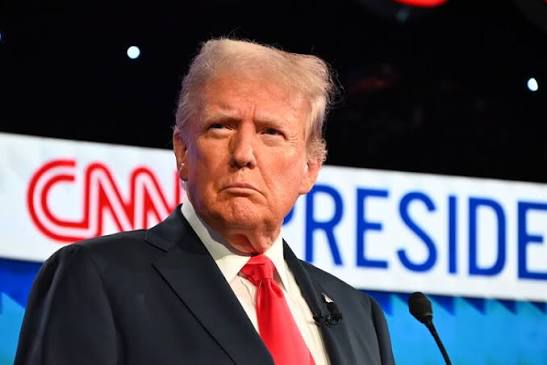
In a dramatic escalation of his long-running feud with the mainstream media, President Donald Trump announced on Friday, 18 September 2026, that CNN, MS NOW (formerly MSNBC), and Politico would be banned from the White House “effective immediately“.
By Saturday morning, the ban had been enforced — reporters from all three outlets were denied entry, and their press passes were seized by United States Secret Service agents.
Trump made the announcement on his Truth Social platform, accusing the three outlets of spreading “fiction or lies” about his administration.
He did not cite any specific story, instead referring vaguely to “cumulative stories over the last few years“.
He also warned that other outlets could face similar action, naming The New York Times and The Washington Post as examples of what he called “fake news“.
The consequences were immediate. On Saturday morning, CNN’s White House reporter Betsy Klein attempted to enter the grounds but was stopped by a Secret Service agent who told her that her press pass had been deactivated.
“I asked him if he could provide an explanation as to why it had been deactivated,” Klein recounted on air. “He said he had no further information“.
MS NOW correspondent Akayla Gardner experienced the same treatment.
“The officer asked me to hand over my badge. He said that it was disabled,” she said. “I asked why I was not able to get inside. He said it was above him“.
Later that morning, Politico’s White House reporter Cheyenne Haslett was also denied entry and had her credential confiscated.
The Outlets Respond
All three news organisations issued strong statements condemning the move and signalling their intention to pursue legal action.
CNN called the ban “an illegal assault” on press freedom. “We have a right under the US Constitution to do our reporting without hindrance or interference from the government,” the network said
MS NOW declared that it “intends to take any and all steps necessary to defend our First Amendment rights and the essential role of independent journalism in our democracy“.
Politico’s global editor-in-chief, Jonathan Greenberger, told staff the company would “vigorously defend” their constitutional rights.
This is not the first time Trump has clashed with the press during his second term. In 2025, his administration sought to bar the Associated Press (AP) from White House coverage after the outlet refused to refer to the Gulf of Mexico as the “Gulf of America“.
The AP sued on First Amendment grounds, and a federal judge ruled in April 2025 that the White House must restore its access.
During his first term, the White House attempted to revoke the press pass of then-CNN correspondent Jim Acosta after a heated exchange with Trump. CNN filed suit, and a federal judge ordered Acosta’s pass restored.