

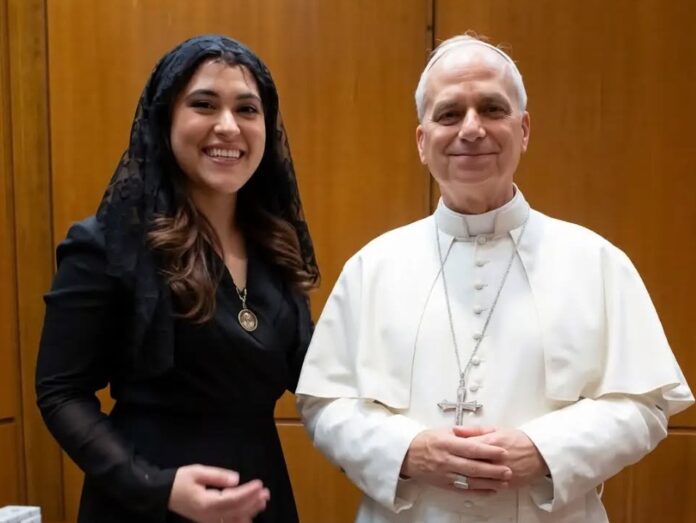
Pope Leo XIV has appointed a Mexican-American media executive as the first laywoman to head a Vatican ministry, signaling a shift in how women are viewed at the highest levels of the Catholic Church.
Maria Montserrat Alvarado, 39, officially assumed office as Prefect of the Dicastery for Communication on November 1, 2026, one day after attending an audience with the Pope at the Paul VI Hall.
She is also the first non-Italian to lead the department overseeing all Vatican television, radio, print operations, and its press office.
An Unconventional Path
Alvarado’s appointment, announced in June, came as a surprise even to her.
“I didn’t apply; I wasn’t chosen” through a standard application process, she said in a television interview with EWTN News, where she had served as president and chief operating officer since 2023.
It was “an appointment from the Holy Father,” she said.
EWTN News is the news division of the Eternal Word Television Network, the largest Catholic television network in the United States, founded by a nun and known as a touchstone for conservative Catholics.
The network has not always had a warm relationship with the Vatican.
Certain programmes developed a reputation for criticizing Pope Francis, Leo’s reform-minded predecessor.
In 2021, Francis appeared to call them out, bemoaning a “major Catholic television channel that is constantly criticising the pope.” Alvarado was a presenter for EWTN at that time.
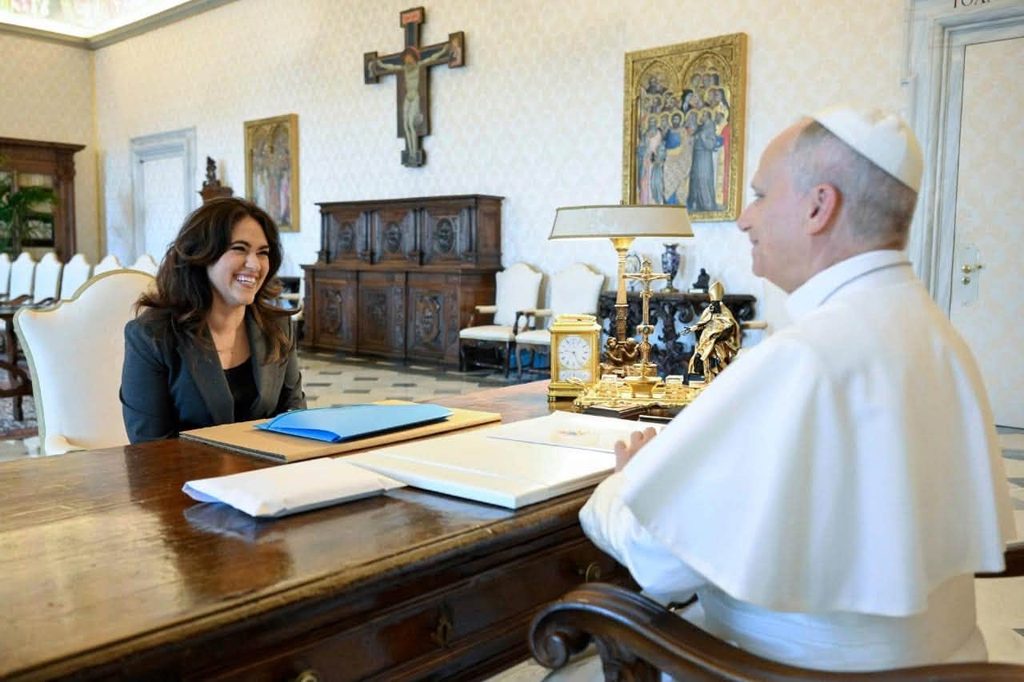
Born in Mexico, Alvarado arrived in the US as a child and grew up in Miami.
For 14 years, she worked at the Becket Fund for Religious Liberty, a non-profit law firm defending religious freedom.
At EWTN News, she oversaw international media platforms producing content in seven languages.
A Different Kind of Appointment
Alvarado succeeds 70-year-old Paolo Ruffini, appointed by Pope Francis in 2018 and the first layperson to lead a dicastery.
Lucetta Scaraffia, founder of the Vatican’s women’s magazine Women Church World, told AFP that Alvarado “is a woman who has been chosen for her skills and her qualities.”
Scaraffia said the appointment signals that “the pope has a different attitude towards women.”
She added: “Until now, the women chosen for important positions were highly obedient nuns — they weren’t really chosen for their merits.”