


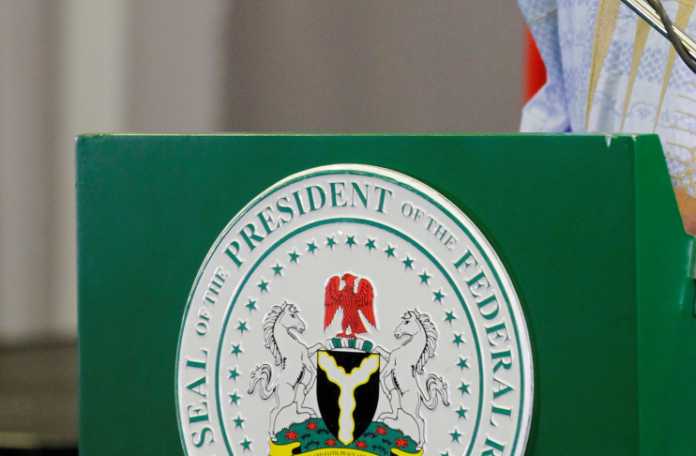
The Presidency has dismissed allegations that the Federal Government plans to pressure the Independent National Electoral Commission (INEC) into postponing the January 16 presidential election.
Minister of Information and National Orientation, Mohammed Idris, said the government was unaware of any such plan.
“The federal government is not planning to shift the date of the election or postpone any election. This is not in the works; the federal government is unaware of this, and this is just fake news as far as we are concerned.”
ADC Alleges Villa Plot
The African Democratic Congress Presidential Campaign Council (ADC-PCC) raised the alarm earlier, alleging a plot to force INEC Chairman Prof. Joash Amupitan to alter the election timetable.
The council said it had information that Amupitan would be summoned to the Presidential Villa with just 80 days to the poll.
In a statement by its Director of Strategic Communication, Phrank Shaibu, the council called on President Bola Tinubu to abandon any such move.
“The election date belongs to Nigerians. It must not be rewritten behind closed doors at the Villa,” the council said.
The ADC-PCC said Nigerians had endured three and a half years of hardship and must be allowed to judge the administration at the ballot box.
“A government that has made life this difficult for Nigerians must not be allowed to postpone its day of judgment,” it said.
The council also cited the Director-General of the Nigeria Centre for Disease Control (NCDC), who said there was no reason to postpone the election over the Ebola outbreak.
It demanded that any proposal to alter the timetable be made openly, backed by published health evidence and subjected to public scrutiny.
At press time, INEC had not reacted to the allegation.
Reps Summon INEC Over 2027 Readiness
Meanwhile, the House of Representatives has resolved to invite INEC to brief its committee on preparations for the 2027 general elections.
The resolution followed a motion by Mansur Manu Soro and Abdussamad Dasuki, which raised concerns about operational challenges facing the commission.
INEC is expected to appear within seven legislative days and provide a detailed status report.
The lawmakers want the assessment to cover voter registration, Permanent Voter Cards (PVCs), production and distribution, election logistics, technology deployment, personnel training, electoral security, risk assessment and funding.
The House expressed concern over reports of inadequate registration equipment, limited personnel, network challenges and long waiting times at Continuous Voter Registration (CVR) centres.
According to the lawmakers, these difficulties could restrict participation, particularly for first-time voters, rural residents, persons with disabilities, students and workers.
They warned that failure to address the gaps could undermine public confidence in the electoral process.
The lawmakers also said the recent Ekiti State governorship election offered useful lessons on election administration, technology deployment, logistics management and stakeholder engagement.