





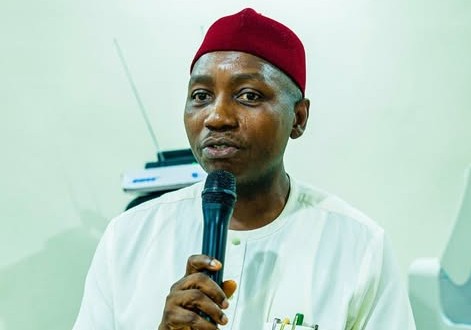
The Enugu State Commissioner for Health, Prof. George Ugwu, has moved to calm concerns over a perceived rise in kidney and cardiovascular disease cases in the state, attributing much of the apparent increase to greater public awareness, better access to health information and more frequent testing.
Prof. Ugwu said more residents are now conscious of their health and are presenting themselves for medical checks, making cases that might previously have gone undetected more visible.
He spoke during a live interactive programme, The Conversation, aired on 100.3 Udoka FM, Enugu.
Even so, Prof. Ugwu said unhealthy lifestyle choices, poor nutrition, obesity, physical inactivity and indiscriminate use of medicines remain significant risk factors for kidney and cardiovascular complications.
He called on residents to pay closer attention to their diet, particularly warning against excessive consumption of sugary, salty, oily and heavily processed packaged foods.
The prof advocated a return to locally produced meals, pointing to ayaraaya oka, a mashed-maize dish common among the Nsukka people of Enugu State, as an example of a traditional food that can provide several essential nutrients when properly prepared.
He said some residents wrongly associate expensive, heavily processed foods with affluence, a habit he linked to obesity and other complications, and advised people aged 40 and above to watch their calorie intake and maintain a healthy weight.
Young People’s Reliance on Noodles Also a Concern
The commissioner also flagged the eating habits of young people, particularly students who rely heavily on noodles and other convenience foods without adding vegetables or protein to their diets.
He said the problem is often ignorance rather than poverty, pointing out that some people spend heavily on snacks and junk food while overlooking cheaper, healthier options, and called for regular physical activity as part of preventing lifestyle-related disease.
On medicines, Prof. Ugwu identified self-medication and painkiller abuse as a serious threat to kidney health, warning residents against buying and taking drugs without medical advice.
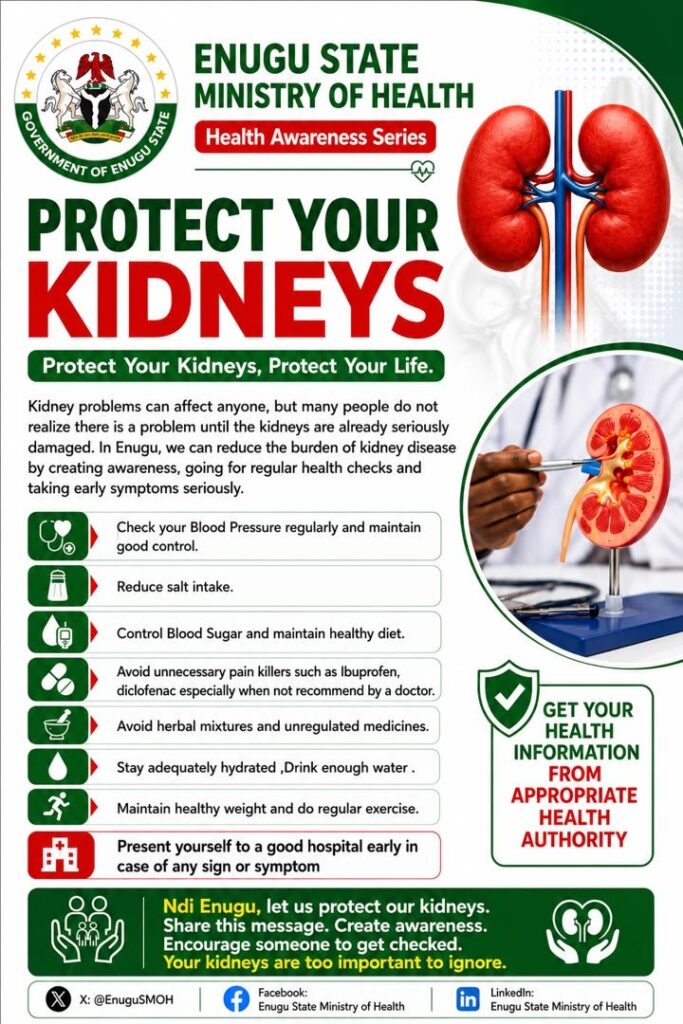
He said the Enugu State Government is working to strengthen regulation of medical products and facilities and is developing a system to source medical supplies directly from manufacturers, describing this as part of efforts to improve drug safety.
He also pointed to the role of the National Agency for Food and Drug Administration and Control (NAFDAC) in tackling fake medicines, including the use of verification codes on some products, and distinguished regulated pharmaceuticals, which undergo clinical testing, from herbal preparations whose dosage and safety data are often not established.
Mbah’s Health Investments Span All Three Tiers Of Care
Prof. Ugwu used the programme to restate Governor Peter Mbah’s commitment to expanding healthcare access across the state, describing the investment as deliberate. “
The Peter Mbah administration is very intentional about health because he’s a leader that cares. The governor understands that for every other sector of the economy to grow, you must have a healthy population of both old and young residents,” he said.
He said investment spans primary, secondary and tertiary care, with ultramodern Type-2 hospitals being built in each of the state’s 260 political wards, alongside continued investment in ESUT Teaching Hospital, Park Lane, and SUMAS Teaching Hospital, Igbo Eno.
The State’s health chief added that the planned Enugu International Hospital would soon be commissioned, and that health spending ranks second only to education in the state’s annual budget.
He said the goal goes beyond ending medical tourism, aiming instead to make quality healthcare broadly affordable.
Children Can Also Develop Kidney Disease, Doctor Warns
Also on the programme, Dr Okoro Chizaram, a medical doctor and public health advocate, challenged the assumption that kidney and cardiovascular disease affects only adults.
He said such conditions in children can be inherited or linked to other illnesses, pointing to certain infections, including skin infections and sore throat, as well as malaria, malnutrition and severe dehydration, as possible triggers.
He called on parents and caregivers to take unusual symptoms in children seriously and to encourage balanced nutrition, adequate hydration, physical activity and prompt treatment of infections.
Callers to the programme largely praised the discussion and called for more regular sessions, while several raised concerns about the alleged circulation of adulterated palm oil and artificially ripened fruits in local markets, calling for tighter food regulation and greater caution among consumers.

 WhatsApp Channel
 Telegram Channel




While all true, the problem also boils down to poverty please. It costs less to buy bread or indomie than to buy Okpa, let me break it down for you. Okpa that will fill you (3) cost ₦500 each so ₦1,500. Pure water nko? Water one sachet is ₦50, so it’s better to buy 3 for ₦100, so ₦1,600. Let’s assume you will manage it till night, plate of rice and stew ₦1,300, they give water with the food so total is ₦2,900 spent. Indomie is ₦400 for superpack, so you buy 4 which is ₦1,600. Use ₦100 buy water… Read more »