



The United States has tightened its Visa Waiver Program to bar visa-free entry for some travellers linked to a list of high‑risk countries, forcing them to apply for regular visas instead.
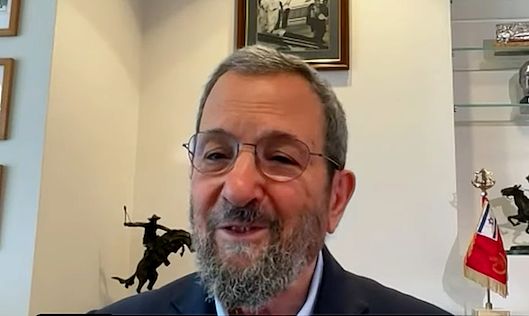
Former Israeli Prime Minister Ehud Barak has said fears that Nigerian governors could weaponise state police for political gain are real but can be contained through tough federal laws that set clear limits and allow Abuja to step in when abuse occurs.
Speaking at an ARISE News Townhall on State Police, Barak argued that decentralised policing can make law enforcement more responsive and closer to communities if it is backed by strong safeguards that prevent partisan misuse.
He said, “The worry that someone might try to use the fact that he has a state police for his own political ambitions and so on is a real issue and should be addressed.”
Barak explained that recruiting officers from within their own communities would deepen trust, improve intelligence and make daily policing more effective.
He said, “When you mobilise and recruit the policemen from within the community, they will be much more sensitive. They will understand the norms and the practises, the religious space, and everything that relates to the people around them. It will be much more effective.”
For him, the core challenge is not whether state police will be abused but whether Nigeria drafts laws that can detect and correct such abuses quickly.
He said, “I think that it is much easier to deal with such events through the very detailed legislation that gives certain authority to the president and to the federal government in Abuja over the governors and so on.”
Barak argued that it is easier to fix specific cases of political misuse than to try to run a vast, diverse country like Nigeria solely from a central police command.
He said, “It’s much easier to correct this element than to activate through a vast country like Nigeria from a central place.”
According to him, state police would also bring faster and more tailored responses to emergencies because local officers know the terrain, customs and evolving security dynamics better than distant commands.
He said, “Response is much faster when you’re talking about the state police. Response is much more calibrated to the nuances, subtleties of the arena in which it’s carried out.”
Local Intelligence, Federal Power And Rapid Response
Barak singled out intelligence as a key advantage of decentralised policing, especially in the fight against terrorism and organised crime.
He said, “Intelligence is essential for running a fight against terror, against organised crime. But, you know, it’s mainly human intelligence.”
He argued that officers embedded in their communities are better placed to gather human intelligence, spot early warning signs and share information that can stop threats before they escalate.
However, he warned that more complex intelligence capabilities, especially signal intelligence, should remain under tight federal control because of their cost and potential for abuse.
“Signal intelligence is extremely expensive, and if the capabilities of signal intelligence ended up in the hands of the wrong person or the wrong group, they can cause huge damage to the national structure and become a kind of a threat.”
To balance local control with national security, Barak recommended that Nigeria create a centrally controlled rapid deployment police force that can support state police when crises surpass local capacity.
“There should be, to the best of my judgement, a central kind of rapid deployment police force under the command of Abuja that could be sent in any region to support them when a problem which is beyond their capabilities emerges.”
He added that constant information sharing between state police and federal authorities is essential to make such a hybrid system work.
He said, “The state should report there should be no secrets of what happens to the police And at the same time, the federal authorities should be sensitive to the needs.”
Barak acknowledged that building this kind of layered policing structure will be challenging but insisted that it is the only realistic path.
He said, “It won’t be easy, but that’s the only way.”
‘Illusions’ About Destroying Iran’s Nuclear Programme
Barak also used the townhall to warn that military power alone cannot erase Iran’s nuclear ambitions, saying recent operations were shaped by unrealistic expectations about what airstrikes could achieve.[caliber]
He said some planners in Israel and the United States acted as though they could topple the Iranian regime, destroy its nuclear programme, eliminate its missiles and neutralise its regional proxies in one sweeping campaign.
He said, “There were certain illusions in the minds of those who ordered it, both on our side and on the American side, that probably we are going to topple down the regime, probably we are going to eliminate, obliterate the nuclear military programme, probably we are going to end up, to eliminate their ballistic missiles or their proxy system. And it was illusion.”
Barak described Iran as a major source of instability through its nuclear activities, its push to build a heavy ballistic missile force and its use of proxies like Hezbollah in Lebanon, the Houthis in Yemen and Hamas in Gaza.
He said, “I think that Iran is a major threat to the stability of the Middle East and indirectly the whole world through their nuclear military programme, through their effort to establish a very heavy ballistic missile source, and through their proxies all around the region, mainly the Hezbollah and the Houthis in Yemen and the Hamas in Gaza, which they financed and supported.”
While he defended the original “Twelve Days War” attack on Iran’s nuclear sites as justifiable, he questioned later strikes that, in his view, were driven by those same illusions.
He said, “So, I think that the original attack on the nuclear plan of Iran a year ago, the Twelve Days War, was justifiable and I could agree. But the second war in February is much more questionable because there were certain illusions in the minds of those who ordered it.”
Barak cautioned that Iran’s resilience, history and capacity to absorb punishment were consistently underestimated.
He said, “Many people were sober, following the events and the capability, and knew all along the way, you should not underestimate a country like Iran. They are strong people and strong country with history that goes back for thousands of years.”
He contrasted Western definitions of victory with those of Iran and its allies, arguing that for Tehran and groups like Hezbollah or Hamas, simply surviving an onslaught by superior forces is enough to claim success.
He said, “For us, for the Americans to win, we should win in a way that every teenager in any country understands that we had won… For the Iranians or Hezbollah or Hamas, it’s enough to survive. If Iran can survive an attack by the most powerful air force in the region, the most powerful air force in the world, and still after a week, still stand on its feet, still ready to fight, for them it’s a victory.”
Barak warned that any serious planning around Iran must start from the assumption that Tehran will retaliate far beyond a narrow battlefield and target key global chokepoints.
He said, “The first thing that Iran will do when it is attacked is to cross the Hormuz Straits,” adding that no realistic war game about Iran omits this scenario.
He said, “You cannot explain any war game in any capital in the Middle East or in the world in regard to Iran, always started that.”
Barak argued that Iran’s regional influence has taken heavy blows in recent years, particularly through strong military action against Hamas and Hezbollah, but insisted that even these setbacks have limits.
He said, “It suffered major blows in the last year, especially in the last three years, when we hit very strongly on Hamas and then Hezbollah so they suffered major blows.”
In the end, he returned to his core warning that believing military force alone can “eliminate, obliterate the nuclear military programme” is itself an illusion, and that strategy must be grounded in what force can genuinely achieve rather than what leaders wish it could do.

 WhatsApp Channel
 Telegram Channel