

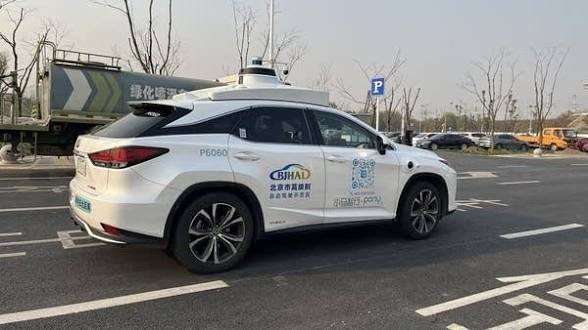
China has temporarily frozen new robotaxi approvals following a large-scale system failure involving Baidu’s Apollo Go autonomous taxi fleet, marking one of the most significant regulatory setbacks yet for the global self-driving industry.
The decision comes after more than 100 robotaxis reportedly stalled across Wuhan in late March, stranding passengers, disrupting traffic, and triggering public concern over the reliability of autonomous transport systems.
Videos circulating online showed driverless taxis immobilised on busy roads while some passengers exited vehicles in active traffic lanes. .
No major injuries were reported, but the incident has intensified scrutiny around the safety and oversight of self-driving technology.
According to multiple reports citing sources familiar with the matter, Chinese regulators have now paused the issuance of new autonomous driving permits nationwide.
The freeze reportedly prevents companies from expanding robotaxi fleets, launching new pilot projects, or entering additional cities until further notice.
The Wuhan disruption involved Baidu’s Apollo Go service, one of China’s largest robotaxi operations and a flagship project in the country’s push towards AI-driven transportation.
Authorities are said to be conducting investigations into the outage while local governments have been instructed to strengthen safety inspections and regulatory monitoring.
The development represents a major moment for China’s autonomous vehicle sector, which has rapidly expanded over recent years in cities such as Beijing, Shanghai, Shenzhen, and Wuhan.
Chinese companies including Baidu, Pony.ai, WeRide, and Geely-backed Caocao have been racing to dominate the emerging robotaxi market, both domestically and internationally.
Despite the regulatory pause, the broader industry is unlikely to disappear. Existing robotaxi services in several cities are reportedly continuing normal operations, and companies have publicly backed tighter oversight measures.
The move is seen as less of a rejection of autonomous driving and more as a warning that Beijing intends to prioritise safety and public trust over aggressive expansion.
The timing is notable. China has positioned itself as a global leader in electric and autonomous vehicles, with firms investing billions into AI-powered mobility systems.
At the recent Beijing Auto Show, automakers heavily promoted intelligent driving technology as the next frontier after electric vehicles.
However, the Wuhan incident exposed a core vulnerability in the robotaxi model: centralised software dependence.
Experts suggest the mass shutdown may have been caused by cloud connectivity failures or software bugs, highlighting how a single technical disruption can immobilise entire autonomous fleets simultaneously.
For now, China’s robotaxi industry remains in limbo. The suspension signals that regulators are willing to slow one of the world’s fastest-moving AI industries if public safety or confidence appears at risk.
It also sends a message globally: autonomous driving may be advancing quickly, but governments are not yet prepared to give the technology unlimited freedom on public roads.
Rate, Like 👍, Comment 💬, Share this article, Follow us on our social media handles, and Submit your own story to get featured and earn rewards!

 WhatsApp Channel
 Telegram Channel