





Nigeria has condemned rising xenophobic attacks against Africans in other African countries. The Federal Government warned that discrimination threatens continental solidarity, integration and peaceful coexistence.
The government spoke during the United Nations General Assembly’s adoption of a new political declaration against racism and racial discrimination. Ambassador Bola Asaju addressed the assembly in Nigeria’s national capacity.
He asked African governments to confront growing hostility against migrants and foreign nationals within their territories.
The delegation said economic hardship, unemployment and social challenges can never justify violence, persecution or discrimination based on nationality.
Nigeria maintained that African countries cannot credibly champion Pan-Africanism and continental integration while tolerating attacks against fellow Africans.
Asaju raised concern about incidents of hostility and violence targeting Africans living outside their countries of origin.
Nigeria Says Attacks Threaten African Solidarity
The delegation said such developments threaten the historical bonds of solidarity that supported Africa’s struggles against colonialism and racial oppression.
Nigeria said the sacrifices made during the continent’s liberation movements should inspire greater unity rather than division among African populations.
The country maintained that governments have a responsibility to protect everyone within their territories, irrespective of nationality or immigration background.
It also called for accountability for individuals and groups responsible for xenophobic violence, intimidation and discrimination.
Nigeria asked African governments to strengthen national legislation, improve regional cooperation and intensify public education against xenophobia.
The delegation recommended addressing underlying socioeconomic conditions that could be exploited to incite hostility against migrants.
It warned against collective blame, particularly where economic difficulties are used to portray foreign nationals as responsible for domestic challenges.
Nigeria reaffirmed its commitment to the Durban Declaration and Programme of Action, the international framework adopted in South Africa in 2001 to combat racism.
Asaju said Nigeria supported the latest political declaration and voted in favour of its adoption.
The General Assembly adopted the declaration by 95 votes in favour, five against and 37 abstentions.
Declaration Marks 25 Years of Durban Framework
The declaration commemorates the 25th anniversary of the Durban Declaration and Programme of Action. It renews international commitments to eliminating racial discrimination.
It recognises the enduring consequences of slavery, the transatlantic slave trade, colonialism and apartheid. It also calls for stronger measures against contemporary discrimination.
The declaration addresses racial profiling, hate speech, unequal access to justice and discriminatory practices associated with emerging digital technologies.
Nigeria said international commitments against racism must produce practical improvements in people’s lives rather than remain declarations of political intention.
The country asked governments to demonstrate greater political will in confronting racism and xenophobia, including discriminatory practices within their own societies.
South Africa supported the declaration. The European Union raised reservations concerning certain provisions relating to neocolonialism and reparatory justice.
South Africa Rejects Xenophobia Label
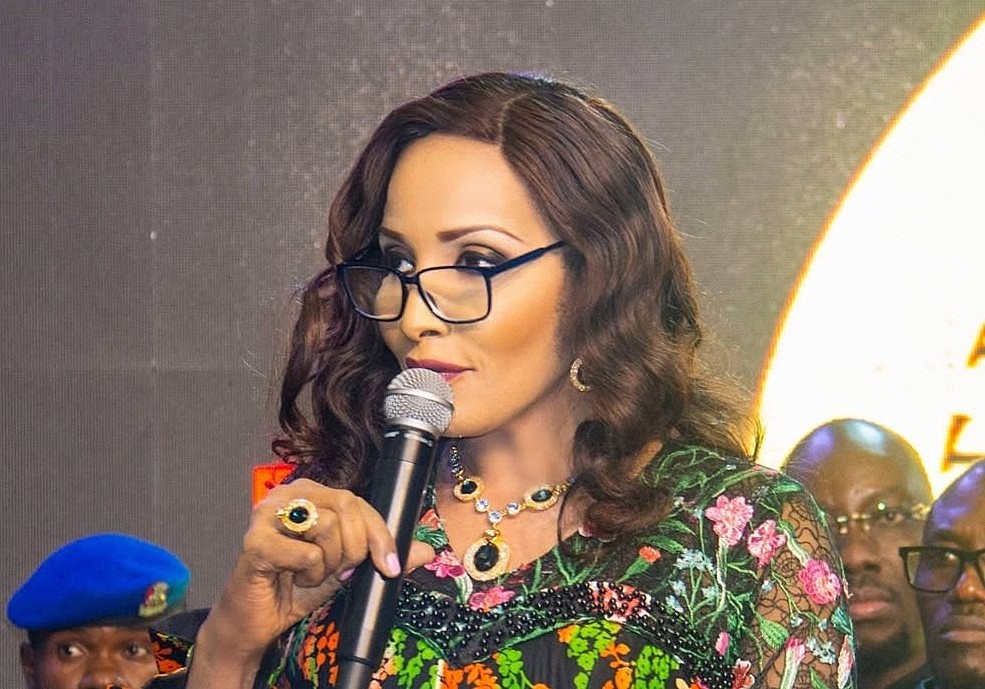
However, South Africa’s Acting Consul-General in Lagos, Ms Kgothatso Xulu, has rejected the portrayal of her country as xenophobic.
She said 364 people have been arrested in connection with attacks on African migrants.
Xulu spoke on Tuesday at the 47th Annual Conference of the Nigerian Society of International Law. The event held at the Nigerian Institute of International Affairs in Victoria Island, Lagos.
The conference had as its theme, “From Obligation to Implementation: Reassessing the Efficacy of International Law in Contemporary International Relations.”
Xulu said the incidents should not be used to characterise the entire country. She insisted that the government and its people reject xenophobia.
“I wouldn’t be doing my country any justice if I don’t actually address and defend that South Africa is not xenophobic and we reject, we completely reject what is happening,” she said.
“But we cannot be generalised with small pockets that are using the opportunity, which is a global problem that is affecting the continent.”
Consul-General Points to AfCFTA and Root Causes
Xulu acknowledged that irregular migration and service delivery challenges are realities in South Africa. However, she asked African countries to address the underlying causes of migration and promote economic cooperation.
She questioned why many Africans are leaving their home countries rather than exploring opportunities to trade and expand businesses across the continent.
“If we want to really have an Africa that we see viable, it has to be that our people are not leaving our homes because of economic emancipation, but rather we are leaving our homes to say that I would like to trade, I would like to extend our market,” she said.
She linked the issue to the African Continental Free Trade Area (AfCFTA) agreement. The framework seeks to promote trade among African countries and establish a single continental market.
According to her, trade should be driven by opportunities for economic growth rather than the need to escape hardship.
“Trade shouldn’t be about survival, but trade should be about we are creating a market,” she said.
Xulu also defended South Africa’s constitutional protection of peaceful protests. She said demonstrations played a significant role in the country’s struggle against apartheid.
She said protests should not automatically be regarded as violent simply because they involve large gatherings or attract public attention.
“The Constitution says peaceful protests for South Africans are allowed. This is how we were partly able to win and be able to push the apartheid government, because our people protested,” she said.
She acknowledged that South Africa has spent about 30 years under democratic rule and asked other Africans to understand the country’s historical experience.
Xulu criticised the generalisation of incidents through media reports. She warned that misinformation and fake news could distort perceptions of South Africans.
She cited South Africa's national anthem, which begins with an appeal for God to bless Africa. She said this reflects the country’s recognition of the support it received from other African nations during the anti-apartheid struggle.
The diplomat called on African countries to establish platforms for honest and structured discussions on migration, xenophobia and economic cooperation.
She asked Nigeria to take a leading role in facilitating such conversations at the next meeting of the NSIL.
Xulu also called on African countries to participate more actively in discussions on international law and global governance.
“Entering into the space of international rules means that Africans are able to make decisions for themselves,” she said.

 WhatsApp Channel
 Telegram Channel