



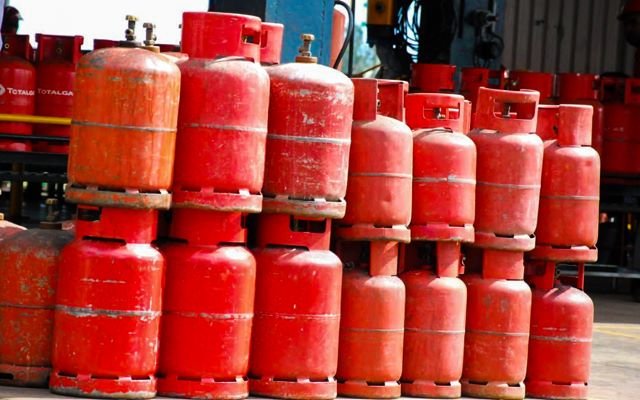
Nigerians across major cities are facing a sharp rise in cooking gas prices, with retail costs jumping by 62.22% in just one month.
The surge has worsened the cost‑of‑living crisis and forced many households back to firewood, charcoal, and kerosene.
Checks show Liquefied Petroleum Gas (LPG), popularly called cooking gas, now sells for as high as ₦1,800 per kg, up from ₦1,120 a month ago.
In supply‑stressed areas, prices have reached ₦2,500 per kg, sparking anger among consumers.
In Enugu, trader Mabel Aneke said the increase was unbearable. “Just one month ago, I could refill my cylinder without too much stress. Now, each refill feels like a luxury. We are suffering,” she said.
In Onitsha, Police Inspector Michael Eze explained how his family now rations gas.
“My salary has not increased, but everything in the market keeps rising. We now cook once and preserve food because frequent cooking wastes gas,” he said.
Families And Businesses Struggle To Cope
Residents in Kano shared similar frustrations. Caterer Fatima Sanni said the hike was hurting small businesses. “This is hurting us badly. I use gas daily for my food business. Every increase cuts into my profit,” she said.
In Port Harcourt, civil servant Ezekiel Amechi described the situation as ironic. “It is painful that people living in the heart of Nigeria’s energy industry cannot afford cooking gas. We produce gas, yet we pay outrageous prices,” he said.
Grace Nwosu blamed middlemen and distribution bottlenecks for the persistent rise. In Lagos, food vendor Adeoye Mutiat said she had no choice but to raise food prices. “Gas is essential to my business. If prices keep rising, many small traders will shut down,” she said.
Regulator Explains New Pricing Policy
The Nigerian Midstream and Downstream Petroleum Regulatory Authority (NMDPRA) said LPG prices should moderate as market competition improves. It recently announced an upward review of domestic gas pricing benchmarks to $2.18/MMBtu, effective 1 April 2026.
The new rate is slightly higher than the 2025 benchmark of $2.13/MMBtu for power generation companies.
In a statement, Chief Executive Saidu Mohammed said: “Taking into cognisance the provisions of the PIA, market realities, as well as the gazetted Gas Pricing and Domestic Demand Regulations, the NMDPRA hereby establishes the new Domestic Base Price as $2.18/MMBtu.”
Industry experts point to foreign exchange volatility, global propane prices, transport costs, and supply chain inefficiencies as key drivers of the surge.
Despite Nigeria LNG Limited and Dangote Refinery supplying about 85% of Nigeria’s LPG, consumers say increased supply has not lowered retail prices.
For millions of Nigerians, clean cooking energy is slipping out of reach. Families are cutting consumption, businesses are raising prices, and many are returning to traditional fuels.

 WhatsApp Channel
 Telegram Channel