




Nigeria’s food market is currently split into two realities. While imported rice prices are falling, the cost of cattle has climbed to record levels in Lagos State, at least.
Local producers are struggling to stay afloat. They spoke to the News Agency of Nigeria on Sunday to express their fears about the future of the sector.
The trouble began with the 2024 import duty waiver. The Federal Government removed taxes on rice and other essential goods to lower the cost of living.
However, this policy has created a difficult environment for local growers. They alleged that the influx of foreign goods is now hurting domestic cultivation.
The increase in the importation of rice is crippling local cultivation of the commodity and keeping a lot of farmers out of business, said Sakin Agbayewa.
Agbayewa is the Acting Chairman of the All Farmers Association of Nigeria. He is also a rice farmer who has seen the downturn firsthand.
Furthermore, he pointed to global conflicts as a cause. The ongoing Iran-Israel-US war has driven up the cost of fertilisers and other vital agro-inputs.
The Collapse of Local Rice Production
Inconsistency in climate patterns is also a major factor. These changes make it hard for farmers to predict their harvest cycles or manage their fields.
So, at what capacity do we expect the average local farmer to produce? Agbayewa asked during his interview.
He explained that local rice cannot compete on price. A local farmer may need to sell a bag for ₦65,000 just to cover their basic expenses.
Meanwhile, large importers can bring in 100,000 metric tonnes. They then sell these foreign bags for as little as ₦40,000 across the country.
Consequently, local production has dropped significantly. Farmers are reconsidering whether to even plant crops during this current season.
With this increased importation of rice, local farmers don’t even have the chance to grow, and this is killing local production, Agbayewa added.
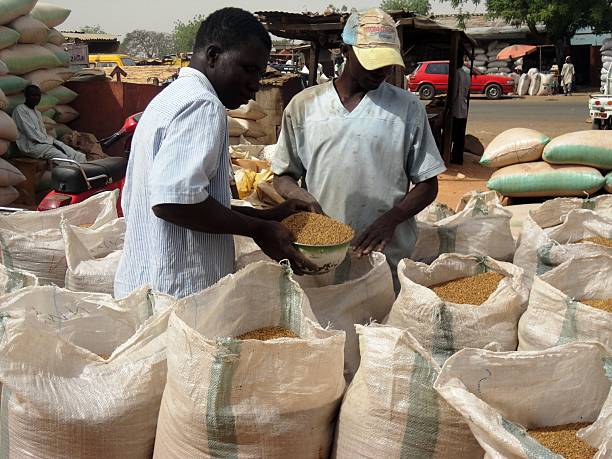
In the Agege area of Lagos, traders see the shift. Mrs Tolu Ajiboye confirmed that market stalls are now flooded with foreign brands.
During the recent Easter celebration, a 50kg bag sold for ₦63,000. Now, that same bag costs between ₦51,000 and ₦55,000 depending on the brand.
Because of this, some local producers have started rebagging their rice. They use foreign packaging to make sure their products actually sell.
Raphael Hunsa is the Lagos State Chairman of the Rice Farmers Association of Nigeria. He wants the government to provide better support.
If the government takes the plight of local farmers seriously, we will still have more farmers in business, Hunsa stated.
Cattle Prices Surge to Record Highs
While rice prices are falling, the meat industry faces a different crisis. The price of a single cow in Lagos has reached ₦2.5 million.
In 2025, the same animal cost about ₦1.7 million. This represents a massive jump that is placing pressure on both butchers and their customers.
Alhaji Bamidele Kazeem is the Patron of the Lagos State Butchers Association. He described the current market as a very tough terrain.
The car I bought in 2020 for ₦2.1 million is now cheaper than the price of a cow, Kazeem said.
He noted that cows priced at ₦1 million have disappeared. This makes it nearly impossible for many small-scale traders to stay in business.
Furthermore, supply from northern Nigeria has reduced. The country still depends on the north for the majority of its livestock needs.
Local producers in Lagos cannot bridge this gap yet. This is because state-led feedlots and ranching programmes have not fully started.
One major project is the Eko Ranching initiative. This is located in Gbodu, Epe, and is intended to boost the local cattle supply.
The gains of the ranch are enormous. It will provide job opportunities for our teeming youths, Kazeem said.
Insecurity and Logistics Choke Supply
The rise in costs is not just about the animals. Insecurity in rural areas has made it dangerous to move livestock across state lines.
In addition, the recent hike in fuel pump prices has worsened the situation. Higher diesel and petrol prices make transportation very expensive.
Most cattle must travel hundreds of kilometres to reach Lagos. These logistics costs are passed directly to the final consumer at the market.
The supply has reduced because of insecurity in the country and the increase in fuel pump price, Kazeem explained.
Consequently, the butchers want the government to speed up local projects. They believe that local ranching is the only way to lower meat prices.
Without these interventions, meat may become a luxury. Many families are already struggling to afford basic protein for their daily meals.

 WhatsApp Channel
 Telegram Channel