




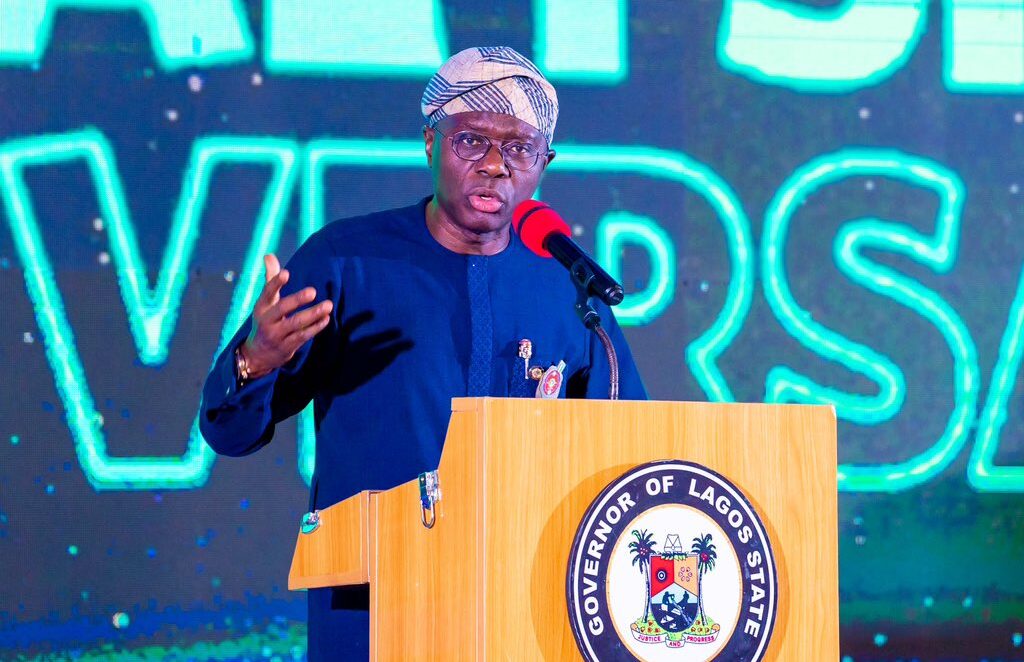
Governor Babajide Sanwo-Olu revealed on Monday that young residents in Lagos State contribute an estimated ₦4.5 trillion annually to the Gross Domestic Product (GDP).
He disclosed these figures during the Abuja Dialogue. The Office of the Vice President and the Lagos State Government organized the event.
The gathering focused on “Scaling Excellence: Youth Leadership as Strategic Infrastructure for National Transformation.” It served as a precursor to the upcoming Lagos Leadership Summit.
Federal Executive Council members and private sector stakeholders attended the session.
Consequently, the Governor used the platform to advocate for deeper investments in human capital.
Performance Over Potential in the Lagos Ecosystem
Sanwo-Olu expressed gratitude to Vice President Kashim Shettima for hosting the dialogue. He explained that the Lagos leadership model relies on the Lateef Jakande Leadership Academy (LJLA).
The state named this institution after Lateef Jakande, the first civilian governor of Lagos. He served from 1979 to 1983 and remains a symbol of transformative governance.
Through this fellowship, young Nigerians gain public sector immersion and mentorship. Furthermore, the statistics show a direct link between these programs and economic output.
“The results speak for themselves. Lagos youths contribute an estimated ₦4.5 trillion annually to our GDP,” Sanwo-Olu said during the event.
“70% of new businesses in Lagos are youth-founded ventures. These are not figures of potential; they are figures of performance,” he added.
The Call for National Human Infrastructure Funding
The Governor suggested that Nigeria needs a shift in how it views development resources. He compared leadership training to physical construction projects.
“If we can establish a national infrastructure fund for roads and bridges, then surely we can establish a national framework for building human infrastructure,” he said.
Meanwhile, Deputy Chief of Staff to the President, Senator Hassan Hadejia, supported this stance. He argued that institutions must remain responsive to youth development.
Earlier, LJLA Executive Secretary Ayisat Agbaje-Okunade called for a national consensus on empowerment. She advised authorities to foster alignment across all state and federal institutions.
Lagos continues to dominate subnational revenue generation in Nigeria. Specifically, the state economy expanded to ₦27.38 trillion in the first half of 2024.
This represents a significant jump from ₦19.65 trillion in 2023. Consequently, the youth contribution now accounts for a vital slice of one of Africa’s largest economic hubs.

 WhatsApp Channel
 Telegram Channel