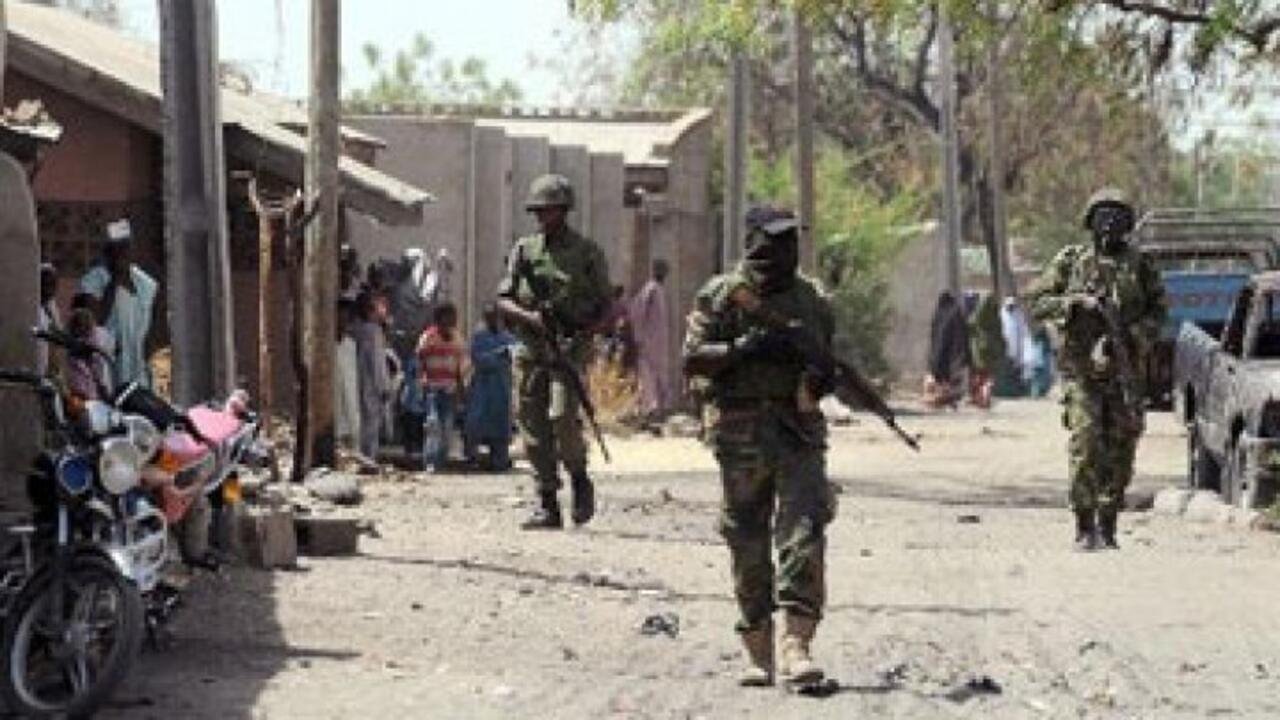




A renewed farmers-herders clash in Paikon-Kore, Gwagwalada Area Council of the Federal Capital Territory (FCT), has left at least three people dead and several others injured, with shops, houses and a motorcycle set ablaze.
The violence began on Saturday afternoon, October 17, 2026, and continued into Sunday morning, according to local reports..
The renewed fighting has revived fears of a wider conflict in the FCT, where similar disputes have repeatedly turned deadly.
A resident, Danlami Ibrahim, said the trouble started when herders allegedly allowed their cattle into a groundnut farm whose crops were not yet harvested.
The farm owner confronted the herders, triggering a heated argument. According to Ibrahim, one of the herders allegedly brought out a cutlass and attacked a farmer, severing one of his hands.
The injury sparked anger among residents, leading to a reprisal in which three herders were reportedly killed.
Market Burned, Victims Hospitalized
The violence also destroyed several shops at the Paikon-Kore village market. Wooden, zinc-built and container shops were burned, with smoke still rising from some of them when journalists visited .
Two houses and a motorcycle were also set ablaze.
Several injured victims were taken to hospitals in Gwagwalada. Some were treated at Sabon Nakowa Hospital, a private facility, while two others were seen at the accident and emergency unit of the University of Abuja Teaching Hospital.
The Secretary of the Miyetti Allah Cattle Breeders Association of Nigeria (MACBAN), Gwagwalada chapter, Mohammed Usman, confirmed the deaths.
“For now, information at my disposal shows that three herders lost their lives. That is what I can say for now, while I am yet to get the number of those who sustained injuries,” he said.
Chairman Visits, Convenes Stakeholders’ Meeting
Gwagwalada Area Council Chairman Kasim Mohammed Ikwa visited the affected community on Sunday alongside the Divisional Police Officer, SP Aaron H. Kaura, and other security operatives.
Ikwa condemned the violence and described it as unfortunate. He said the council would convene a stakeholders’ meeting on Monday to deliberate on the crisis and seek ways to prevent further violence.
He urged both warring parties to embrace peace and avoid actions capable of escalating tensions.
Farmers whose crops were damaged by cattle were advised by Ikwa to report such incidents to security agencies rather than resorting to self-help.
The chairman said youth leaders, the Sarkin Noma and other community leaders from both sides had been invited to an expanded security meeting to find a lasting solution.
Meanwhile, soldiers, police officers, vigilantes and personnel of the Nigeria Security and Civil Defence Corps (NSCDC) have been deployed to the community to restore calm.
The FCT Police Command spokesperson, SP Adeh Josephine, did not answer calls seeking the command’s reaction as of the time of filing this report.
A Repeat of August Violence
The latest clash follows an earlier incident on August 11, 2026, across Paikon-Kore, Ibwa and Rafin-Zurfi communities. During that violence, a farmer reportedly lost a hand and three other people sustained machete injuries.
After the August incident, Ikwa summoned an emergency security meeting and set up a peace and investigative committee.
He promised that the committee’s report would be made public during Monday’s stakeholders’ meeting.
Residents linked the August violence to cows that allegedly strayed into farms.
Ishaku Danjuma, a farmer, said “95 per cent of incidents of farmers and herders clashes across the three communities were as a result of cows straying into people’s farms.”
Grazing Reserve at the Center of the Dispute
The Paikon-Kore Grazing Reserve sits on about 9,500 hectares of land in Gwagwalada. Herders say much of the reserve has been encroached upon by surrounding communities .
In a 2024 investigation, herder Hussaini Hassan said farmers had cultivated land close to Fulani homes and farms. “During the rainy season, we don’t have cattle routes,” he said.
Suleiman Ahmad, secretary of the Ardon Paikon-Kore, said committees had been set up to delineate grazing routes, but disputes persisted.
The reserve has a history of tension. In June 2022, a crisis was averted when the then Minister of Agriculture, Dr Mohammad Mahmood Abubakar, visited to flag off a pasture development programme.
Youths and herders threw stones at each other during the event. Gbagyi farmers opposed the programme, calling instead for the reserve to be fenced.
Security Expert Calls for Early Warning Systems
Security analyst Dr Kabiru Adamu, chairman of Beacon Consulting, said the latest violence reportedly started after herders’ cattle entered a rice farm and fed on crops.
He said the farmers’ complaints allegedly led to an attack on them by the herders, triggering violence that spread across several settlements.
Adamu said recurring clashes in the FCT reflected a longstanding problem, recalling similar incidents in 2012, 2024, 2025 and earlier this year.
He called for stronger early warning systems and faster responses by security agencies.
“If early warning indicators had been picked up and then the response capability by our security forces had been deployed, the violence could have been prevented,” he said.
Adamu also stressed the need for an effective justice system to resolve disputes, particularly cases involving destruction of crops by livestock.
“If the justice system had stepped in and payment was made as compensation, perhaps we wouldn’t be where we are,” he said.
He urged security agencies to arrest anyone found to have taken the law into their own hands, regardless of whether they are farmers or pastoralists.
 WhatsApp Channel
 Telegram Channel