
A Nation on Edge
In the mid-1960s, Nigeria was still a young country, only a few years removed from independence in 1960. But beneath the excitement of freedom lay deep divisions—ethnic tensions, political rivalries, and mistrust among regions. The dream of unity was fragile.
The events of January 15, 1966, shook the nation. A group of young military officers carried out Nigeria’s first coup, assassinating key political leaders, including Prime Minister Abubakar Tafawa Balewa and Northern Premier Ahmadu Bello.
The coup was chaotic, and although its leaders claimed national interest, many Nigerians—especially in the North—viewed it through an ethnic lens.
Into this confusion stepped Major General Johnson Aguiyi-Ironsi, the most senior military officer at the time. He took control to restore order, becoming Nigeria’s first military Head of State.
At first, many saw him as a stabilizing force. As one observer later said, “Nigeria needed a firm hand, and Ironsi was the man who stepped forward when no one else could.”
But leadership in such a moment came at a cost.
The Man Behind the Uniform
Johnson Thomas Umunnakwe Aguiyi-Ironsi was not just a soldier; he was a man shaped by discipline, loyalty, and a deep belief in unity. Born in 1924 in Umuahia, he joined the army at a young age and rose steadily through the ranks during colonial rule.
He served in the British West African Frontier Force and gained respect for his professionalism. By the time Nigeria became independent, Ironsi had already built a reputation as a capable and dependable officer.
Those who knew him often described him as calm but firm.
One colleague once remarked, “Ironsi did not speak loudly, but when he spoke, people listened.”
As Head of State, he faced an almost impossible task—holding together a country already drifting apart.
Decree No. 34 and the Fire It Sparked
One of Ironsi’s most controversial decisions was the introduction of Decree No. 34 in May 1966. This decree aimed to abolish Nigeria’s federal structure and replace it with a unitary system of government.
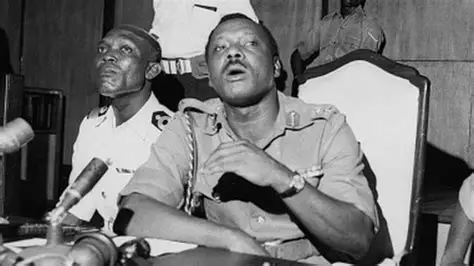
To Ironsi, this was a step toward unity. He believed that removing regional divisions would strengthen the nation.
He reportedly argued, “Nigeria must move beyond tribal loyalties if it is to survive.”
But many Nigerians, particularly in the Northern Region, saw it differently. They feared domination and loss of regional autonomy. Suspicion grew. Anger simmered.
What Ironsi intended as a unifying move instead deepened existing divisions.
As one historian later noted, “In trying to force unity, he may have unintentionally accelerated disunity.”
The Road to Ibadan
By July 1966, Nigeria was tense and unstable. Rumors of revenge filled the air. Within the army, resentment had grown, especially among officers who believed the January coup had unfairly targeted Northern leaders.
Ironsi embarked on a nationwide tour to calm the situation and reassure Nigerians that the country was still intact.
Despite warnings, he traveled to Ibadan on July 29, 1966, where he stayed at Government House with Lt. Col. Adekunle Fajuyi, the Military Governor of the Western Region.
Ojukwu and others had advised against the trip.
“Do not go,” they warned. “The situation is not safe.”
But Ironsi believed otherwise.
“Everything is under control,” he insisted.
Those words would echo tragically in the hours that followed.
The Night of Betrayal
In the early hours of July 29, soldiers surrounded Government House in Ibadan. The atmosphere was tense, heavy with uncertainty and fear.
The mutiny had begun.
Led by officers including T.Y. Danjuma, the soldiers stormed the residence. Communication lines were cut. Attempts to reach key figures, including Yakubu Gowon, failed.
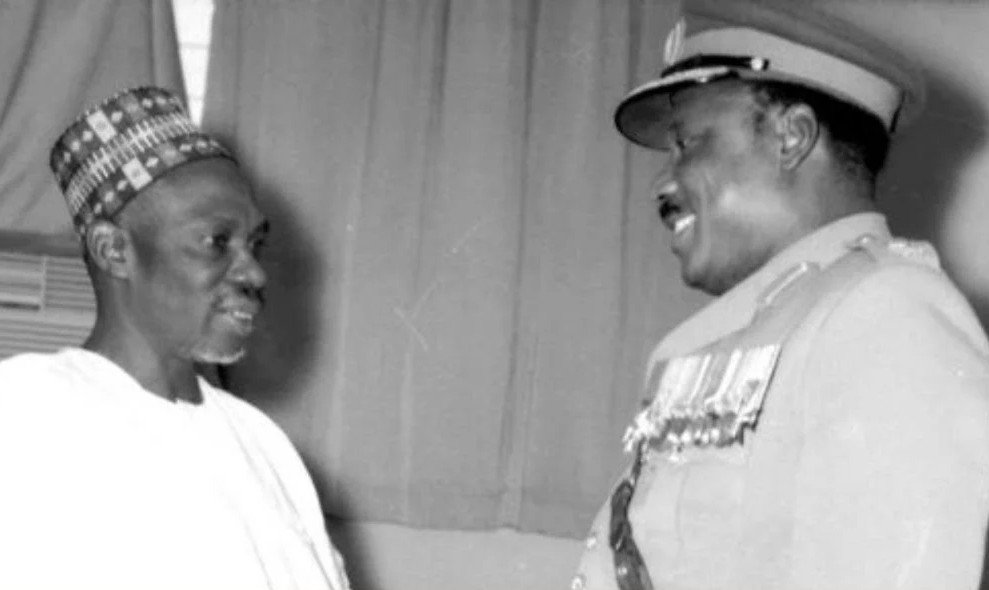
Ironsi and Fajuyi were taken.
Fajuyi had a choice—he could have stepped aside. But he refused to abandon his guest.
As later recounted in Nigerian history, “Fajuyi chose honor over life.”
Both men were led away into the unknown.
That moment became one of the most powerful symbols of loyalty in Nigerian history.
Death in the Shadows
What followed remains one of the darkest chapters in Nigeria’s story.
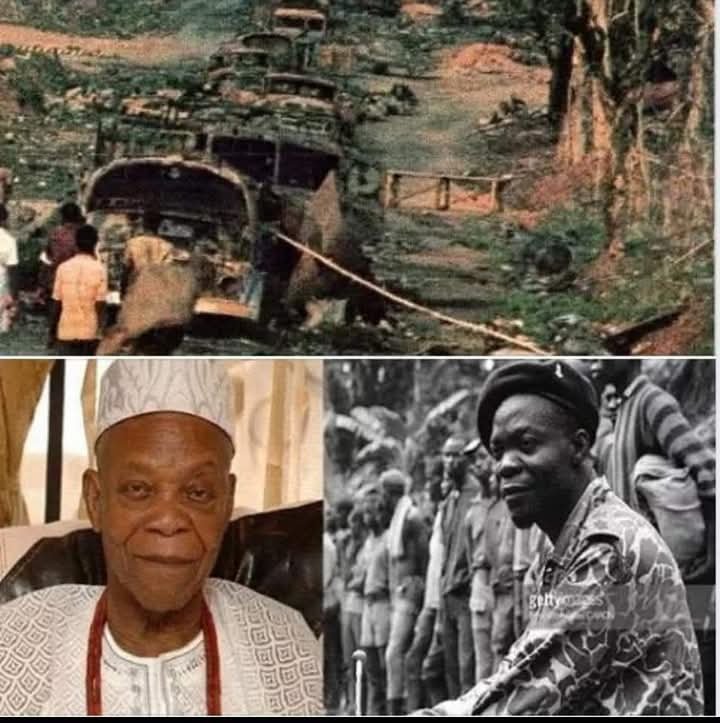
Ironsi and Fajuyi were taken to a nearby forest, where they were killed. The details of their deaths were brutal and humiliating, reflecting the anger and chaos of the time.
There was no dignity in how they died. No ceremony. No farewell.
For days, uncertainty surrounded their fate.
As one account described it, “They disappeared into silence, and the nation held its breath.”
Eventually, their bodies were discovered.
Nigeria had lost its first military Head of State.
A Burial Delayed, A Nation in Mourning
Ironsi’s death was not immediately honored with the dignity he deserved. In fact, his burial became a story of its own—one marked by delay, movement, and eventual recognition.
He was first buried in a shallow grave in Ibadan.
Later, his remains were moved to a cemetery.
But it was not until January 25, 1967, that he received a proper state funeral in his hometown, Ibeku-Umuahia.
This final burial was made possible largely through the insistence of Lt. Col. Odumegwu Ojukwu, who believed Ironsi deserved honor.
At the funeral, grief was heavy.
His wife, Victoria Ironsi, dressed in black, kissed his coffin in anguish.
A witness recalled, “There was a silence that spoke louder than any cry.”
The Meaning of His Life and Death
Ironsi’s story is complex. To some, he was a unifier who tried to hold Nigeria together at its weakest moment. To others, his decisions contributed to the tensions that followed.
History does not always give simple answers.
What is clear, however, is that he lived in a time when leadership required impossible choices.
As one commentator reflected, “Ironsi carried the weight of a nation, and in the end, it crushed him.”
His death also marked a turning point. It deepened mistrust, accelerated division, and set Nigeria on the path toward civil war.
Lessons for Young Africans
For young Africans today, Ironsi’s story offers more than history—it offers reflection.
Leadership is not just about power; it is about understanding people, timing, and consequences.
Good intentions do not always lead to good outcomes.
And unity cannot be forced—it must be built.
As one elder once said, “A nation is not held together by laws alone, but by trust.”
Ironsi tried to build that trust, but the moment may have been too fragile.
Remembering, Not Forgetting
Today, Major General Johnson Aguiyi-Ironsi remains a significant figure in Nigerian history. His name is remembered in military circles, in textbooks, and in conversations about the country’s past.
But remembering him is not just about honoring one man.
It is about understanding a moment that shaped a nation.
It is about asking difficult questions.
And it is about ensuring that history becomes a guide, not a cycle.
“If we do not learn from our past,” a historian once warned, “we risk reliving it.”
Rate, Like 👍, Comment💬, share this article and Follow us on our social media handles. You can also Submit your own story to get featured and earn rewards!
Feel free to download and share our Daily Newsletter for Friday, March 14, 2025. 👇