



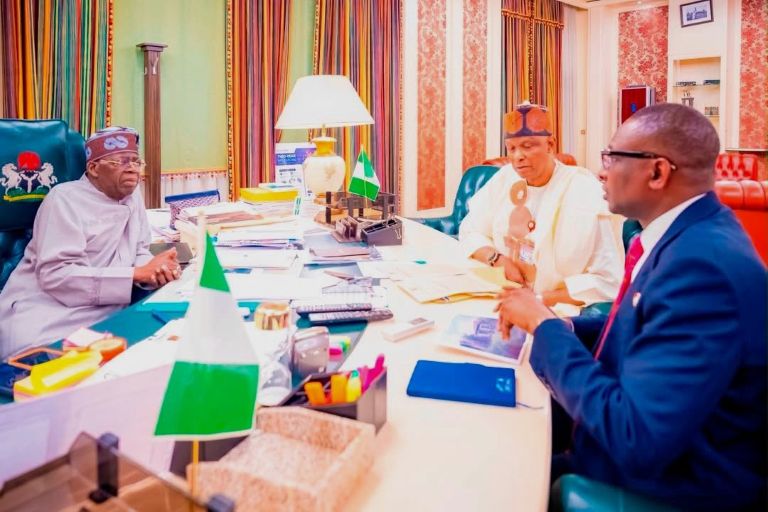
President Bola Tinubu met with the Chairman of the Economic and Financial Crimes Commission (EFCC), Ola Olukoyede, and the Minister of Housing and Urban Development, Muttaqha Rabe Darma, at the State House in Abuja on Tuesday.
The meeting focused on how to manage and dispose of houses seized by the EFCC during anti-corruption operations.
These properties, scattered across Nigeria, were recovered from individuals linked to financial crimes and illicit activities.
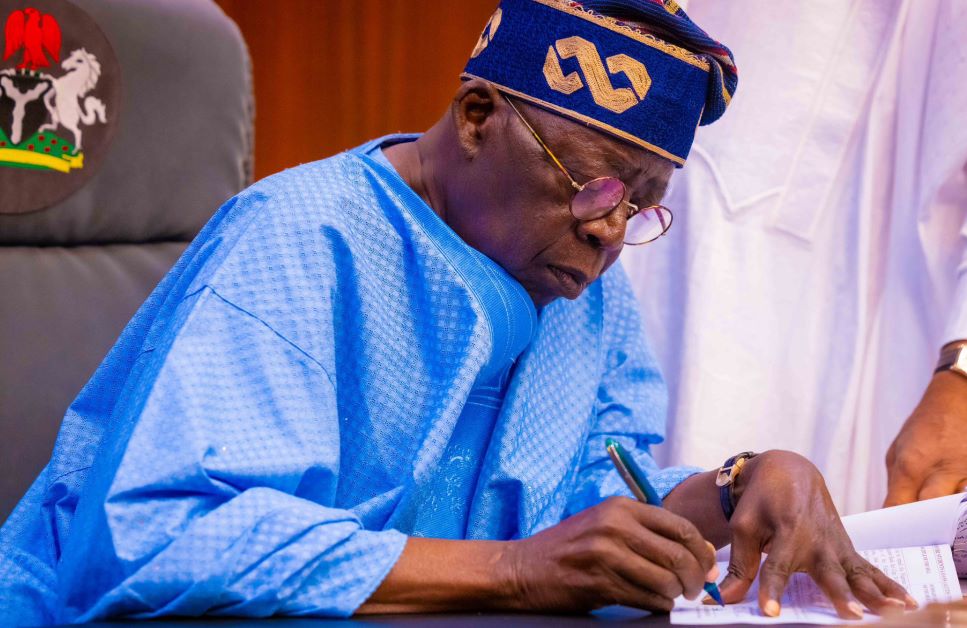
Tinubu’s administration has repeatedly insisted that recovered assets must be handled with transparency. The President told the officials that accountability in the disposal process was essential to restore public trust.
The EFCC, established in 2003, is Nigeria’s leading anti-graft agency. It has seized hundreds of properties over the years, ranging from luxury homes to commercial buildings.
Many of these assets have remained unused due to legal disputes or bureaucratic delays.
Housing Minister Darma explained that the ministry’s involvement was to ensure seized houses are properly integrated into Nigeria’s housing policy.
He said the government wants to avoid situations where recovered assets deteriorate or are mismanaged.
Olukoyede added that the EFCC was committed to working with the ministry to ensure that disposal of assets follows due process.
He said “our responsibility is to ensure that every recovered property benefits Nigerians and does not return to criminal hands.”
Backstory Of Seized Properties
Over the past decade, the EFCC has recovered assets worth billions of naira from corruption cases. These include mansions in Abuja, Lagos, and Port Harcourt, as well as estates linked to former public officials.
In many cases, the properties have been left idle while court proceedings dragged on. Critics have argued that the lack of clear disposal policies has allowed valuable assets to waste.
Tinubu’s government has promised to change this by creating a transparent framework for asset disposal. The administration believes that recovered houses can be converted into public housing, government offices, or sold to raise revenue.
Officials said the collaboration between EFCC and the Housing Ministry would create a system where seized houses are catalogued, valued, and either sold or repurposed.
This development signals a shift in how Nigeria handles recovered assets. By involving the Housing Ministry, the government is linking anti-corruption enforcement with housing policy.
Analysts believe this could help reduce Nigeria’s housing deficit, which affects millions of citizens. It may also boost public confidence in the EFCC, which has often faced criticism over its handling of seized properties.

 WhatsApp Channel
 Telegram Channel