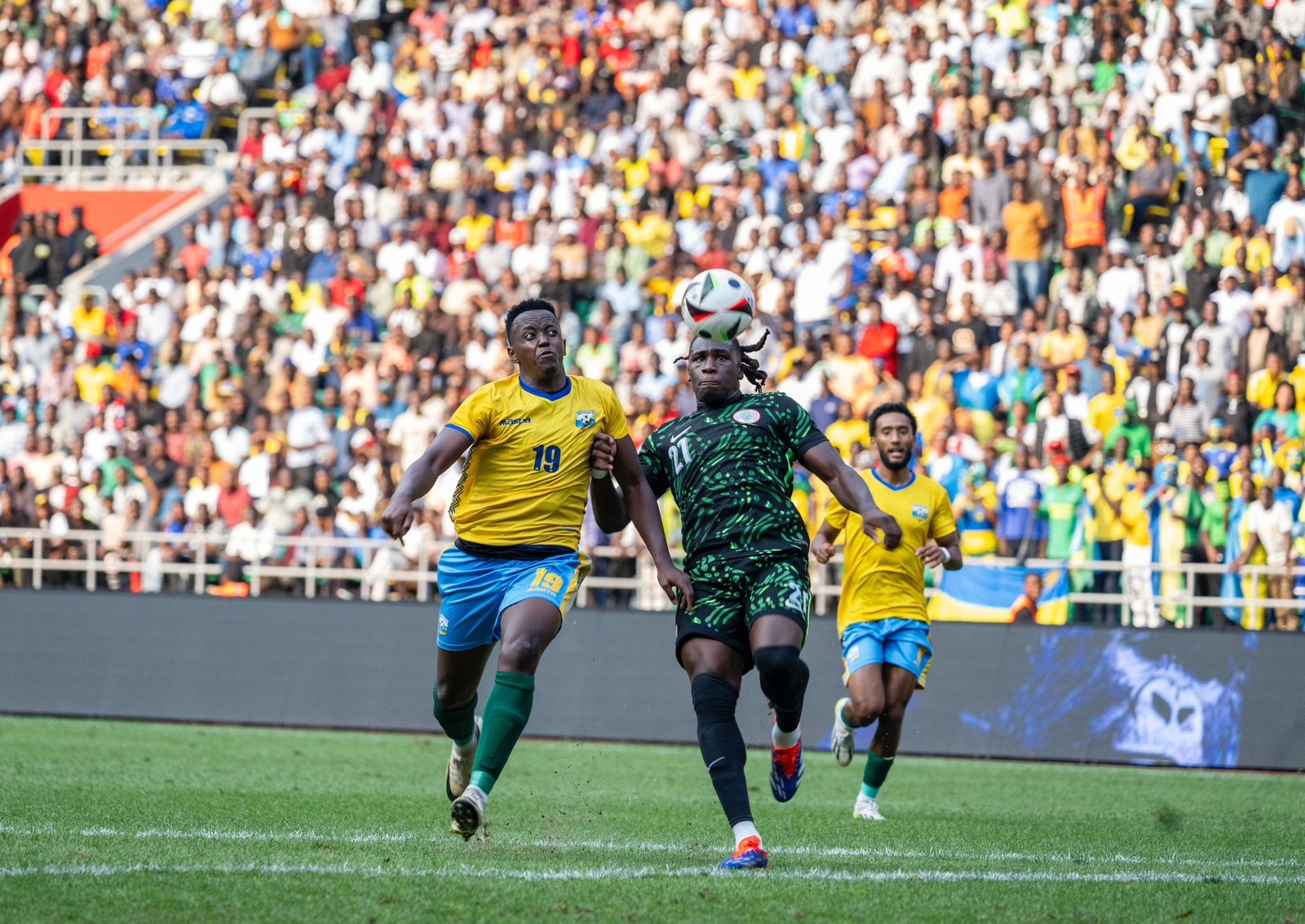



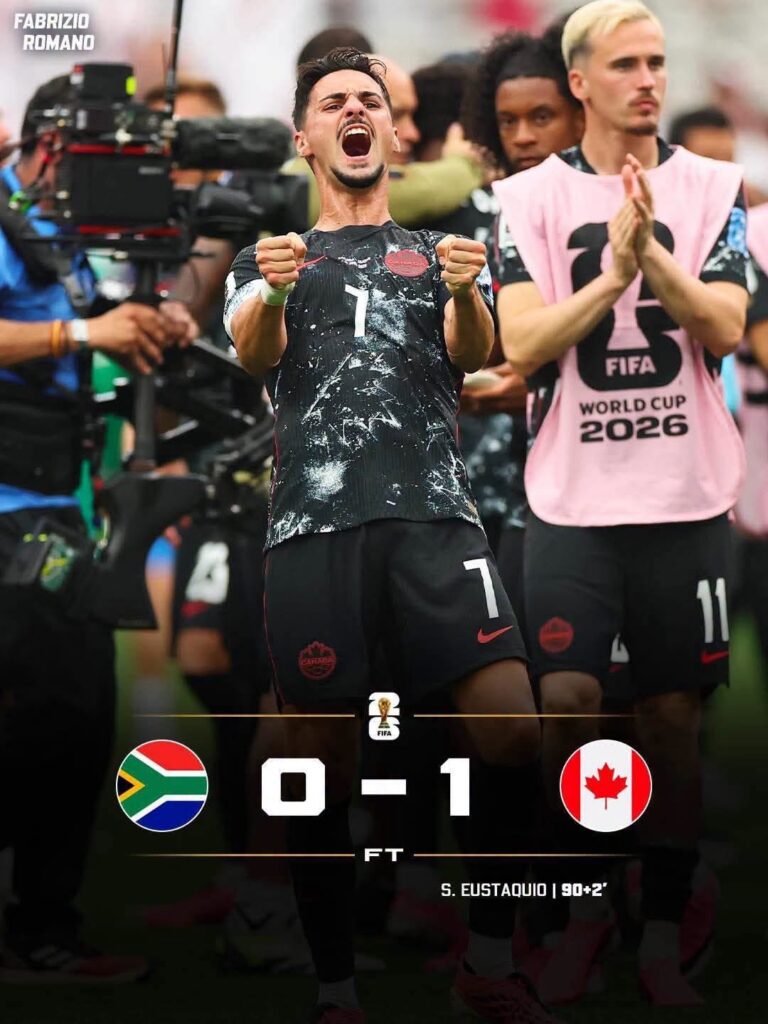
It was one second-half moment that changed everything. With time almost up, Stephen Eustáquio drove home a stoppage-time goal at the Los Angeles Stadium on Sunday, June 29, to send co-host Canada into the 2026 FIFA World Cup Round of 16 for the first time in the nation’s history.
The final score was Canada 1–0 South Africa. Both teams had entered the match having already made history — it was the first knockout-stage appearance for each nation.
For Canada, the win meant progression. For South Africa’s Bafana Bafana, it meant a painful exit, but not without honour.
The atmosphere inside LA Stadium, shared between fans of both sides, was electric throughout. Canadians had travelled far, many unable to secure tickets in Vancouver where their team is based as a co-host.
“I’m in Vancouver too, and I wasn’t able to get tickets there, but here we are,” one supporter told FOX 11.
“I’m just happy to see Canada play. We’re happy to be here. It worked for us because we’re in San Jose, so it’s easier to get here than to fly back to Toronto,” said another.
For many South African supporters, simply being at a FIFA World Cup knockout match was itself the reward. South Africa last qualified for the tournament in 2002.
Their 2010 appearance came as hosts — meaning Sunday was, in real competitive terms, the furthest Bafana Bafana had ever gone.
Hugo Broos Proud Despite Painful Exit
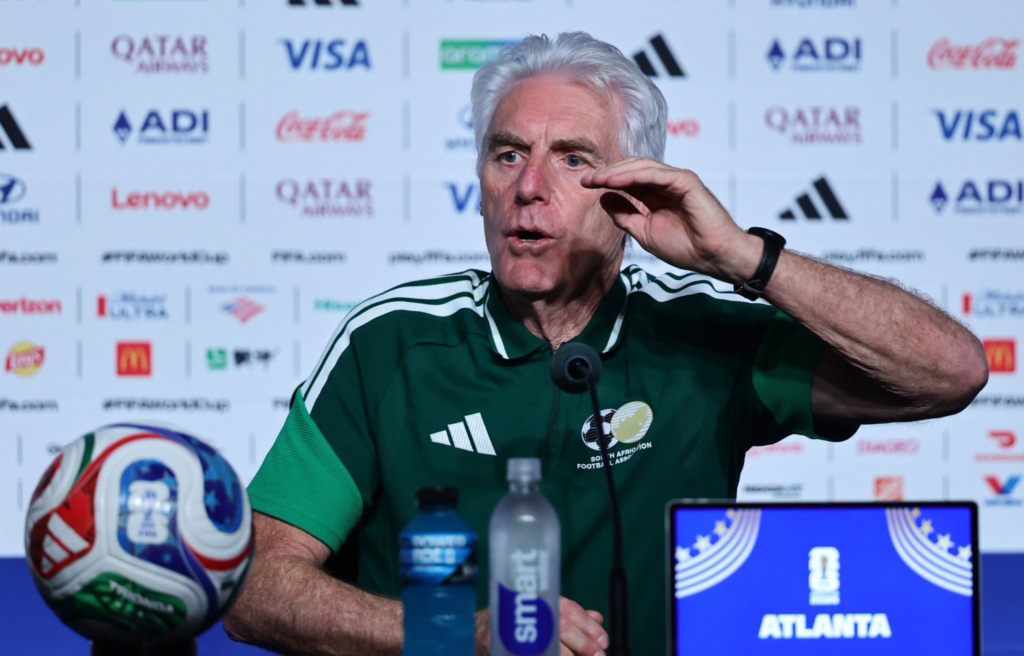
South Africa head coach Hugo Broos — the 74-year-old Belgian who also led Cameroon to the 2017 Africa Cup of Nations title — was candid after the defeat.
“Nobody expected us to be in the second round. They only hoped that we’d get there. But when we look back, I think we can be very satisfied with what we did at the World Cup.”
He was equally generous about Canada, whose speed and physicality proved the difference.
“I think Canada have a chance because they play good football. They are powerful. There’s speed in the team. So it’s a rather modern team. And with their mentality, they can cause a surprise.”
Broos acknowledged that South Africa needed to evolve. “Modern football is more than technique. Modern football is power, speed. And when you don’t have it in your team and you play against the team who has it, then it’s difficult.”
He remained proud of his squad regardless. “I’m still proud of my team even though we’re out of the tournament. I know why we are out and this is something we have to work on in the next months and years.”
Social Media Goes Wild as “Go Bek” Trends Online
Canada’s win triggered a wave of reactions across X, with the phrase “Go Bek” — internet slang used to mock the South Africans whose country have been in the news for xenophobic attacks against African immigrants in their country, often shouting at them to “go back to your country“. Nigerians, most hit by the South African xenophobia were among the loudest voices online.
Nollywood actor Charles Awurum posted: “Go home and take care of your job and women.” Reality TV star Groovy wrote simply: “TIME TO GO BEK!”
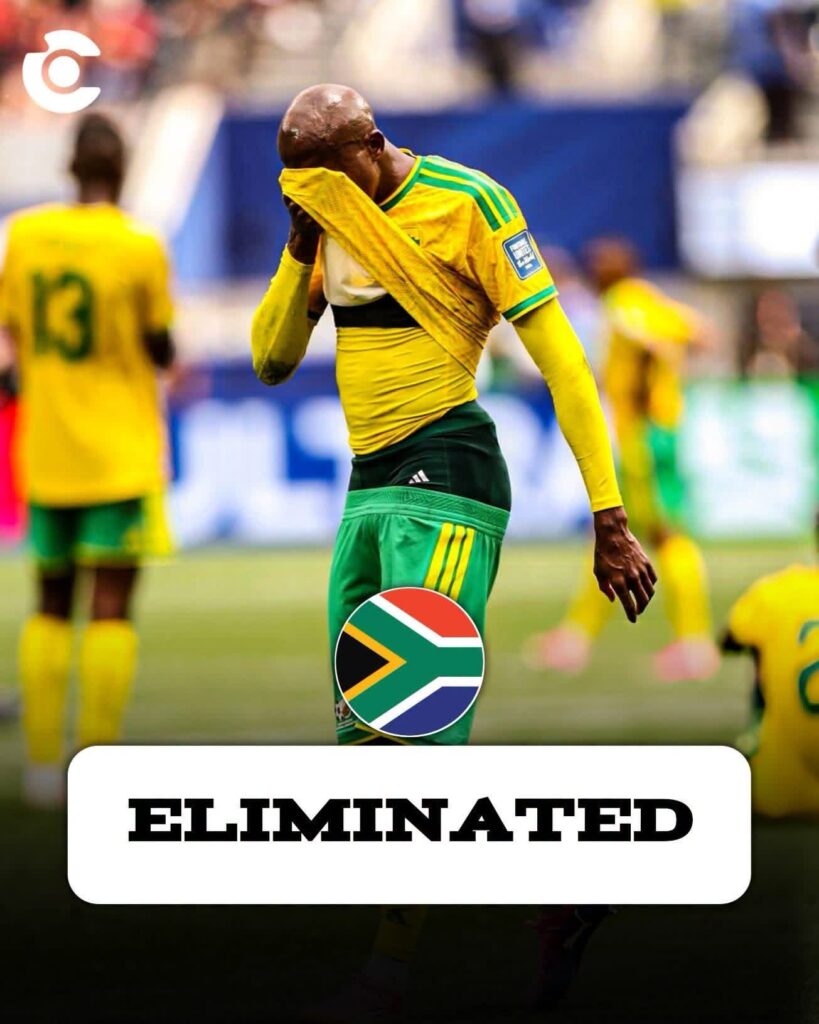
Not everyone joined the mockery, though. X user Nandi pushed back, writing: “I hope the rest of Africa is happy now that South Africa has been knocked out of the World Cup. Was this really what you wanted?”
Most serious football fans were quick to separate the online banter from the bigger picture. South Africa’s campaign was a genuine milestone — the first time Bafana Bafana had reached the knockout stage in a World Cup they did not host.
Canada next face the winner of the Netherlands versus Morocco clash in Monterrey. Elsewhere on Monday, Brazil take on Japan in Houston, Germany face Paraguay at Boston Stadium, and the Netherlands–Morocco tie concludes the day.
South Africa made history reaching the Round of 32 — but Nigerians and other Africans led the online trolling when they were knocked out. Does the “Go Bek” trend reveal a silent rivalry between African countries, and is this the kind of unity African founding fathers like Mandela envisaged? Share your thoughts in the comments section.