


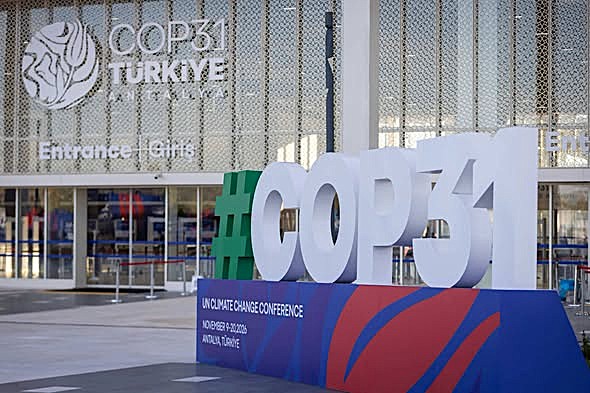
United Nations climate negotiations in Antalya, Turkey, have ended without an overarching agreement after countries failed to resolve disagreements over fossil fuels and climate finance.
The two-week COP31 conference concluded on Sunday, November 22, after running more than 50 hours beyond its scheduled closing time.
Negotiators could not agree on the final text, particularly over whether it should explicitly address the use of coal, oil and natural gas.
The dispute exposed deep divisions between countries seeking stronger commitments on fossil fuels and those opposing their inclusion in the final agreement.
Fossil Fuels Become the Main Point of Disagreement
According to the Associated Press (AP), the final proposal from the Turkish-Australian leadership did not contain the words “fossil fuels” or establish a new commitment to reduce dependence on coal, oil and gas.
The European Union and several other countries rejected the proposed text.
Russia and Saudi Arabia were among the countries that opposed references to fossil fuels.
Ireland’s Climate Minister, Darragh O’Brien, speaking on behalf of the European Union, said: “It’s unconscionable that we would have a climate act that makes no reference to fossil fuels.”
United Nations Secretary-General António Guterres also expressed disappointment over the outcome.
“I am deeply disappointed that COP31 has ended without consensus on an overarching outcome,” he said.
“Temperatures keep shattering records. Climate extremes keep intensifying. Emissions remain far too high. And every delay makes our task harder and more costly.”
Climate Finance and Other Issues Remain Unresolved
The disagreements extended beyond fossil fuels.
Countries also failed to settle important questions about financial support for poorer nations facing the effects of climate change.
Several issues were deferred to the next round of negotiations in Ethiopia.
However, the conference recorded progress on some separate initiatives.
Turkey promoted a global electrification proposal seeking to increase electricity’s share of total final energy consumption from about 21% to 35% by 2035.
Nearly 100 countries supported the separate goal.
The talks also recorded progress on adaptation goals and work to help countries reduce emissions.
Australia’s Climate Minister Chris Bowen, who served as president of the negotiations, described the failure to reach an agreement as disappointing.
He maintained that the transition away from fossil fuels was already taking place.
“Transition away from fossil fuels in the real world is happening. It’s happening. It’s happening at speed and it’s irreversible,” Bowen said.
The failure to reach an overarching agreement leaves several major climate issues for governments to address at the next conference.





Countries may have different economic interests, particularly when it comes to fossil fuels, but delaying meaningful action only make the problem harder to tackle
That is a very good decision to make, anyway i like that just believe and make it happen
This is the best thing that anyone should have do,in anything you do just believe in the process and trust in God