

A new COVID-19 variant is spreading across continents, and Nigerian health experts are asking the public to stay alert. The Academy of Medical Sciences of Nigeria has issued a public health advisory on PJ.2.1, a descendant of the Omicron JN.1 family.
The World Health Organisation (WHO) has classified PJ.2.1 as a “Variant Under Monitoring.” Its current assessment indicates a low additional global public health risk.
The variant was first detected in Ontario, Canada, on May 2, 2026. It has since been reported in the United States, Canada, Spain, France, the Netherlands, Israel, Singapore, Brazil, Argentina, Australia, and New Zealand.
As of November 8, 2026, the WHO had counted sequences from 18 countries.
The advisory was signed by Prof. Boaz Adegboro, Chairman of the Academy’s Rapid Response Committee, and Academy President Prof. Joseph Ahaneku.
Preliminary studies suggest PJ.2.1 may spread more efficiently than some other circulating Omicron sub-lineages. However, there is no evidence that it causes more severe illness.
Early laboratory findings indicate that existing COVID-19 vaccines remain effective against the variant. Antibodies generated by updated vaccines can neutralise it.
The variant carries about 24 changes in its spike protein compared with its parent lineage. Laboratory studies suggest stronger binding to the human ACE2 receptor and more efficient entry into cells. This could give it a transmission advantage.
Symptoms include sore throat, fever, cough, runny or blocked nose, fatigue, headache, muscle aches, and chills. Some patients report severe sore throats and prolonged fatigue.
No Cases in Nigeria Yet
As of the advisory, there has been no public report of PJ.2.1 in Nigeria. The Nigeria Centre for Disease Control (NCDC) continues routine surveillance and has reported sporadic confirmed cases during 2026.
However, the Academy warned that the absence of reports should not be taken as absence of the variant. Genomic sequencing in Africa is limited.
“Because genomic sequencing in Africa is limited, absence of reports should not be taken as absence of the variant,” the advisory said.
With the festive season approaching, the Academy advised Nigerians returning from countries where the variant has been reported to monitor their health for 10 days after arrival.
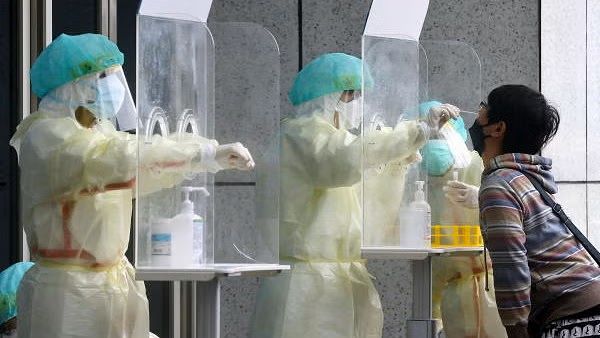
They should seek testing promptly if respiratory symptoms develop.
It recommended staying home when unwell, getting tested, wearing well-fitting masks in crowded indoor places, and washing hands frequently.
People aged 60 and above, those with underlying conditions, pregnant women, and people with obesity are at higher risk.
The Academy said available evidence did not justify travel bans. Its message is not to panic but to be vigilant.
“Stay home when unwell. Anyone with fever, cough, sore throat or flu-like illness should avoid work, school, church/mosque and social gatherings until well,” the advisory said.
It also called on the Federal Ministry of Health and the NCDC to intensify genomic surveillance and strengthen testing at points of entry during the festive travel period.