

Two opposition candidates want to bring back fuel subsidies. A policy group wants to know how they will pay for it.
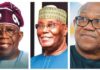
The Independent Media and Policy Initiative (IMPI) has challenged Atiku Abubakar and Peter Obi to explain their fuel subsidy restoration plans.
Atiku is the presidential candidate of the African Democratic Congress (ADC). Obi is the flagbearer of the Nigeria Democratic Congress (NDC).
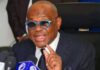
IMPI made the call in a statement signed by its Chairman, Dr Omoniyi Akinsiju. The group asked both candidates to present clear and financially sustainable alternatives to the current fuel pricing regime.
Akinsiju said the proposals look appealing on the surface. However, he said they lack detail on implementation. He argued they would put extra pressure on public finances.
“Political campaign promises must be anchored on rigorous policy logic rather than economic illusions designed for temporary electoral appeal,” he said.
IMPI challenged Atiku and Obi to a public debate. The group listed six areas for questioning: crude ownership, revenue losses, arbitrage, smuggling, the legal framework and budgetary transparency.
The Hard Questions On Crude And Revenue
On crude ownership, Akinsiju asked how a government would force international oil companies and private producers to sell crude to domestic refiners at discounted rates.
“How do you intend to compel joint-venture international oil companies (IOCs) and private crude producers—who own significant equity shares in Nigerian crude oil—to sell their commercial assets to domestic refiners at government-mandated discounted rates without triggering massive international arbitration, breaching contracts, and causing investor flight?” he asked.
He also questioned the impact on revenue shared among the three tiers of government.
Crude oil sales are a major source of foreign exchange and revenue for the Federation Account Allocation Committee (FAAC).
“With crude oil sales serving as the main source of foreign exchange and revenue for the Federation Account Allocation Committee (FAAC), how will your administration cover the trillions of Naira in monthly revenue shortfalls to states and local governments that a ‘crude discount’ or ‘production subsidy’ will inevitably cause?” Akinsiju asked.
On smuggling, he asked what mechanisms would stop discounted crude or subsidised products from being diverted across borders for profit.
“Under a deregulated regional market, what specific administrative mechanisms will you put in place to prevent discounted domestic crude or subsidised refined products from being diverted across borders for profit?” he asked.
Legal And Budget Questions
Akinsiju also challenged the legality of returning to price controls. The Petroleum Industry Act (PIA) 2021 enforces full deregulation and market-driven pricing in the downstream sector.
“How do you plan to reconcile a return to price-fixing or crude price differentials with the explicit statutory mandates of the Petroleum Industry Act (PIA) of 2021, which legally enforces full deregulation and market-driven pricing in the downstream sector?” he asked.
He further questioned whether the proposed subsidy arrangements would be captured in the national budget.
“Will your proposed support differentials be explicitly captured in the national budget passed by the National Assembly, or do you intend to revert to off-budget, unappropriated under-recovery deductions by NNPC Limited that previously depleted public finances and ballooned ‘Ways and Means’ debt?” he asked.
Akinsiju said Nigerians deserve detailed proposals, not campaign slogans. He warned that re-entering a subsidy regime under any name would reverse recent fiscal gains.
“Re-entering a subsidy regime under any name—whether branded as a ‘production subsidy’ or an ‘interim welfare bridge’—threatens to reverse hard-won fiscal stability, endanger international credit standing, and derail the long-term path toward energy independence driven by domestic refining and local currency crude transactions,” he said.
He asked both candidates to provide a step-by-step implementation roadmap before the 2027 general elections.
“So we challenge Alhaji Atiku Abubakar and Mr Peter Obi to move beyond generalized criticism and present a step-by-step, empirically backed implementation roadmap that addresses these fundamental questions before the Nigerian public,” Akinsiju added.

 WhatsApp Channel
 Telegram Channel