



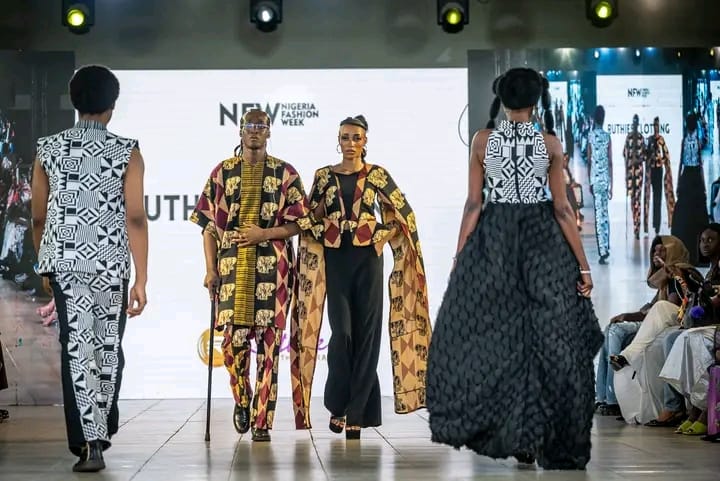
Nigeria Fashion Week 2026 drew to a close on Sunday, 4 October 2026, marking the first time in its history that the event was held in Abuja rather than Lagos.
The four-day showcase ran from 1 to 4 October at the Soul Lounge Resort in Jahi, forming part of activities marking Nigeria’s 66th Independence anniversary.
More than 40 Nigerian and international designers participated in this year’s edition, showcasing collections that blended traditional textiles with contemporary silhouettes.
The event was organised by Legendary Gold in partnership with the Federal Ministry of Art, Culture, Tourism and the Creative Economy.
The Final Day
Sunday’s finale shifted focus from the runway to the business of fashion.
The Nigeria Fashion Entrepreneurial Forum ran from 9 am to 4 pm, bringing together policymakers, financial institutions, fashion entrepreneurs and international buyers.
Organisers said the forum aimed to move beyond showcasing clothing to discussing how designers can turn creative work into sustainable businesses and access larger markets.
The Awards and Gala
The event climaxed with the Nigeria Fashion Awards and Gala Fashion Night at 6 pm on Sunday.
The awards recognised individuals and stakeholders who have contributed to the development of Nigeria's fashion industry.
The decision to move the event from Lagos to Abuja was deliberate.
Lexy Mojo-Eyes, Chief Executive Officer (CEO) of the event, said the relocation was intended to provide designers with a wider platform and strengthen opportunities within Nigeria's fashion industry.
He told Agence France-Presse (AFP): “We want to change the dynamics, we want to build Abuja as a fashion city“.
Carnival-Inspired Collections
Models donned outfits featuring seemingly impossible amounts of fabric, folded and moulded into massive silhouettes or overlapping in shingled, feather-like patterns.
The colourful, detailed textiles evoked Carnival — both Nigeria’s own in Calabar and that of Rio de Janeiro — but were in fact splashing down a runway in Abuja, a city better known as the seat of government than as a home of avant-garde couture.
Libyan designer Rabia Ben Barka, considered the doyen of Libyan fashion, showed shimmering dresses and described Abuja on her first trip to Nigeria as “so clean” and organised.
Government Support
Hannatu Musawa, Minister of Art, Culture, Tourism and the Creative Economy, said the fashion industry can significantly drive job creation and national economic growth if provided with strategic attention and investment.
She said the government would focus on policies, infrastructure, funding and partnerships with the private sector to strengthen the fashion industry.
Mojo-Eyes announced that Nigeria Fashion Week would henceforth be held annually in Abuja from 1 October, giving the Federal Capital Territory a prominent place on the international fashion calendar.