





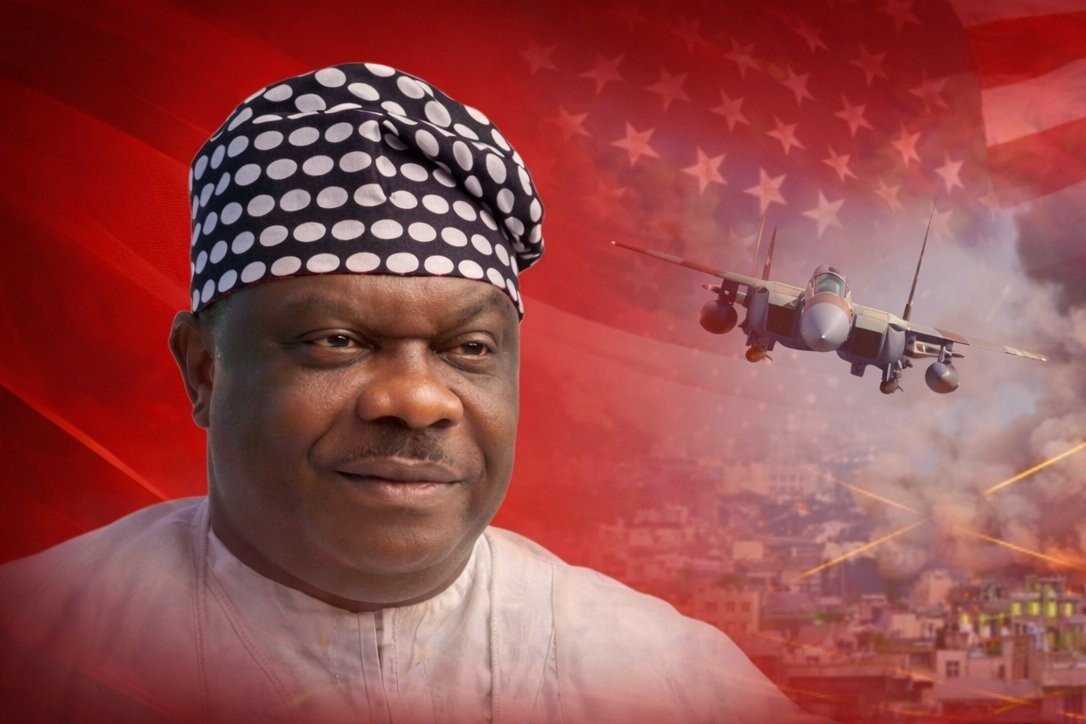
Former Attorney General of the Federation, Mike Aondoakaa, has warned that allowing states to independently procure arms for their proposed state police forces could create confusion, calling instead for central control of military and paramilitary equipment.
Speaking during an interview on ARISE News on Monday, Aondoakaa said the procurement of equipment for state police should be subject to a legal framework that guarantees proper oversight.
“You cannot allow 36 states to go buying equipment directly from the international market to arm their policemen. There should be a level of control,” he said.
Aondoakaa suggested the legal framework could route arms procurement through the National Security Adviser (NSA), a presidential appointee responsible for coordinating Nigeria’s security and intelligence agencies, arguing that this would allow proper tracking of arms supplied to individual states.
“The requirement for the procurement of equipment, military and paramilitary equipment, should be controlled, possibly subject in the framework, legal framework should be through the national security adviser so that we can know this type of arms went to the state, this type of arms went to the state,” he said, adding: “It will be a lot of confusion if 36 states go to the market and import arms for their state police.”
Recruitment Also Needs Safeguards Against Political Interference
Aondoakaa identified recruitment as another area requiring safeguards, particularly to prevent political interference in the establishment of state police forces.
“The key areas I would like to observe that must be taken care of, the issue of recruitment, to avoid politicians breaking the laws to become state police officers,” he said.
He said the issue should be addressed through federal legislation to prevent politicians from controlling state police recruitment. “Politicians are not allowed to come and put people who are not worthy of being police officers,” he said.
Despite his concerns about possible abuse, Aondoakaa described the establishment of state police as a positive development, recalling that the idea had first been proposed during Nigeria’s 2009 constitutional reform process, in which he took part.
“State police is an idea that in 2009, during the first constitutional reforms, we brought the idea of state police because of the enormous challenges facing the federal police in policing the country. Unfortunately, we could not see it through. Luckily, the present government has been able to see it through and it’s a very good thing,” he said.
Concurrent List Status Seen As A Path To Joint Regulation
Aondoakaa said appropriate regulation would be necessary to address concerns over the use and control of state police, but argued that concerns about possible abuse should not stop the project from proceeding.
“We cannot say we will not move on because of the apprehensions of state police because of abuses. What we can certainly do is that, luckily, it is being placed on concurrent lists. And the legal framework can be effectively done by the federal government and the state,” he said, referring to the constitutional arrangement under which both federal and state governments can legislate on shared subjects.
He added that mechanisms should also be built in to ensure greater independence in how state police operations are handled at the local level, concluding: “These are just a few observations, but I believe it’s a laudable project.”

 WhatsApp Channel
 Telegram Channel