





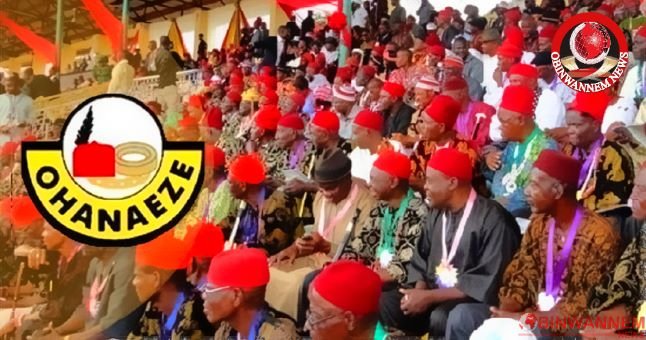
The controversy generated by the position of the Igbo Leaders of Thought (ILT) on the restructuring of Nigeria has provoked mixed reactions from South-West and northern leaders.
Some described aspects of the proposal as unrealistic and capable of causing political destabilisation.
The ILT had rejected the communiqué issued at the Abuja restructuring conference of August 20, 2026, accusing the organisers of disregarding the position of the Igbo delegation.
The group proposed a 10-region political structure for Nigeria, with regional control of resources and regional police, while calling for the temporary suspension of the 2027 general elections pending the completion of the restructuring exercise.
The ILT also proposed an enlarged Igbo Region extending beyond the five South-East states and called for the restructuring exercise to be completed before May 2027, after which elections would be conducted under a new constitutional arrangement.
The proposal has triggered a fresh debate over the structure of the Nigerian federation, the place of regionalism, the future of the existing 36-state arrangement, resource control, regional policing and the implications of delaying the 2027 elections.
Adejumo Says ILT Position Is Unrealistic
Mogaji Gboyega Adejumo, who led the South-West Zone to the Patriots Constitutional Conference in Abuja, said the position of the Igbo Leaders of Thought was unrealistic.
He argued that the various ethnic groups in Nigeria appeared to be struggling to identify the precise solution to the country’s structural problems .
Adejumo said the confusion was not peculiar to the Igbo but is indicative of the failure among Nigeria’s constituent groups to determine what they wanted from the Nigerian project.
“What I can say is this, the Igbo are as confused as any. Most of the tribes in Nigeria are in that kind of situation of confusion, of knowing absolutely what next to do,” he said.
He questioned what he described as inconsistencies in the ILT’s demands.
“Now, talking about what the Igbo have just put out. Is it any different from what was said at Aburi, that was rejected? You want resource control, you want this, you want that. You reject restructuring. So, what exactly do you want?” he asked.
Adejumo advised the Igbo Leaders of Thought to reconsider their approach and build alliances with other groups. “So, the Leaders of Thought should better go back and think very well about how the Igbo people can be liberated,” he said.
Afenifere Warns Regionalism Could Destabilise Nigeria
The Pan-Yoruba socio-political organisation, Afenifere, also rejected the proposal for regionalism, warning that it could create fresh political instability, particularly in areas with significant minority populations .
The National Publicity Secretary of the group, Justice Faloye, said the organisation remained committed to the resolutions of the 2014 National Conference.
“Until another wider representative sovereign conference is held, Afenifere stands on the 2014 Confab Resolutions, made up with a wide and balanced delegation, which, after thorough deliberations, agreed on States as Federating Units,” Faloye said.
Faloye warned that imposing regions from the federal level could create fresh tensions, particularly in the South-South and North-Central areas where communities might oppose being assigned to particular regions .
“Nigeria is made up of 371 ethnicities, so how do we allocate them to regions for representative governance?” he asked.
Afenifere Secretary-General, Chief Ademola Folarin, said the organisation was not part of the Abuja conference and had not changed its position on the 2014 Confab.
He said the resolutions supported retaining the federal and state structure, with possible additional states to accommodate minorities, alongside the devolution of powers including policing and mining.
ACF Says Election Suspension Call Is Unconstitutional
The Arewa Consultative Forum (ACF) rejected the call for the postponement of the election, stating that the constitution only permits such electoral delays under extreme conditions like war or civil unrest.
ACF spokesperson Professor Tukur Baba said the Igbo Leaders of Thought had no constitutional authority to halt elections or compel the country to adopt its preferred restructuring model.
Baba said proposals for constitutional change should be channelled through the National Assembly and state assemblies, adding that the forum had submitted recommendations during the constitutional review process .
He urged the ILT to engage the relevant state assemblies and pursue its demands through consultation, negotiation and constitutional procedures.
Baba said groups had the right to make recommendations and protest, but their demands must take account of the rights of other Nigerians.
OPC Rejects Proposal as Selfish
The Oodua People’s Congress (OPC) Worldwide also rejected the ILT’s proposal. Its Deputy National Secretary, Otunba Babatunde Thompson, described the call to suspend the 2027 elections as “complete selfishness and insensitivity”.
Thompson said the six geopolitical zones had served as the administrative basis for organising the country’s 36 states.
He added that recognised Igbo leaders like Second Republic Vice President Alex Ekwueme had joined other eminent Nigerians to propose the six-region structure.
The OPC called for a Sovereign National Conference to forge a new constitution that encapsulates the basis of Nigeria’s togetherness as one indivisible nation .

 WhatsApp Channel
 Telegram Channel


That halting of election was the big red flag, they would not have agreed to that because a lot of people are already on the edges of their seats in preparations for this election, and regionalism. Honestly they will not agree on that, not just because of some groups who are lacking in resources, but because it strips them of their power.