






With the passage of the State Police Bill by both chambers of the National Assembly, attention has shifted to the 36 State Houses of Assembly, which must approve the constitutional amendment before it can become law.
As a constitutional amendment, the bill requires approval from at least two-thirds, or 24, of the state assemblies, in addition to the two-thirds support it already secured in the Senate and House of Representatives.
The Senate passed the executive bill on June 24, 2026, after considering the report of the Committee on the Review of the Constitution, chaired by Deputy Senate President Barau Jibrin.
A total of 87 senators voted in support, exceeding the constitutional requirement of 73.
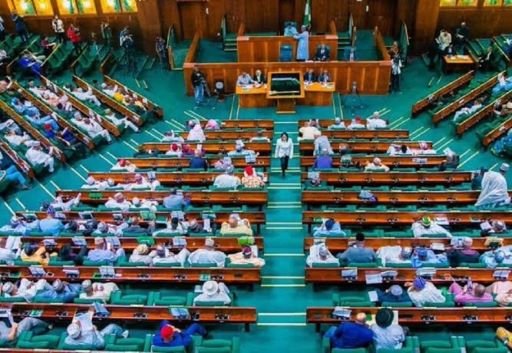
On July 23, 2026, no fewer than 311 members of the House of Representatives voted in favour, with 35 lawmakers voting virtually and 276 in person, according to Speaker Abbas Tajudeen, comfortably passing the 240-member threshold.
The legislation, titled A Bill for an Act to Alter the Constitution of the Federal Republic of Nigeria 1999 to provide for the Establishment of State Police Services and for Related Matters (HB. 2797), seeks to create state police forces to operate alongside the existing Federal Police Service.
How State Police Would Operate and Who Controls Them
Under the bill, the Inspector-General of Police would continue to head the Federal Police Service, while each State Police Service would be led by a Commissioner of Police appointed by the governor and confirmed by the State House of Assembly.
Governors may issue lawful written directives on public safety matters, but the bill bars state commissioners from arresting, detaining or using force against anyone for criticising the government, except as authorised by law.
A commissioner may seek review of a directive deemed unlawful, and can only be suspended or removed for stated cause, following due process, with approval from at least two-thirds of the State House of Assembly.
The bill also clarifies that existing outfits such as Amotekun, Ebube Agu and Hisbah cannot automatically become state police agencies or bear arms without constitutional authorisation.
It sets conditions for temporary federal intervention in state policing, including where public order breaks down, a governor requests help, or there is evidence of rights abuse or partisan misuse of police.
Any intervention must be authorised by the president, who must notify the affected governor, State Assembly Speaker, National Police Council and National Assembly within 48 hours, and remains subject to judicial review.
No Conference Committee Needed as Chambers Align
President Bola Tinubu transmitted the executive bill to the House on July 14, 2026, saying it built on previous legislative work and added safeguards for a dual policing structure.
Following receipt of the bill, the House rescinded an earlier resolution and dissolved a 12-member Conference Committee it had constituted on July 9.
Ordinarily, a Conference Committee is needed to harmonise differing versions passed by the Senate and House before both chambers vote again.
However, since both chambers passed identical versions, the bill can proceed directly to the state assemblies.
House of Representatives spokesman Akin Rotimi confirmed this in comments to another online media, LEADERSHIP Weekend.
“There will be no Conference Committee, as both the Senate and the House passed identical versions of the State Police Executive Bill. The Bill is being finalised for transmission to the State Houses of Assembly in line with the constitutional amendment process,” Rotimi said.
The Conference of Speakers of State Legislatures in Nigeria has already endorsed the bill, describing it as a major milestone toward improved security and true federalism.
In a statement signed by its chairman, Delta State House of Assembly Speaker Emomotimi Dennis Guwor, the conference said community-based policing would strengthen security, intelligence gathering and rapid response to crime, noting that policing needs differ across communities.
The bill will now undergo scrutiny in the state assemblies through stakeholder engagements and public hearings before a final vote on its adoption.

 WhatsApp Channel
 Telegram Channel



So the government is giving back freedom of speech to criticize the government without fear of arrest, and conviction, that is a good one, seeing as the elections are fast approaching, a lot of things will be said.
Hahaha, there has always been “freedom of speech” in the constitution which is the highest law, yet complaints of abuse abound. Repeating it in the law for state police is merely stating the obvious. But let’s hope state police will now evolve a better culture of respect for citizens constitutional and human rights.