





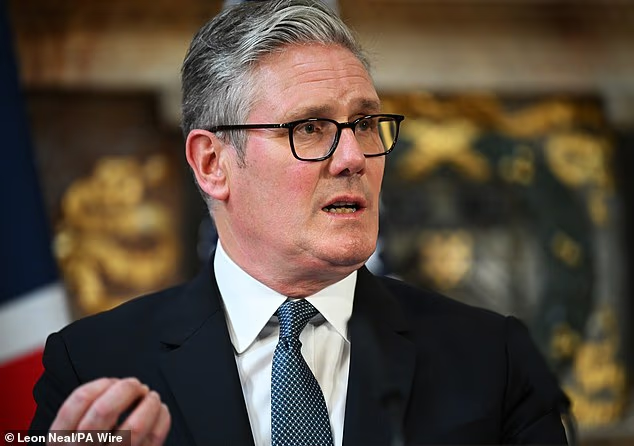
UK Prime Minister Keir Starmer is expected to step down, as pressure from Labour MPs intensifies following a surge in support for Andy Burnham as a potential successor.
The anticipated decision, likely to be announced on Monday, follows weeks of internal party tension after Burnham’s return to Parliament through a by-election victory in Makerfield.
Burnham’s strong showing, with over 50% of the vote and a majority exceeding 9,000, has shifted momentum within the Labour Party.
Senior party figures now believe he commands backing from around half of Labour’s MPs, strengthening calls for a leadership change.
Business Secretary Peter Kyle confirmed that the Prime Minister is aware of the situation.
He said, “There are forces at work which are challenging the prime minister as leader – that is clearly the case.”
He added that Starmer is weighing his next steps carefully.
He said the Prime Minister is focused on acting in the country’s interest during a period of uncertainty.
Leadership Pressure Mounts After By-Election
Starmer had earlier insisted he would resist any leadership challenge, even after Burnham’s political comeback.
However, internal pressure has grown, with ministers and MPs asking for a clear timeline for his departure.
Reports indicate that failure to act could trigger direct intervention at a cabinet meeting.
Burnham’s rise follows dissatisfaction within Labour ranks over declining public support and policy reversals.
The party has slipped in opinion polls, while opposition groups, including Reform UK, have gained traction nationally.
Kyle warned that leadership change alone may not solve deeper issues.
He said, “Changing the person at the top would fix everything… that is not the case.”
Uncertainty Over Succession And Party Direction
Attention is now turning to how Labour will handle a possible transition.
Under party rules, a leadership contender needs backing from at least 20% of MPs to enter the race.
Health Secretary Wes Streeting has also indicated interest in the role, though his chances remain uncertain.
Some party members favour a quick transition to maintain stability, while others want a full leadership contest.
Kyle said, “We are now facing a period of political uncertainty.”
He added that any transition must prioritise governance and public confidence.
Starmer’s expected exit would mark another leadership change in the UK, which has seen frequent turnover in recent years.
The decision could reshape Labour’s strategy ahead of the next general election, where party unity and public trust remain key challenges.

 WhatsApp Channel
 Telegram Channel