




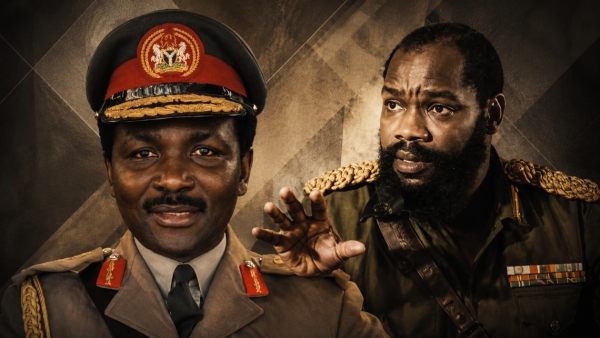
Former Head of State Gen. Yakubu Gowon has reopened some of the most sensitive memories of Nigeria’s civil war in his autobiography, My Life of Duty & Allegiance.
He said the late Chief Obafemi Awolowo once stepped in to save Gen. Murtala Mohammed from dismissal during the war.
He also said he never wanted the late Biafran leader Chukwuemeka Odumegwu Ojukwu captured or killed.
The book was launched in Abuja on Tuesday and gives rare details about the military, political and ethnic tensions that shaped the 1967 to 1970 war.
Awolowo’s Intervention
Gowon said Murtala’s plan to cross the River Niger from Asaba into Onitsha was dangerous and could have ended in disaster.
He said he told Murtala the plan was “quite suicidal” and warned that rebel forces could destroy the Onitsha Bridge and trap federal troops.
Still, Murtala pressed ahead with the river crossing by boat and barge.
Gowon wrote that the result was heavy loss of men and equipment. It resulted was one of the most catastrophic battles in which Nigerian forces suffered decimating losses. At the now famous Nkpor Junction, estimates of Nigerian soldiers dead were put between 500 and 5,000 men in a single attack.
He added that Murtala’s courage was obvious, even though the operation failed flatly.
Gowon also recalled a time Murtala sent him a rude battlefield signal that nearly cost him his command.
He said Chief Awolowo stepped in and pleaded with him not to punish Murtala immediately.
According to Gowon, he later let Murtala return to base because the war had too few experienced officers to spare.
Ojukwu And The End Of War
Gowon also addressed the final phase of the war and Ojukwu’s flight into exile in Ivory Coast.
He said he was relieved Ojukwu was never captured, but insisted that killing him was never his intention.
“But to kill him? Never, except in the battlefield where whoever got the first lucky shot survives!” he wrote.
He said the war was fought to preserve Nigeria, not to settle personal grudges.
That thinking, he added, later fed into the Federal Government’s No Victor, No Vanquished message after the war ended in January 1970.
He also said peace had to include reconciliation, reconstruction and rehabilitation, although the South East region which was the then Biafran enclave continues to claim those hallowed promises were never kept.
Aburi Talks and Arms Claims
The memoir returns to the failed Aburi peace meeting in Ghana on January 4 and 5, 1967.
Gowon said Ojukwu’s position at Aburi looked peaceful on paper, but he believed it was also meant to buy time for arms stockpiling.
He alleged that the Eastern Region was secretly building up weapons and said a DC-4 aircraft carrying arms crashed in Northern Cameroon in October 1966.
He also said Ojukwu later boasted in Enugu that the East had “equality of arms” and the “biggest army in Black Africa.”
Gowon dismissed that as exaggeration and said the federal side still had clear military strength.
The launch drew top figures in Abuja, including former President Goodluck Jonathan, who chaired the event, and Vice-President Kashim Shettima, who represented President Bola Tinubu.
Gowon’s book is sure to receive a lot of critical reviews. He was a partisan player of the period and often felt the need to protect his legacy and records.
But those on the other side of the conflict, while still complaining of systemic and subtle marginalisation, often insist they never fought to break away from Nigeria, but to end the orgy of pogrom directed at its people all over Nigeria at the time.

 WhatsApp Channel
 Telegram Channel