



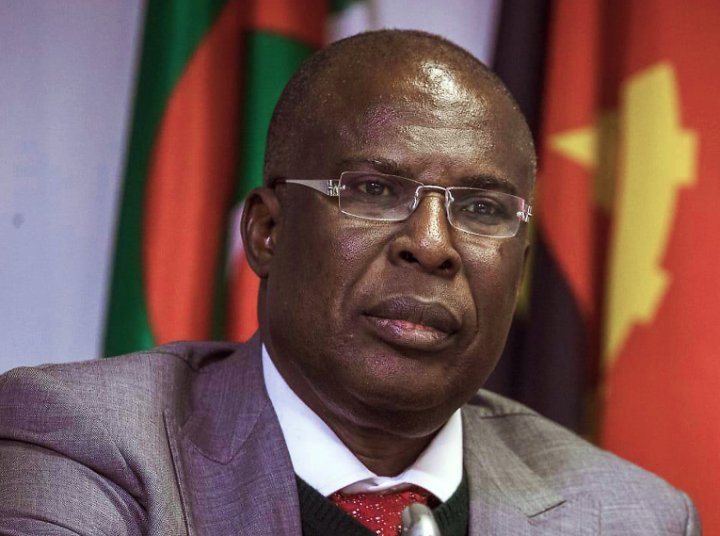
Fresh investigative records show how former Bayelsa State Governor Timipre Sylva’s alleged financial contributions to Nigeria’s failed 2025 coup plot moved from a company account to individual plotters.
Military investigators allege that Sylva, described as the plot’s principal financier, funnelled money through Purple Waves Limited, an Abuja-based construction and real estate firm.
According to Premium Times, which first reported the disbursement records, the funds then moved from Purple Waves into the accounts of a Kano-based bureau de change (BDC) operator, Abdullahi Sani Mohammed, who paid out money on the instructions of retired Army Colonel Mohammed Ma’aji.
The alleged plot aimed to topple President Bola Tinubu’s government and install a military administration.
It collapsed with Ma’aji’s arrest on September 29, 2025, days before the two dates insiders had reportedly considered for the strike, October 1 and October 4.
How The Money Moved From Purple Waves To The BDC Operator
Investigative records show Purple Waves Limited’s SunTrust Bank account held a balance of more than ₦5 billion when disbursements for the alleged plot began in September 2025.
Mohammed, the BDC operator, told interrogators he had a long-standing foreign exchange relationship with Ma’aji before the Purple Waves transfers started.
He said the first major transfer came in two tranches of ₦150 million each, paid into his A&A Express Link account at Providus Bank on Ma’aji’s instruction.
“He sends me a voice note on WhatsApp directing me to pay N10,000,000 in his First Bank account. Later, I received another N150,000,000 in the same Providus account, making it to be N300,000,000,” Mohammed said in his extrajudicial statement.
Two days later, another ₦100 million reportedly landed in his second business account, LUJI Trade and Investment, at Fidelity Bank, followed by further transfers of ₦50 million, ₦100 million and ₦50 million.
In total, Mohammed said he received ₦785 million from Purple Waves between September 20 and October 2, 2025, and made 47 payments worth over ₦474.7 million to beneficiaries in the final 11 days of that September.
A bureau de change operator is licensed to trade foreign currency; investigators say Mohammed’s role in the alleged plot was limited to moving and paying out funds as directed, rather than planning operations.
Who Got Paid, And What Happens Next
Bank records reviewed by investigators show beneficiaries included serving and retired military officers, an Islamic cleric consulted for spiritual support, and civilians.
Among them, Lieutenant Colonel Shamsudeen Bappah, assigned to seize a battalion in Niger State, allegedly received ₦5 million, while Army Major Mundi Usman, tasked with leading the operation at the Presidential Villa, allegedly got ₦10 million.
Cleric Goni Bukar allegedly received about ₦50 million across three transfers for spiritual support, and several payments also went to corporate accounts, including one linked to a cake business.
The Nigerian Army recovered ₦306.6 million in undisbursed funds from Mohammed after his arrest.
Sylva, believed to be abroad, has denied involvement, while five people linked to him face charges over his whereabouts.
More than 40 suspects have been arrested in connection with the alleged plot.
Thirty-six serving military personnel face trial before a General Court Martial in Abuja, a military tribunal that handles offences by armed forces personnel, while six others are being tried on 13 charges before Justice Joyce Abdulmalik of the Federal High Court in Abuja.
Defence lawyers in the Federal High Court case have challenged the admissibility of extrajudicial statements and video recordings prosecutors want to use as evidence, arguing they were obtained without the safeguards required under the Administration of Criminal Justice Act, a law that sets out how criminal suspects must be treated during investigation and trial.
The prosecution has urged the court to admit the evidence and dismiss the objections.

 WhatsApp Channel
 Telegram Channel