


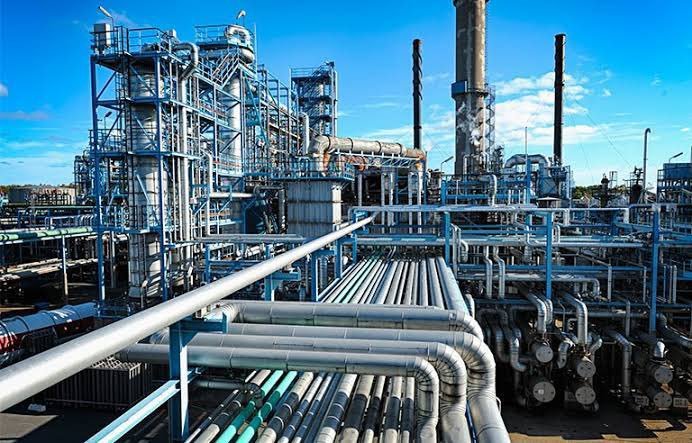
Nigerians are paying more for cooking gas as supply shortages bite. The price of Liquefied Petroleum Gas (LPG) rose 14% to ₦1,600 per kilogramme in November 2026, up from ₦1,400 in October.
Checks by Vanguard showed that several suppliers had run out of commercial stocks in Lagos and other parts of the country . Dangote Petroleum Refinery was among the few suppliers with available products.
The increase has sustained the upward movement in cooking gas prices over the past three months. It raises concerns about the adequacy of domestic supply to meet growing demand.
Supply Cannot Match Demand
Inyang Edu, National President of the Nigerian Association of Liquefied Petroleum Gas Marketers (NALPGAM), said the scarcity exposed the gap between national supply figures and what consumers actually experience.
“The national supply is still struggling to keep pace with actual consumption. Although domestic LPG supply has increased, demand has also grown,” Edu said.
“If this imbalance persists, the market must draw on existing inventories or secure additional supplies to maintain availability. A rise in supply is not sufficient to stabilise prices if consumption continues to exceed incoming volumes.”
Edu identified inadequate storage and transportation infrastructure as additional constraints. He explained that gas availability at production facilities or coastal terminals did not guarantee access in inland markets.
“The cost of transporting LPG over long distances, road conditions, haulage charges, loading and offloading, storage limitations and the availability of suitable LPG trucks can all contribute to regional price differences,” he said.
He warned that increased national production should not be mistaken for improved supply across all states. States far from major supply points remain most affected.
A Call For Infrastructure Subsidies
Audrey Joe-Ezigbo, Chief Executive Officer of Falcon Corporation Limited, called for subsidies to target infrastructure that reduces delivery costs. She spoke at the 16th NLCGA Conference and Exhibition in Abuja.
“We should subsidise access, not consumption. That means funding the infrastructure that lowers delivery costs, such as inland depots, bottling plants and better logistics, rather than the price. Some of these incentives already exist, and we need more of them,” she said.
Joe-Ezigbo noted that transportation costs significantly affect what consumers in northern Nigeria pay for cooking gas. She said trucking, railways, and pipelines would be critical to expanding nationwide distribution.
“We should avoid subsidising the molecule itself, because that discourages the investment needed to expand LPG use,” she said.
She also called for improved household purchasing power and greater awareness of LPG’s health benefits. Cooking gas is a cleaner alternative to firewood and charcoal.
On measuring government interventions, she recommended tracking whether households could independently afford cylinder refills 24 to 36 months after support ended.
To attract private investment, she advocated guaranteed supply and predictable regulations. She also called for an enforceable domestic LPG supply obligation backed by performance-based offtake contracts.



Campaign will say A, but reality always shows otherwise…. hopefully bigotry would not be our end