




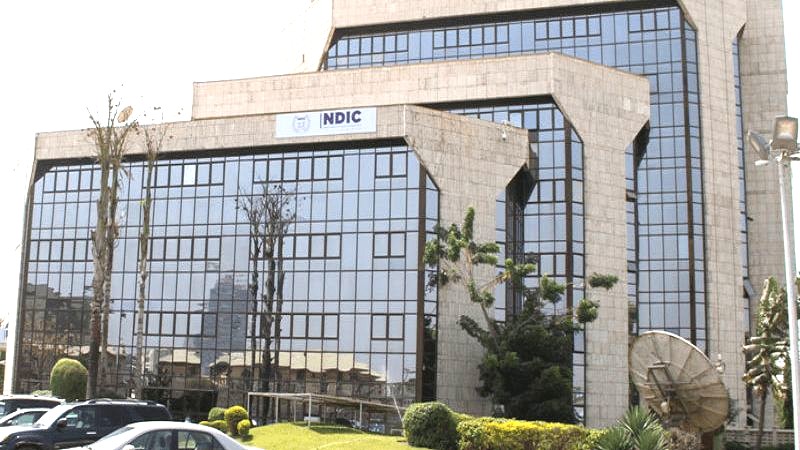
The Nigeria Deposit Insurance Corporation (NDIC) has commenced the final stage of winding up 89 defunct Microfinance Banks and Primary Mortgage Banks across Nigeria, following a broad restructuring exercise linked to the Central Bank of Nigeria’s 2023 licence revocation.
The affected institutions were part of a larger group of 179 microfinance banks and four mortgage banks whose licences were withdrawn in May 2023 due to regulatory issues.
Consequently, their operations were transferred under a resolution framework designed to protect depositors and maintain financial stability.
According to NDIC spokesperson, Hawwua Gambo, the transition was executed through a Purchase and Assumption (P&A) model, where new licensed institutions took over viable assets and liabilities of the affected banks.
“The acquiring institutions have since commenced operations under new identities,” she said.
P&A Transition And Financial Stability Framework
The NDIC explained that the P&A arrangement allowed for a seamless transfer of banking operations, ensuring customers retained uninterrupted access to financial services despite the collapse of the original institutions.
“The transition enabled new institutions to assume control of the assets and liabilities of the defunct banks,” Gambo stated.
Meanwhile, the Corporation confirmed that all operational handovers have been completed, paving the way for formal liquidation proceedings.
NDIC, acting as liquidator, will now approach divisions of the Federal High Court to secure dissolution orders and formally close the affected entities.
The Corporation also referenced a state-by-state spread of the impacted institutions, with Lagos recording the highest number at 27, followed by Osun with seven and Anambra with six. The Federal Capital Territory accounted for five.
Court Process And Legal Closure Phase
With operations already transferred, NDIC said it is now focusing on legal closure of the institutions through court-sanctioned dissolution.
This stage is the final administrative step in the resolution framework, officially ending the corporate existence of the failed banks.
The Corporation said the process is designed to ensure depositor protection while maintaining overall confidence in Nigeria’s financial system.
“The exercise aims to bring closure to the resolution process while ensuring depositors’ interests remain protected, and the financial system remains stable,” NDIC stated.
Meanwhile, acquiring institutions continue to operate under their new identities, sustaining financial services in affected communities across the country.
State-Level Impact And Sector Cleanup
The liquidation list includes dozens of microfinance banks spread across Nigeria, with notable clusters in urban and semi-urban areas.
Furthermore, states such as Oyo, Kaduna, Edo, and Niger each recorded three affected institutions, while several others had one or two banks included in the process.
The NDIC noted that the restructuring effort is part of a wider cleanup of the financial sector aimed at strengthening compliance and restoring confidence in microfinance and mortgage banking operations.
With this final liquidation phase underway, the NDIC is effectively closing one of the largest banking resolution exercises in recent years.

 WhatsApp Channel
 Telegram Channel