

Kenya will introduce a new HIV-prevention drug, lenacapavir, in March across 15 high-priority regions, the Ministry of Health announced on Wednesday, February 18.
Health Minister Aden Duale confirmed that Kenya received its first shipment of 21,000 doses on Tuesday, February 17, under an agreement with Gilead Sciences and the Global Fund to Fight AIDS.
“The first phase of implementation will begin early March, covering 15 counties. We expect an additional 12,000 continuation doses by April,” he said.
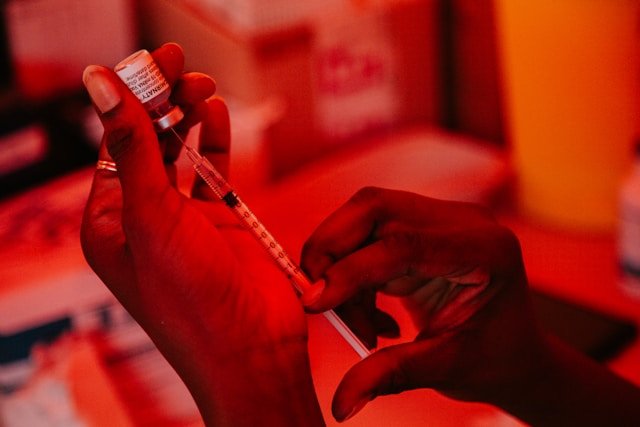
Lenacapavir is administered twice a year and reduces the risk of HIV transmission by more than 99.9%.
Although often described as vaccine-like, it is classified as a chemical drug because it does not stimulate the immune system like traditional vaccines.
Instead, it acts as a long-acting pre-exposure prophylaxis (PrEP), blocking HIV replication in the body.
Kenya is among nine African countries selected to roll out lenacapavir. South Africa, Eswatini, and Zambia began implementation in December.
According to UNAIDS, eastern and southern Africa account for about 52% of the 40.8 million people living with HIV globally.
Global Context
Lenacapavir’s introduction is considered a breakthrough in HIV prevention. Experts note that long-acting PrEP could help break major cycles of transmission in high-burden regions, particularly in Africa, where access to daily oral PrEP has faced challenges.
While not a vaccine, lenacapavir’s twice-yearly injection offers protection levels comparable to vaccines against other diseases.
If scaled globally, it could significantly reduce new HIV infections, especially in regions with high prevalence and limited healthcare access.
Duale disclosed that the United States government has pledged to supply Kenya with an additional 25,000 doses. Kenya’s HIV prevalence rate currently stands at 3.7%.
The rollout comes amid reduced foreign aid to HIV/AIDS programmes in Africa.
In December, Kenya signed a $2.5 billion health aid agreement with the US, which includes $1.6 billion over five years for HIV/AIDS treatment and prevention, malaria control, and polio prevention.
Kenya will contribute $850 million and gradually assume greater responsibility for programme implementation.
The deal has faced legal scrutiny after a Kenyan senator challenged it in court, citing alleged constitutional violations.
Rate, Like 👍, Comment 💬, Share this article, Follow us on our social media handles, and Submit your own story to get featured and earn rewards!
 WhatsApp Channel
 Telegram Channel