





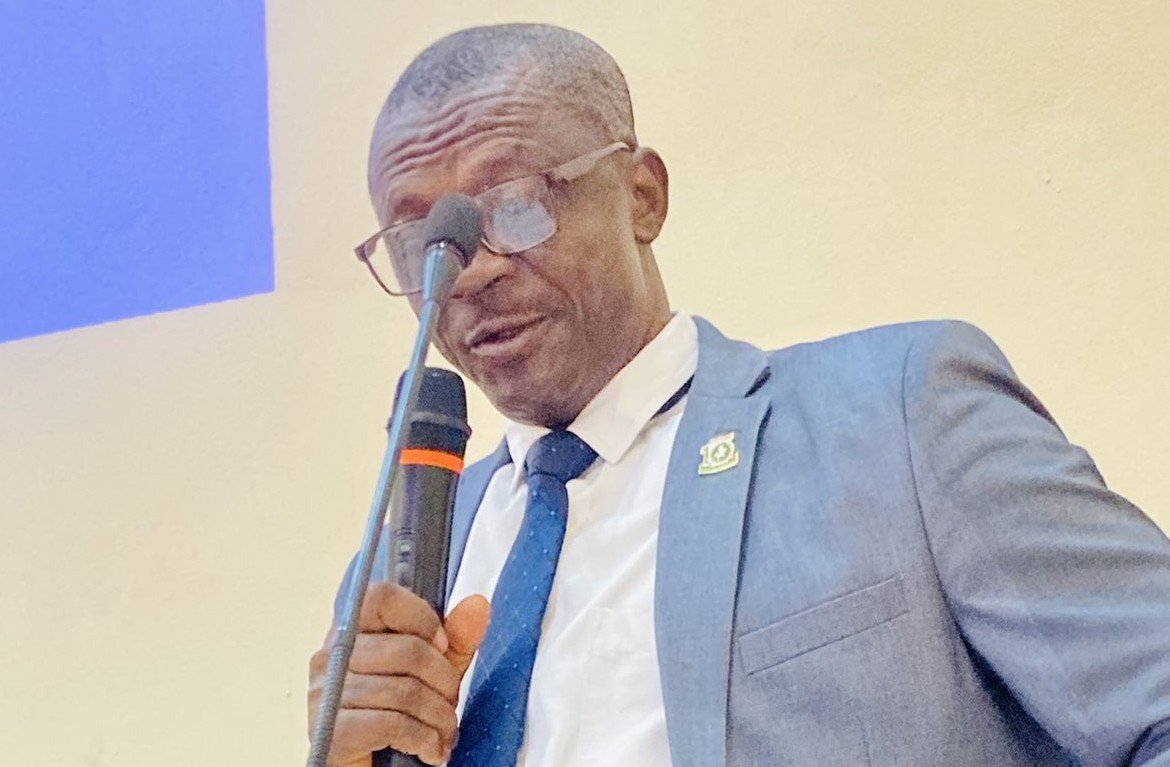
The Independent Corrupt Practices and Other Related Offences Commission (ICPC) has issued a stark warning that corruption in Nigeria is so widespread that strict enforcement of existing laws could see “about 80%” of citizens imprisoned.
This assertion was made by Sakaba Ishaku, ICPC’s Resident Anti-Corruption Commissioner for Kaduna State, during a workshop on local government accountability organised by the Kaduna State Ministry for Local Government and Chieftaincy Affairs.
Speaking on the theme “Accountability in Local Government: A Springboard for National Development,” Ishaku said corruption has infiltrated nearly every sector of Nigerian life.
“If the laws were to be applied to the letter, about 80 percent of the people you see walking freely on the streets would be in jail,” he declared.
He described corruption as “endemic and deeply entrenched across all levels of governance and society,” driven by weak institutions, poor accountability, and harsh socio-economic conditions.
According to him, this has diverted public resources, deepened poverty, triggered unrest, and stalled development.
“There is no massive wealth that is acquired without some criminality behind it. Even where wealth is inherited, a check on its origins often shows exploitative practices,” he added.
Resistance to Reform
Ishaku lamented that many Nigerians resist anti-corruption reforms because they benefit from corrupt systems.
“Not everybody wants to hear about fighting corruption. The arrangement often benefits individuals at the expense of society,” he said.
He criticised local government chairmen who leave office after two terms without a single legacy project. “It is disheartening that some council chairmen cannot point to any legacy project upon exit. Do you really deserve to be there?” he asked.
Calling for tougher laws, Ishaku argued that current punishments are too lenient. “Where someone steals ₦2 billion and gets only five years in prison, that is a slap on the wrist,” he said, urging a comprehensive review of legislation.
He further encouraged Kaduna State to adopt compulsory project-tracking systems similar to ICPC’s initiative, which has forced many contractors who abandoned projects to return to site.
Citizens and Leadership Failures
Kaduna State Commissioner for Local Government and Chieftaincy Affairs, Sadiq Mamman Legas, echoed the concerns.
He said poor public attitudes also hinder development, stressing that Kaduna—despite being a major economic gateway to Northern Nigeria—is held back by weak leadership and civic irresponsibility.
Legas revealed that the ministry recently saved “over ₦8–9 billion” through rural electrification repairs, only for communities to vandalize the transformers. He warned that development cannot thrive where citizens destroy public infrastructure.
He called for stronger public enlightenment and collaboration between agencies and local governments to promote community ownership and protection of public assets.

 WhatsApp Channel
 Telegram Channel