


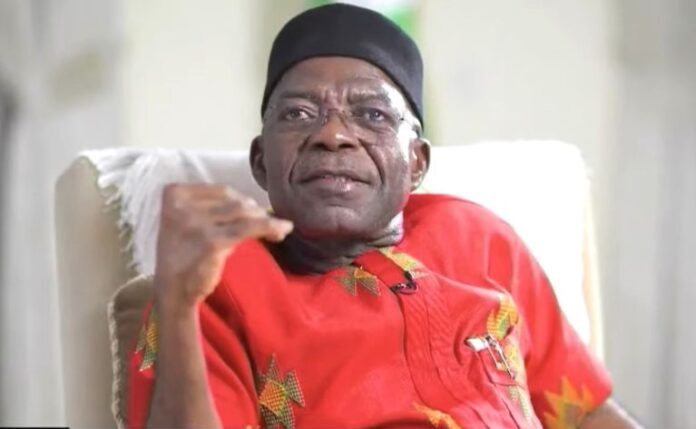

In an exclusive interview on another online news media, ARISE NEWS, on Friday, September 25, Abia State Governor Alex Otti broke down his administration’s economic strategy, debt management achievements, and political alignment ahead of 2027.
Demonstrating an unconventional approach to fiscal governance in Nigeria, Otti revealed how Abia drastically slashed its debt profile while simultaneously maintaining an ambitious 80 per cent capital expenditure budget line.
Beyond state finances, the governor weighed in on national macroeconomics, defending the total removal of fuel and electricity subsidies, addressing internal Labour Party dynamics, and clarifying his political relationship with President Bola Ahmed Tinubu.
The Exclusive Interview
Q Your Excellency, let’s start with Abia State’s fiscal health. You inherited a massive debt profile upon assuming office. What is the current state of these liabilities?
Ans “I inherited a debt of 191 billion naira. You are correct. It was 191.2 billion, different types of debts. Some of them were contractor debts, some of them were pension areas. Then the debts owed to multilateral organisations, and I think that one was somewhere about 148 billion, as reported by DMO. We’ve actually reduced that debt to about 48.4 billion. So, we’ve taken almost 75% of that loan out we’ve paid.”
Q Paying down nearly 75 per cent of inherited debt is significant. How have you managed this while expanding infrastructure and maintaining public spending?
Ans We said no less than 80% of our budget will go into capital expenditure. So, in the last three years, 80% to sometimes 82% of our budget was in capital expenditure, leaving a meagre 18% for recurrent spending. So that helps discipline us. So, what does that do? That leaves us with a lot of the money to build roads, clean the environment, build hospitals, rebuild schools, and all the things you see.”
Q A lot of state governments struggle primarily with recurrent expenditure and overhead. How do you keep governance costs within that tight 18 to 20 per cent band?
Ans “The other thing it does is what I always have campaigned on, and that is cost of governance. It is a major problem in the country. If you don’t manage your costs very well, you will find that year in, year out, you are struggling. You are working hard. You are sweating, but it’s not showing. Brought it down, caged it within that 20%.
“We have taken almost 75% of that loan out we’ve paid.”
“However, so you come to me, and you are coming, I decline it. Once I decline it, that’s it. So you cut down your cost of governance to 20%. Yes. Both salaries and, for instance, about 11.9% of our cost goes into salaries and all that. And we keep it there. Even though minimum wage increased, and we are one of the first states to implement, we make sure that every other thing gets cut down.”
Q Abia’s 2026 budget is projected at N1.16 trillion with an internally generated revenue (IGR) target of N223 billion. Critics might say an 80 per cent capital expenditure ratio is unusual or unsustainable. Is this model really sustainable?
Ans “Yes, because you will be right to say that is unusual. But that is the ideal situation. That is what it should be. So it is not an operation. It is sustainable. If we can do it now, then we can continue doing it. We are not spending on consumption. We are spending to build a resilient economy.”
Q How does this capital-heavy spending translate directly to economic growth for residents and business owners in places like Aba?
Ans “When we came, we started with power. And we have done studies, not just in Aba, but elsewhere in the country. And you find that for manufacturers, close to 60% of their costs are in energy. And one year later, Geometric was up and running. And that solved a lot of problems. And we are successful in that because TotalEnergies will be able to supply gas as an alternative.
“That’s what China did. … It does appear like a model from China. It’s a model that works. So it’s not a fluke. It is a system that is built on the basis of data. So the direct answer, it is affordable. It is sustainable. It is the only way to go. Anytime you reverse it, of course, you pay the price.”
“When you subsidise consumption rather than production, you are just subsidising laziness. You are subsidising, sometimes, corruption.”
Q Turning to national economic policies, there has been widespread debate on subsidies. What is your stance on consumption versus production subsidies?
Ans “When you subsidise consumption rather than production, you are just subsidising laziness. You are subsidising, sometimes, corruption. You know, because there’s just no way that people will not want to take advantage of the system. When you have to pay, you are much more efficient. And anyhow you slice and dice it, it’s still cheaper than darkness. And if you have to run a generator, buy the diesel, provide for the maintenance, you will find that you are paying a whole lot more than public power supply.”
Q What about electricity subsidies specifically? Should commercial entities and manufacturers receive subsidised power?
Ans “But most importantly, for the people who use it for production, for their factories, those people, they really don’t need the subsidy. They just need the constant power supply. And once you’re able to guarantee them constant power supply, they’ll pay. So businesses don’t need subsidy. Low-income earners can always manage. And I’ve given you an idea of how they can manage. Well, in many parts of the world, they turn off the electricity to save power.”
“There is a saying that you don’t relocate from your house because armed robbers came.”
Q Many political figures are calling for the return of fuel subsidies due to inflation. Where do you stand on petrol subsidies?
Ans “I’ve always been consistent on subsidy. And I’ve written extensively. I also refer you to my back page in THISDAY including I believe that one that I wrote in 2020 during the COVID. And at that time, nobody was buying oil. And I said it was a good time to remove subsidy.
“So I’ve always heard the view that once you subsidise consumption, what you get is what exactly what you wanted. So I don’t have a problem supporting production. But consumption should not be subsidised. You know, as election approaches, people will be making all sorts of arguments. But removing the subsidy was the right thing to be done.”
Q Are you saying anyone advocating for fuel subsidy reinstatement is wrong for the economy?
Ans “That’s where I stand. And I have sufficient reasons, including the scam that it became. So if you are being subsidised, you can just blast all vehicles, maybe 20 vehicles, put all of them on the road because somebody is paying for it. But then you find that at the time prices went up, people became more reasonable. So there will be the pain initially. But consistency and management would eventually make that pain give way to efficiency.”
Q Moving to politics, why did you choose to stay in the Labour Party despite the protracted legal battles and leadership crises?
Ans “Okay, but you have seen that we’ve solved the problem. There is a saying that you don’t relocate from your house because armed robbers came. Armed robbers came and attacked the house, so tomorrow you move and go to your neighbor’s house? You need to solve the problem, so I remained, and I’m sure you agree with me that we have solved the problem.
“What I talked about is supporting the president as the President of the Federal Republic of Nigeria. As time goes on, it is for me now to decide who to support.”
“Of course, there is always an opportunity to go to another court or start litigating once again, but the reality is that INEC has published its list of candidates. So even if you go to court, it’s an academic exercise. We litigated all the way to Supreme Court, started the litigation again, and got to the Court of Appeal. Because we are standing on the right side—”
Q Former Labour Party presidential candidate Peter Obi chose to leave the party. Did you consult with him prior to his departure?
Ans “He came and met with me, and I told him that for me, I was staying back. But he said he was leaving. I also predicted some of the things that happened, particularly where he went to first, and then he left that place again. Is it for me to tell him where he will be? Absolutely no, but at least I offered him my own piece of advice based on my understanding. You know he’s a more senior person, so there are things he could have seen that I didn’t see.”
Q Peter Obi suggested that the crisis within the Labour Party might not have been resolved if he had stayed. Do you share that view?
Ans Okay, but the process of resolution was already on. So for me, I could see that resolution. Like I said, he could have seen what I wasn’t seeing, and I don’t even have a superior idea or knowledge. But what I could see at that time, including what I saw where he was headed, eventually turned out to be right. Otherwise, he would have stayed there, but he now left to where he is now. So it’s a matter of debate whether the problem could have been resolved with him there or not; I don’t know.”
Q Looking ahead to the 2027 presidential election, are you supporting President Bola Ahmed Tinubu’s re-election bid?
Ans For the 2027 election, I had said that I have a presidential candidate.”
“It is a major problem in the country. If you don’t manage your costs very well, you will find that year in, year out, you are struggling. You are working hard. You are sweating, but it’s not showing.”
Q And is that candidate the one you are actively supporting?
Ans “Yes.”
Q Does that mean you are not supporting President Tinubu?
Ans “What do you expect me to say? To say I’m not supporting him? Of course, I had said he has the right to run, and nobody can stop him from running. So whether I’m supporting him or not supporting him is not even an issue. I’d also said that as a governor in this Republic, a lot of the things that are being—in fact, I’m part of all the things that are being done as a member of the National Economic Council.
“So we should distinguish that. When somebody then says, ‘Oh, you are supporting or you’re not,’ I have to support him. What I talked about is supporting the president as the President of the Federal Republic of Nigeria. As time goes on, it is for me now to decide who to support. But at the moment, I have a presidential candidate, and it’s expected that I will support my presidential candidate.”


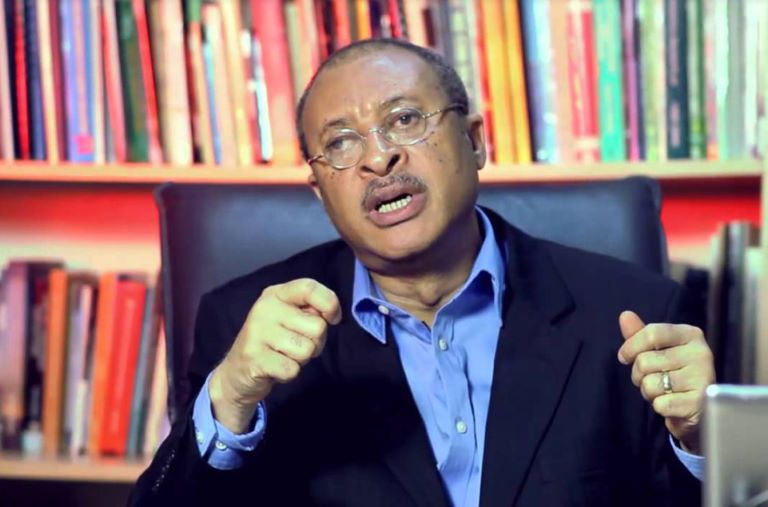

HE Alex Otti, is a governor with a heart to change and bring the dividends of governancy to Abia State which has been long denied the state by former sycophant governors. His landmark achievements in this first four years are clear to everyone. He is doing great, and Abians love it.