




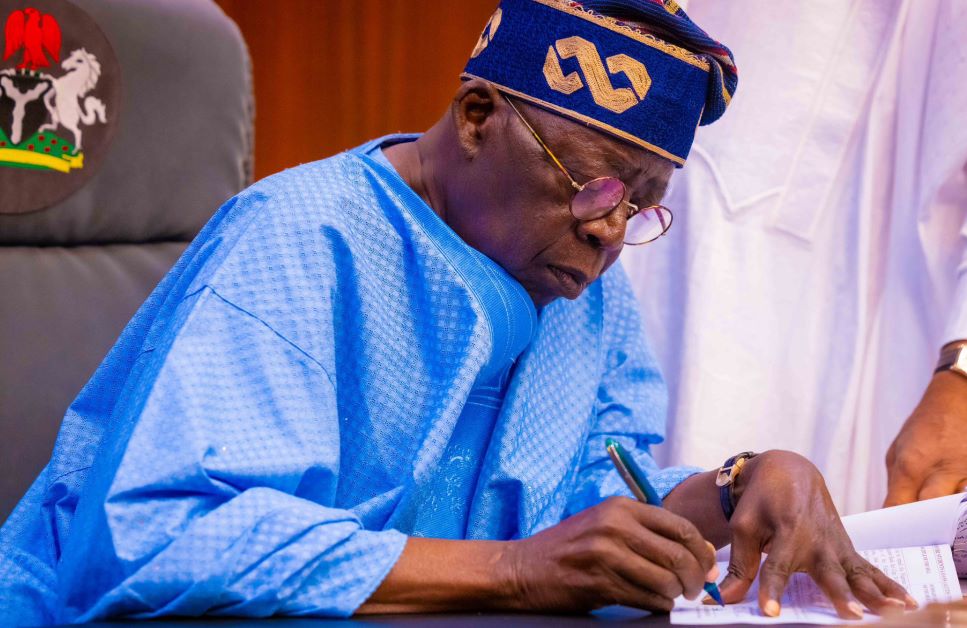
President Bola Tinubu has approved a salary increase of between 30% and 80% for about 250,000 personnel of the Armed Forces.
The pay package raises the military’s annual wage bill from ₦660 billion to ₦924 billion, an increase of ₦264 billion.
It is the biggest upward review of military salaries under Tinubu’s administration.
Special Adviser to the President on Information and Strategy, Bayo Onanuga, announced the package in a statement on Tuesday.
The new structure, which takes effect from September 1, 2026, gives the highest increase to junior personnel.
Soldiers from the rank of Private to Staff Sergeant will get an 80% increase, Warrant Officers to Colonels will get 50%, while Brigadier-Generals to Generals will earn 30% more.
Tinubu linked the pay rise to the sacrifices troops continue to make fighting terrorism, banditry and kidnapping.
“The men and women who help to keep us safe in our homes must be supported and appreciated in the course of their duties to our nation,” he said.
He added: “Our administration will continue to prioritise troop welfare and modernise the armed forces by providing the weapons and technological tools needed to discharge their duties.”
Military Chiefs, Senators And Retired Officers React
Minister of Defence, retired General Christopher Musa, described the approval as a major boost to troop welfare and operational effectiveness.
“The President has once again demonstrated unwavering leadership and empathy for the brave men and women who put their lives on the line daily to preserve the peace and territorial integrity of our nation,” Musa said in a statement issued by his media aide.
Chairman of the Northern Senators Forum, Senator Abdulaziz Yar’Adua, and former Senate President Ahmad Lawan, who chairs the Senate Committee on Defence, both commended the move.
Lawan called the review a “compassionate and strategic intervention,” and urged the Army, Navy and Air Force to improve coordination and intelligence sharing in return.
Retired senior officers welcomed the pay rise but said it must come with better equipment.
Former Director of Army Public Relations, retired Brigadier-General Sani Usman, said no amount could fully compensate soldiers for the risks they take, describing the 80% jump for junior ranks as significant given rising inflation.
Retired Commodore Omatseye Nesiama called the increase welcome but said pay gaps among senior officers still needed attention, adding that the review should ideally extend to other security agencies facing similar risks.
Retired Brigadier-General Bashir Adewinbi said the pay rise would boost morale and could attract more young Nigerians into the military, but stressed that salaries alone would not fix operational gaps.
“The government should not stop at salaries. The troops need more protection and technology to support their operations. They need sophisticated weapons, accommodation, uniforms and the logistics required to perform their duties effectively,” he said.
Some Cautionary Voices Still
Retired Brigadier-General George Emdin, however, urged caution, noting that past welfare pledges had often lacked funding.
“Until we see the implementation, one cannot say much,” he said.
Minister of State for Defence, Bello Mohammed Matawalle, described the review as a landmark demonstration of the government’s commitment to troop welfare, saying he had personally championed the initiative within government.
Serving personnel echoed that caution. One officer, who shared a breakdown of his expected pay under the 50% increase, said his monthly salary would rise from ₦362,405.67 to ₦543,608.51, adding: “It still does not compare with what many of my contemporaries outside the military earn, but we thank the President.”
The review comes barely two weeks after Tinubu restructured the Nigerian Army into four additional divisions to improve response times to regional security threats, and follows recent disclosures that the monthly salary of the lowest-ranked soldier had already been raised from ₦50,000 to ₦100,000.
 WhatsApp Channel
 Telegram Channel


Great. I am happy for the increment in our soldiers salary. That’s a relief to their families. Our leaders know what should be done but will hold back until election time to mess up the people’s conscience.
Just recently on social media, a soldier’s wife was lamenting about their low salary.