




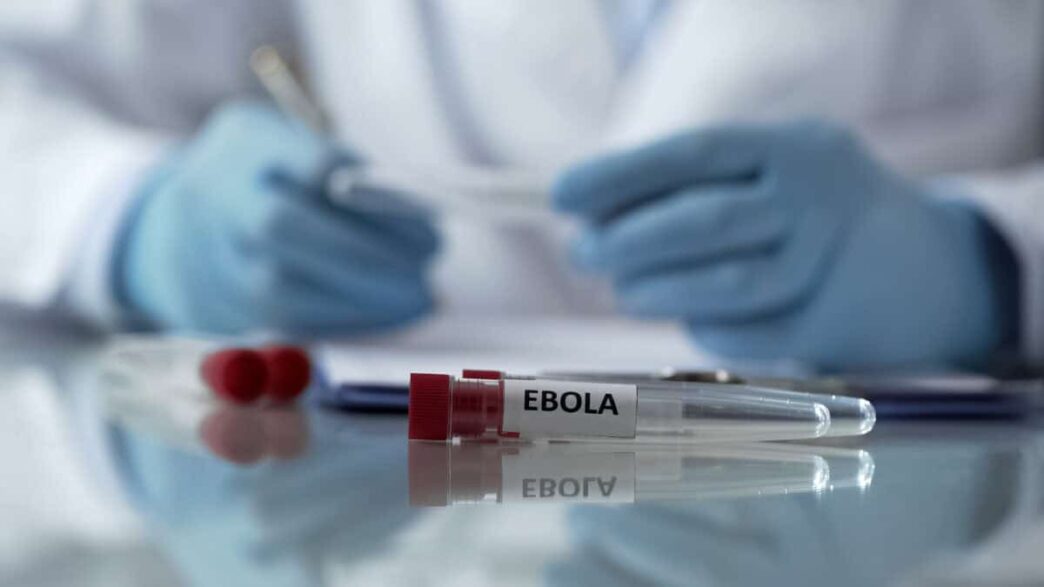
The Nigeria Centre for Disease Control and Prevention (NCDC) has dismissed reports of an Ebola outbreak in Nigeria.
In a statement on Wednesday, the agency said the rumours were false and warned Nigerians not to panic.
It said no confirmed Ebola case has been recorded in the country.
The agency also said it was monitoring the situation closely and keeping health systems on alert.
The NCDC said it issued the statement to correct misinformation spreading online and in communities.
It explained how Ebola spreads and said the disease is not the same as Hantavirus.
“People say Ebola and Hantavirus are the same disease. Hantavirus spreads mainly by inhaling rodent dust and rarely between people. Ebola spreads through direct contact with bodily fluids,” it said.
It also rejected claims that Ebola outbreaks are created or manipulated on purpose.
“Some people say Ebola outbreaks are deliberately created or manipulated. The truth is that Ebola is a known viral haemorrhagic illness with a history of outbreaks in several countries.”
The agency further dismissed claims that every fever should be treated as Ebola.
“People believe that if someone has a fever, it must be Ebola. The fact is that many illnesses cause fever, including malaria, typhoid, Lassa fever, and other infections. Healthcare workers use case definitions, travel history, symptoms, and laboratory testing to identify the real cause,” it said.
“Mislabeling delays proper treatment and fuels unnecessary fear.”
Public Safety Advice
The agency warned against home remedies such as salt water, bitter kola, herbs and seasoning cubes.
It said none of those can prevent or cure Ebola.
NCDC advised Nigerians not to handle sick or dead animals and to avoid bushmeat from unknown sources.
It also asked people to report strange illnesses quickly and to stay calm while following verified public health advice.
“Responsible public health behaviour reduces the risk of importation and onward transmission if a case occurs,” it said.
The agency added that Ebola symptoms may include fever, weakness, headache, muscle pain, sore throat, vomiting and diarrhoea.
“If you develop these symptoms, seek care immediately. Do not self-medicate and do not delay reporting to health authorities,” it said.
The NCDC said early reporting and quick medical care remain important for saving lives.
The warning comes as the World Health Organisation (WHO) and other health bodies continue to monitor Ebola risks in parts of Africa.
The Federal Airports Authority of Nigeria (FAAN) also said it had strengthened safety checks at international airports to reduce the risk of spread.
Together, the agencies are trying to stop panic and keep Nigerians focused on verified health information.

 WhatsApp Channel
 Telegram Channel