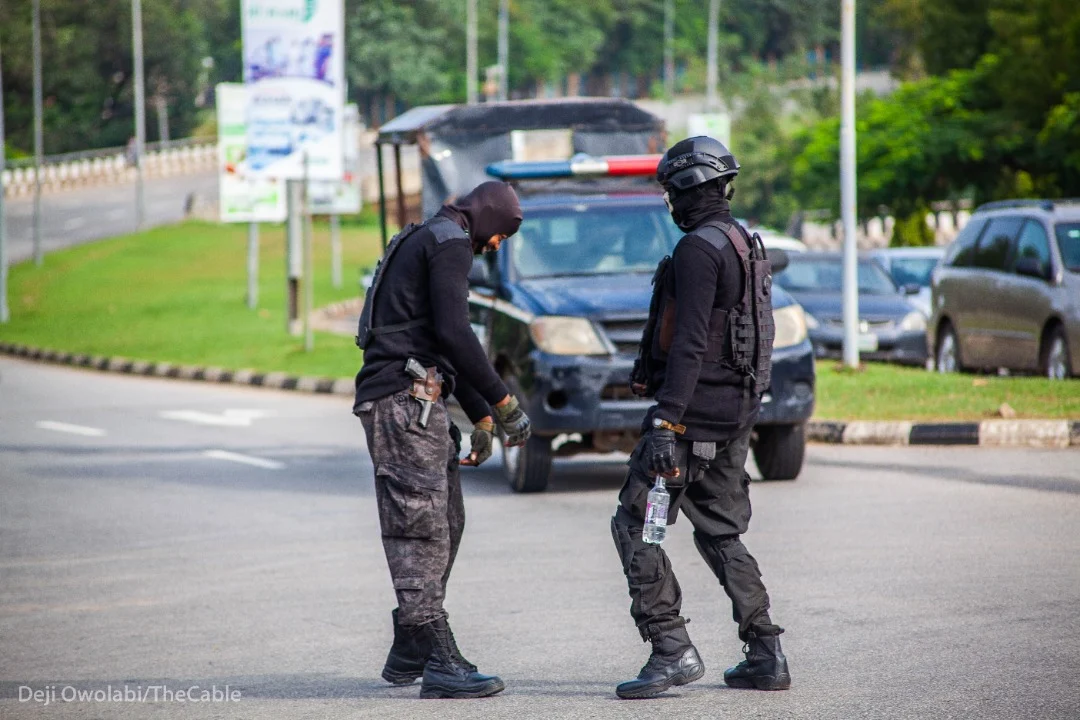




The Inspector General of Police, Tunji Disu, delivered a 75-page state police plan to the National Assembly in Abuja on Thursday. This roadmap covers a 60-month period.
Disu presented the document to the Deputy Senate President, Jibrin Barau. Consequently, the proposal seeks to decentralize security and strengthen internal safety in Nigeria.
The plan suggests that 60% of current officers should join state commands. Meanwhile, the remaining 40% will stay within the federal structure to handle national issues.
ThisDay reported that this strategy includes constitutional changes. These adjustments would shift policing to the Concurrent Legislative List.
A key pillar is the State Police Fund. It will draw 3% of the Federation Account. Furthermore, each state must contribute a minimum of 15% from its own security budget.
“This ensures stability, avoids mass retrenchment and preserves institutional memory,” a senior officer explained regarding the planned transfer of existing police personnel.
To prevent political abuse, the plan creates independent commissions. These bodies will manage recruitment and discipline without interference from state governors.
The framework also requires the use of body-worn cameras. Additionally, it establishes a public dashboard to track incidents where officers use force against citizens.
Each command must have a Community Policing Department. These units will work with traditional rulers and local leaders to gather intelligence on neighborhood crimes.
A Structured Five Year Roadmap For Internal Security
The implementation begins with constitutional changes in the first year. Later, state commands will appear as federal forces pull back from routine local duties.
“The framework is the product of rigorous consultations and reflects both operational realities and international best practices,” a top police source told the press.
A National Police Standards Board will oversee the system. This 13-member body will enforce uniform rules for both federal and state formations across the nation.
The proposal includes criminal penalties for unlawful orders. Consequently, the Federal High Court will have fast-track powers to handle cases of political misuse.
“The model was intended to rebuild public trust, which the document described as a fundamental operational necessity rather than a public relations concern,” sources said.
Officers who choose to join state commands will receive a three-month salary grant. Furthermore, the plan guarantees that they will keep their current pension benefits.
Liaison officers must speak local languages fluently. Residents will even help evaluate these officers based on how well they interact with the neighborhood.
Constitutional Changes To Anchor The New Police Force
The proposal targets Section 214 of the 1999 Constitution. Meanwhile, a new Section 214A would legally recognize the National Police Standards Board for oversight.
“Disu has proposed a bold funding structure, strict safeguards against political abuse, and a community-driven operational model as the pillars of the new system,” it says.
The Federal Police Service will focus on terrorism and interstate crime. However, state units will handle armed robbery, homicide, and domestic violence cases.
This Voluntary Transfer Programme prevents mass job losses. It allows for a gradual shift of power without breaking the chain of command during the transition.
“Ring-fenced financing would eliminate political manipulation and enhance accountability,” the sources stated while discussing the proposed 3% funding from federal funds.
Annual compliance ratings will be published for every state. If a jurisdiction fails to meet standards, the federal board can restrict its access to funding.
The 60-month timeline concludes with a full legislative review. This ensures the system remains efficient and serves the interests of all Nigerian citizens.
 WhatsApp Channel
 Telegram Channel