



A senior Congolese official and a U.S. diplomat has confirmed that the United States has gained access to vast tantalum reserves in the Democratic Republic of Congo (DRC).
The deal places Washington at the centre of one of the world’s most strategic mineral regions.
The announcement followed a February meeting in Washington between Congolese and American officials.
The Rubaya mining area in North Kivu was included on a shortlist presented during the talks. Two months later, both countries signed a Strategic Minerals Cooperation Agreement.
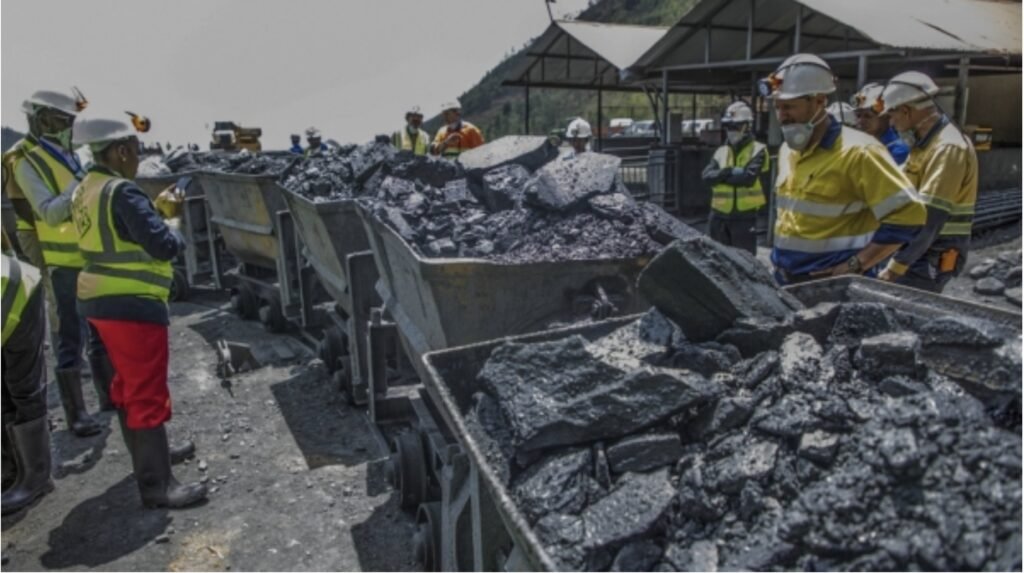
Tantalum is a rare mineral used in electronics, aerospace, defence, and medical devices. It does not occur in pure metallic form but is found in minerals such as coltan.
Its resistance to corrosion and ability to store charge make it vital for capacitors in smartphones, computers, and advanced weapons systems.
The DRC holds some of the world’s largest deposits. Rubaya alone accounts for about 15% of global output, with tantalum concentrations ranging from 20–40%. In 2023, the country produced an estimated 400 metric tons.
Peace Framework and Partnership
The agreement includes a peace framework for the mineral-rich country, which has faced decades of violence.
By linking mineral access to stability, the pact makes the DRC a strategic partner of the U.S. in securing critical resources needed for modern technology and the energy transition.
The deal reflects a U.S. foreign policy strategy, where economic partnerships are tied to conflict resolution and long-term geopolitical influence.
Beyond minerals, Washington has moved to broker peace between DRC and neighbouring Rwanda.
Their conflict dates back to the aftermath of the 1994 Rwandan genocide and has evolved into a long-running crisis centred in eastern Congo.
Rebel groups, including AFC/M23, control parts of North Kivu. Their activities have disrupted trade and complicated exports.
The U.S. hopes that linking mineral cooperation to peace efforts will reduce instability and secure supply chains.
Strategic Importance of Rubaya
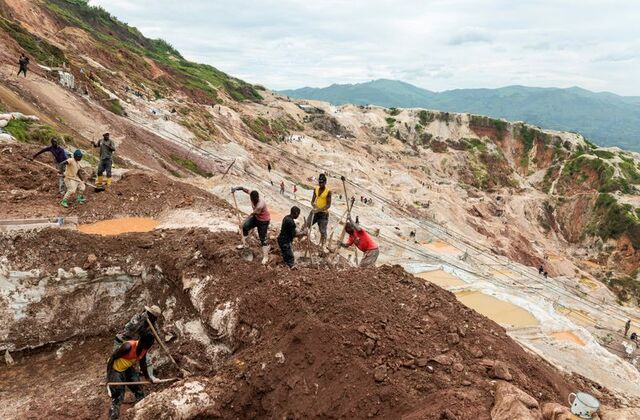
Rubaya’s reserves are considered among the richest in the world. The site has long been contested by armed groups.
Its inclusion in the U.S.–DRC pact signals Washington’s intent to secure reliable access while supporting Congolese sovereignty.
American officials say the deal will help diversify supply chains away from China, which dominates global processing of critical minerals.
By partnering with Congo, the U.S. aims to strengthen resilience in industries ranging from semiconductors to renewable energy.
The pact comes amid rising demand for tantalum and other rare minerals. As nations accelerate the energy transition, competition for resources has intensified.
The U.S. move positions it as a key player in Africa’s mineral landscape.
For Congo, the agreement offers potential economic benefits and international support for peace, although rebel control of mining areas, corruption, and weak infrastructure may continue to threaten stability.
Rate, Like 👍, Comment 💬, Share this article, Follow us on our social media handles, and Submit your own story to get featured and earn rewards!
 WhatsApp Channel
 Telegram Channel







All I see is a different type of slavery. Institutionalised slavery.
Good luck to the people of Congo