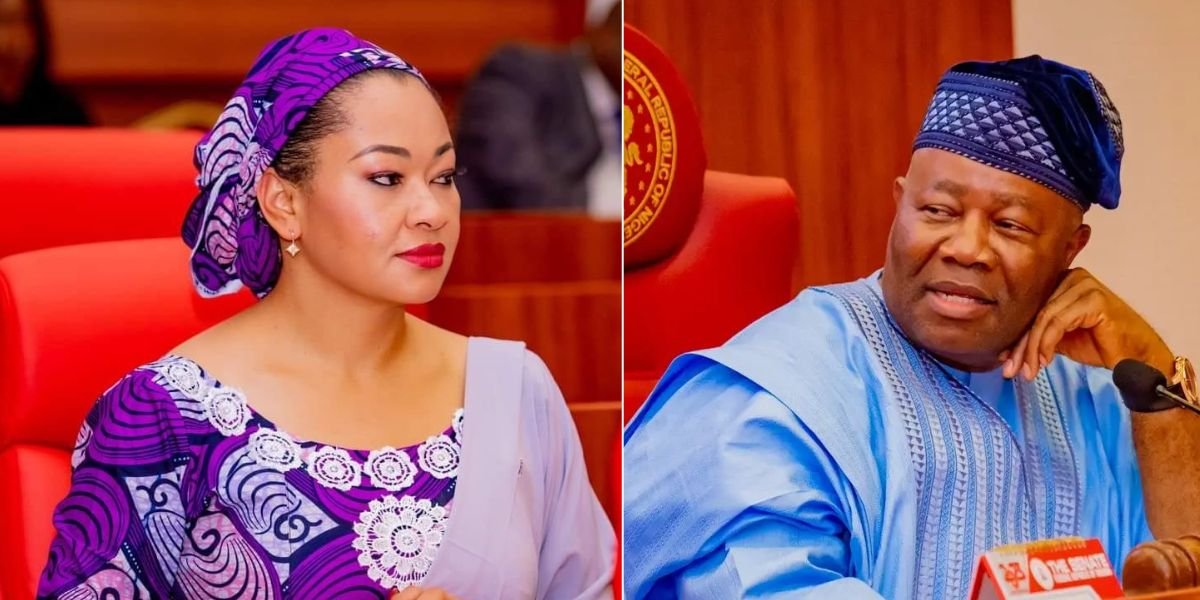

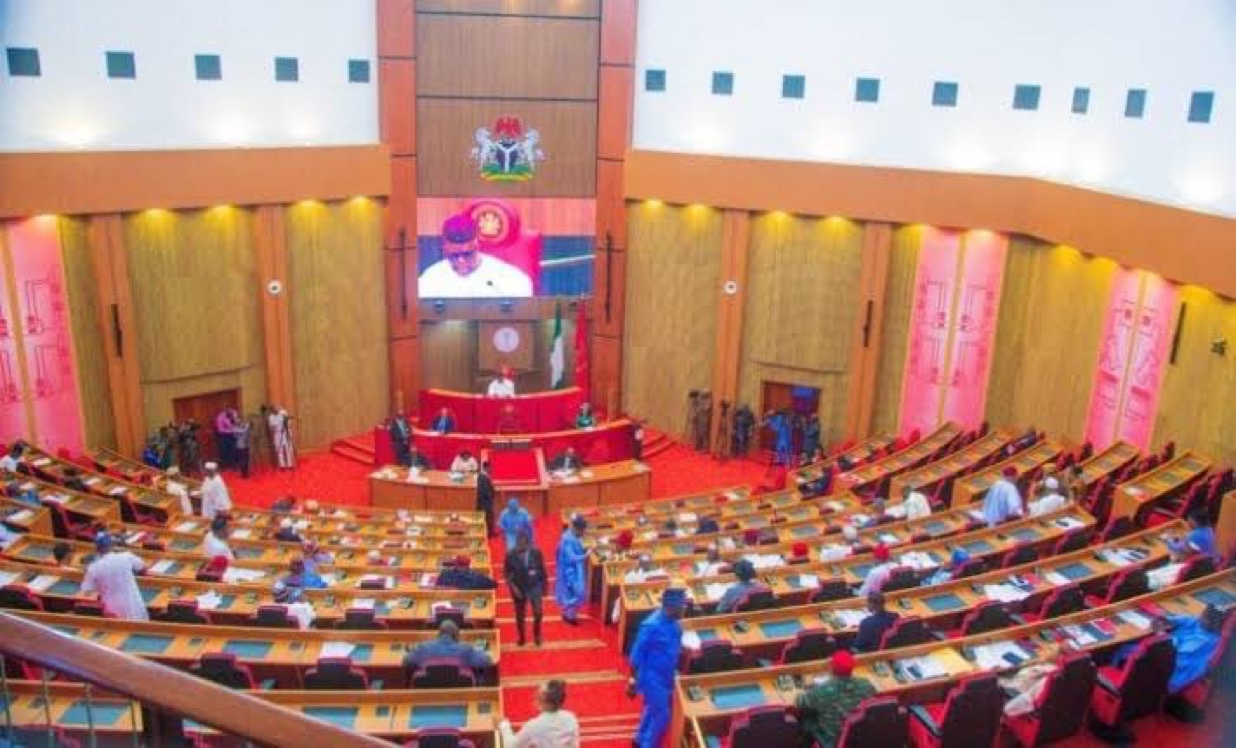
The Senate has approved the electronic transmission of election results to the Independent National Electoral Commission’s Result Viewing Portal, while permitting manual collation to serve as a backup where technology fails.
The decision followed a reconsideration of a disputed clause in the Electoral Act Amendment Bill during an emergency plenary on Tuesday.
However, the upper chamber stopped short of making electronic transmission compulsory and also rejected the provision for real-time upload of results.
Under the reviewed section, presiding officers at polling units are to electronically transmit results to the IReV portal after voting and documentation are completed.
The amendment, however, provides that where electronic transmission cannot be carried out due to communication or network challenges, the manual result sheet, Form EC8A, will become the primary basis for collation and declaration.
While putting the motion to a voice vote, Senate President Godswill Akpabio urged senators who disagreed with the amendment to formally challenge it.
“It’s very simple. If you disagree with him, move your counter motion. So, if you agree with him, you agree with me when I put the votes,” Akpabio said.
Akpabio Explains Amendment
He explained that the motion before the chamber sought to reverse an earlier Senate decision on Section 60, Subsection 3 of the Electoral Act.
“When I ask for the votes, when I ask for your consent, let me read the motion. His earlier motion, which passed in our last sitting, he has sought to rescind that. That is in respect of Section 60, Subsection 3. And this is what he said,” Akpabio stated.
Reading the amended clause, Akpabio said, “That the presiding officer shall electronically transmit the results from each polling unit to the IReV portal. And such transmission shall be done after the prescribed Form EC8A has been signed and stamped by the presiding officer and/or countersigned by the candidates or polling agents, where available at the polling units, because sometimes you don’t see any polling agent.”
The Senate President added that the law now accounts for situations where electronic transmission is impossible.
“Provided that if the electronic transmission of the results fails as a result of communication failure — in other words, maybe network or otherwise — and it becomes impossible to transmit the results electronically in Form EC8A signed and stamped by the presiding officer and/or countersigned by the candidates or polling agents where available at the polling units, the Form EC8A shall in such a case be the primary source of collation and declaration of results,” he said.
The amendment is still dissatisfactory to civil society organizations and opposition politicians, who argue that allowing manual results to override electronically transmitted ones only provides a backdoor to election manipulation especially in areas with poor network coverage.
Conference Committee and Growing Public Protests
The Senate has reconstituted a 12-member Electoral Act Conference Committee to harmonize differences in the proposed amendments to the Electoral Act, appointing Simon Bako Lalong as chairman.
The committee is expected to interface with its counterpart in the House of Representatives to reconcile discrepancies in the amendment bill and produce a unified version for final legislative approval.
The President of the Senate, Godswill Akpabio, announced the members of the committee on Tuesday during an emergency plenary session.
The conference committee will review areas of divergence between the versions passed by both chambers of the National Assembly and resolve contentious clauses before presenting a harmonized document for adoption.
“After consultation with the leadership, we have moved the number from nine to 12. I will now read out the names of the conference committee members from the Senate,” Akpabio said on the floor of the Senate.
He urged the committee to treat its assignment as urgent, expressing optimism that the process could be concluded swiftly.
“When you meet, you should recognize that this is a matter of urgency. I believe that if you are able to conclude within the next few days or one week, the President should be able to sign the amended Electoral Bill into law within the month of February,” he said.
President of the Senate, Godswill Akpabio, on Tuesday, disclosed that President Bola Tinubu is expected to sign the amended Electoral Act into law by February, despite intensifying public outcry and nationwide protests over the controversial removal of the phrase “real-time” from clauses on electronic transmission of election results.
“We have raised our numbers from nine to twelve to match the figures from our colleagues in the House of Reps. We expect everything to be done in the next few days or in a week. The President is expected to sign this into law in February,” Akpabio stated.
Public Outcry Over Removal of “Real-Time”
Among those at the protest was Omoyele Sowore, former presidential candidate and leader of the African Action Congress (AAC), who accused the political elite of pushing regressive laws that undermine electoral credibility.
“This is an exposition that already existed. It is not new. That is why it is a surprise to everyone that this provision was yanked away from the Electoral Act that Akpabio and his friends are trying to put in place,” Sowore said.
“These people cannot win in free and fair elections. But the people have a duty to demand processes that guarantee free, legal and transparent elections,” he added.
“My preference is not even electronic transmission of results, because what gets transmitted at the end of the day is what has already been manipulated. I am more interested in electronic voting.”
“Whatever people think in their minds that can protect the integrity of their votes, we must defend and support it.”
“It is their job to protect the country, not to attack peaceful protesters. I have warned them that if they try that, they are starting something they cannot predict how it will end.”
“Nigerians are very angry at this time, but security agents have a duty to maintain law and order, nothing more, nothing less,” he said.
“I’m not for baby steps. I’m a revolutionary. Nothing other than revolution will solve this problem. That has always been my position.”
“When we arrived here, you could tell this place was filled with silent revolutionaries. The giants in them began to awaken when they saw that we were together.”
Rate, Like 👍, Comment 💬, Share this article, Follow us on our social media handles, and Submit your own story to get featured and earn rewards!
 WhatsApp Channel
 Telegram Channel