



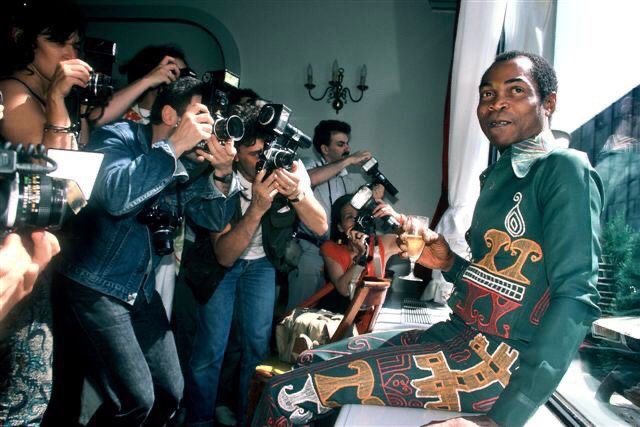
Legendary Nigerian musician and Afrobeat pioneer Fela Anikulapo Kuti has been named the first African recipient of the Grammy Lifetime Achievement Award, nearly three decades after his death.
The Recording Academy announced the honour ahead of the upcoming Grammy Awards ceremony in Los Angeles, making it a historic recognition of Fela’s enduring influence on global music, activism, and cultural consciousness.
Legendary Nigerian musician and Afrobeat pioneer, Fela Anikulapo Kuti, has been named the first African to receive the prestigious Grammy Lifetime Achievement Award, marking a historic milestone in global music history nearly three decades after his death.
The honour, announced by the Recording Academy ahead of the upcoming Grammy Awards ceremony in Los Angeles, places Fela among an elite group of global music icons whose work has left an indelible mark on culture and society.
The award will be received posthumously by members of his family, friends and longtime collaborators.
It comes at a time of renewed global interest in African music, driven by the international rise of Afrobeats and the introduction of the Best African Performance category at the Grammys in 2024.
For many, the recognition represents both a celebration of Fela’s legacy and a symbolic correction of historical oversight.
Global Recognition Long Overdue
Reacting to the announcement, Fela’s son and Afrobeat musician, Seun Kuti, described the recognition as long overdue in an interview with the BBC.
“Fela has been in the hearts of the people for such a long time. Now the Grammys have acknowledged it, and it’s a double victory,” he said. “It’s bringing balance to a Fela story.”

Former manager and longtime friend, Rikki Stein, also welcomed the development, describing it as “better late than never.”
He noted that African music had historically been sidelined in major global award platforms but said attitudes were gradually changing. “Africa hasn’t in the past rated very highly in their interests. I think that’s changing quite a bit of late,” Stein said.
The Grammy Lifetime Achievement Award, first presented in 1963, has previously honoured music legends such as Bing Crosby.
This year’s recipients include Carlos Santana, Chaka Khan and Paul Simon, but Fela stands out as the first African artist to receive the distinction.
Architect Of Afrobeat and Cultural Resistance
Widely regarded as the architect of Afrobeat, Fela Kuti pioneered the genre alongside drummer Tony Allen, blending West African rhythms with jazz, funk, highlife and politically charged lyricism.
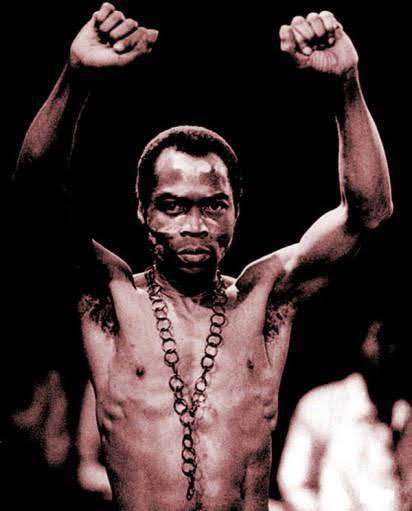
Over a career spanning nearly three decades until his death in 1997, he released more than 50 albums and built a sound that would influence generations of musicians across Africa and beyond.
Beyond his music, Fela was known for his fearless opposition to corruption, social injustice and military dictatorship in Nigeria. Stein recalled that Fela “castigated any form of social injustice, corruption [and] mismanagement” in government, often using his music as a tool of protest.
His activism reached a peak in 1977 following the release of Zombie, a song that mocked military authority.
The backlash was severe: soldiers raided and burned his Lagos commune, the Kalakuta Republic, assaulted residents and fatally injured his mother, Funmilayo Ransome-Kuti.
Fela responded not with silence but with protest music, releasing Coffin for Head of State and publicly carrying his mother’s coffin to government offices.
Reflecting further on the honour, Seun Kuti said the recognition went beyond personal pride.
“The global human tapestry needs this, not just because it’s my father,” he said, adding that Fela’s influence was rooted in discipline, leadership and humanity. “The human part of him, leadership, musicianship, fatherhood, that was the epitome of who he was.”
With the Grammy Lifetime Achievement Award, Fela Anikulapo Kuti’s impact on music and activism is now formally etched into global history, reaffirming his status as a cultural icon whose work transcended entertainment and became a powerful tool for liberation.