

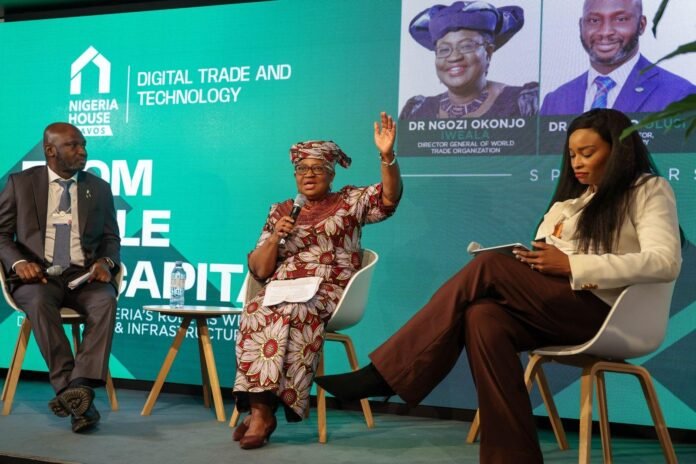
World Trade Organization (WTO) Director-General Ngozi Okonjo-Iweala has urged African nations, including Nigeria, to prioritise adding value to their products in order to strengthen trade within the continent and globally.
Speaking in an interview at the World Economic Forum in Davos, Okonjo-Iweala noted that Africa’s trade is still dominated by raw materials and commodities, with 60% of exports to other regions unprocessed.
She stressed that value addition is critical to expanding intra-African trade, which currently accounts for only 15–20% of total trade.
“We need to add value to our products, even for the intra-Africa market, because we are trading even with each other. We have mostly commodities and raw materials that we’re trading. And 60 percent of our exports elsewhere are still raw commodities. … We need to accelerate that, add value. That way we can trade different products to each other,” she said.
Opportunities for Nigeria
The WTO chief highlighted Nigeria’s potential to dominate African markets in textiles and apparel, citing the country’s vibrant fashion industry.
She also pointed to emerging sectors such as digital pharmaceuticals and digitally delivered services, where African women and youth are already excelling.
“I’m very excited that Nigeria might be able to take over the African market in textiles and apparel, because we have powerful people in fashion. … If we can capitalise on that, we can capture a big slice of the African market,” she added.
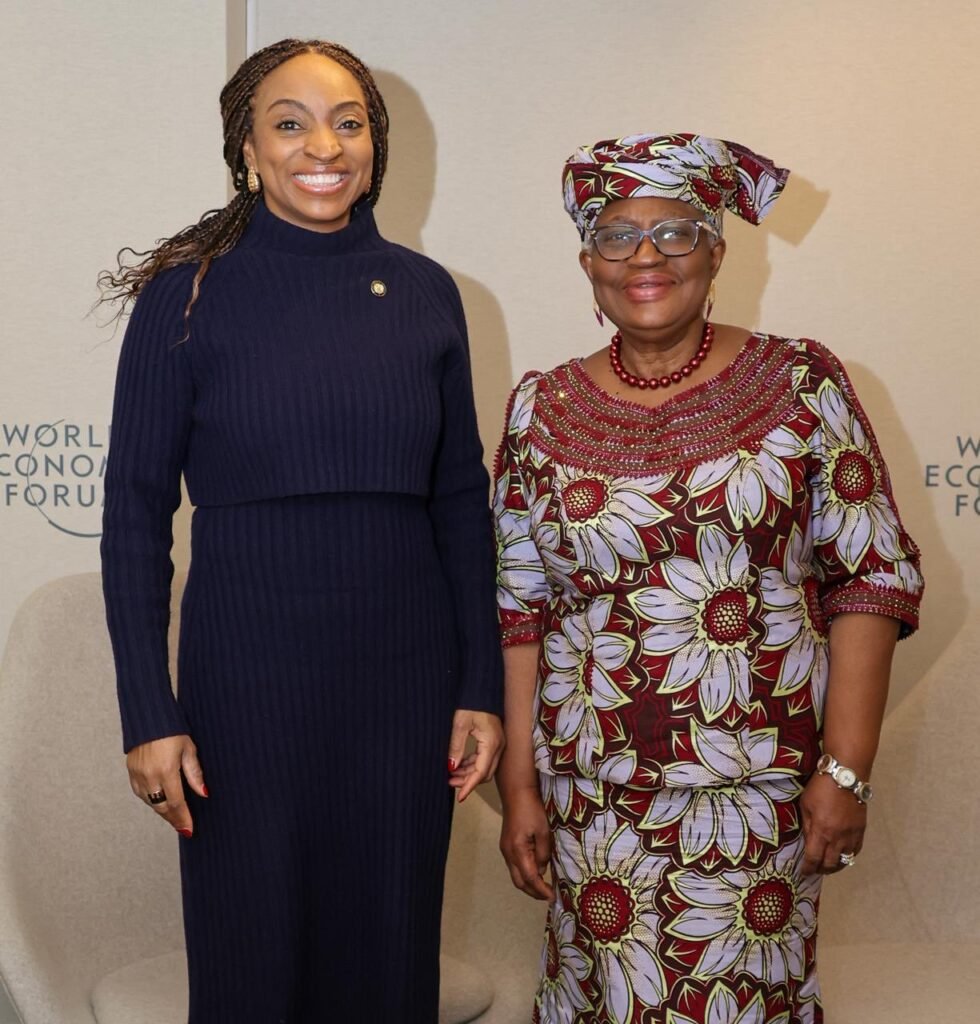
Okonjo-Iweala emphasised that scaling up these industries could give Nigeria a comparative advantage and help diversify trade opportunities across the continent.
Global Trade Resilience
Addressing concerns about the global trading environment, she dismissed claims that multilateralism has collapsed.
“Almost three quarters of world trade is still going on on WTO terms. So, there’s disruption but the system is resilient and I think we can build into that resilience,” she explained.
She noted that many countries and businesses are now seeking to diversify supply chains to reduce over-dependence on single markets.
In this context, Nigeria—with its population of 220 million and a sizable middle class—has the chance to attract supply chains in pharmaceuticals, textiles, and agro-processing.
“This is our time but it will not fall on our laps. We have to work for it and I think this is the direction,” she concluded.
Rate, Like 👍, Comment 💬, Share this article, Follow us on our social media handles, and Submit your own story to get featured and earn rewards!