

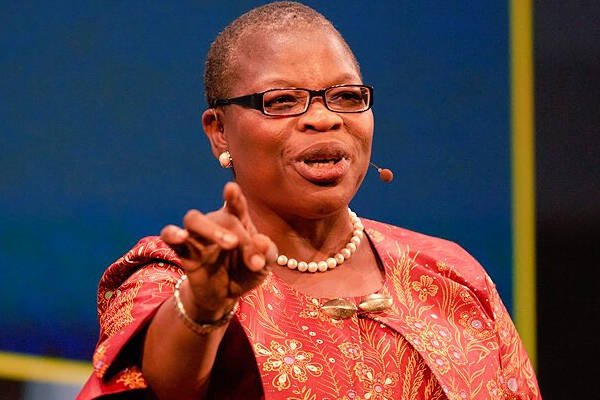
Former Minister of Education and founder of the School of Politics, Policy and Governance (SPPG), Obiageli Ezekwesili, has issued a strongly worded open memorandum to President Bola Tinubu and Lagos State Governor Babajide Sanwo-Olu, denouncing the ongoing demolition of homes in Makoko.
She described the exercise as unconstitutional, unjust, and tantamount to “state-sanctioned oppression of the poor.”
In her letter dated 19 January, Ezekwesili argued that the demolitions represent an assault on the rights of Nigerian citizens.
She questioned whether poverty nullifies citizenship, stressing that Makoko residents are not squatters but Nigerians who contribute to society.
“Makoko residents are not squatters on the Nigerian soil. They are citizens of Nigeria. They are preyed on by your same political class to vote for your parties during elections. They work. They raise families. Their children, whose education is now disrupted, are some of the most brilliant Nigerians I have met,” she wrote.
Ezekwesili accused the Lagos State Government of breaching agreements with community leaders. According to her, officials had initially assured residents that demolitions would be limited to structures within 30–50 metres of high-tension power lines.
However, she said the exercise has extended far beyond those limits, with human rights monitors citing demolitions between 277 and 522 metres from the power lines.
She described the demolitions as a “fundamental breach of trust and legality” and likened them to a land grab. Reports of at least four deaths during the exercise, she noted, evoked the biblical story of Naboth and King Ahab.
“What has happened in Makoko is not about safety nor urban development. What is happening in Makoko is that individuals in authority of the Nigerian State are engaged in a vicious Class Cleansing,” she stated.
Humanitarian Concerns
Ezekwesili warned that the demolitions have created a humanitarian emergency, leaving thousands of families homeless.
“Many are sleeping in the open, exposed to rain, heat, disease, violence, and hunger. Children have been pulled out of school. Livelihoods have been destroyed overnight,” she said.
She demanded an immediate halt to the demolitions, disclosure of the legal standards governing power-line setbacks, provision of emergency shelter and healthcare, compensation for displaced families, and accountability for the use of force against civilians.
Ezekwesili argued that the demolitions violate constitutional guarantees of dignity, fair hearing, and social justice.
“A government cannot create homelessness and then plead administrative delay. A state that leaves citizens homeless after state action has violated everything that the Nigerian Constitution guarantees,” she wrote.
She urged authorities to embrace inclusive urban development rather than forced evictions.
“What will make Lagos a respected mega-city is to strategically build up to the status of an inclusive city. Inclusive cities invest in in-situ upgrading, secure tenure, sanitation, schools, and livelihoods,” she said.
Sending a warning to political leaders, she added: “A nation that fails to govern well and turns around to criminalise poverty while celebrating wealth has lost completely its moral compass. Start immediately with the grieving children of Makoko and their families. It is fiercely urgent.”
Sanwo-Olu’s Response
Governor Babajide Sanwo-Olu, however, defended the demolitions, insisting they were necessary for public safety and infrastructure protection.
Speaking on Monday, January 19, 2026, during the signing of the state’s Appropriation Bill into law, he accused some local and international NGOs of exploiting the Makoko community for financial gain.
“Of what interest will it be to the government to unduly demolish anybody’s house, if it’s not for the overall safety of the citizens we are talking about?” the governor asked.
Sanwo-Olu explained that many of the demolished structures were built directly under high-tension power lines and dangerously close to the Third Mainland Bridge, violating safety regulations. He said the law requires a clearance of 150–250 metres from power lines, a standard ignored for years.
“They built shanties right under the high-tension wire. The regulation is clear. We are not demolishing the whole of Makoko. We are clearing people so they do not get close to the Third Mainland Bridge and to keep them off the high-tension wire,” he stated.
Criticism of NGOs
Sanwo-Olu rejected the assertions that the government intends to wipe out Makoko, calling such narratives false and misleading. He alleged that NGOs opposing the demolitions have exaggerated the situation for profit.
“We are aware that there are some local and international NGOs that want to profit from this. They make so much money from international donors. They have collected so many grants in the name of Makoko, and it is just to cover their lies and the fact that they have not done what they said they were going to do,” he said.
The governor added that the state has evidence of NGO misconduct, including videos and communications spanning two and a half years. He described their reaction as disproportionate and self-serving, saying they were “crying more than the bereaved.”
Sanwo-Olu maintained that the government’s priority is to protect lives in areas exposed to risks such as electrocution and structural collapse.
He promised that evidence of NGO misconduct would be made public, while stressing that the state would continue to act in the interest of public safety despite criticism.
Rate, Like 👍, Comment 💬, Share this article, Follow us on our social media handles, and Submit your own story to get featured and earn rewards!
 WhatsApp Channel
 Telegram Channel