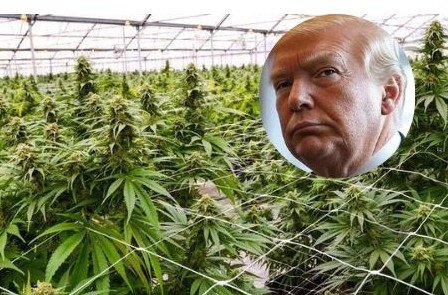
President Donald Trump has signed an executive order expanding access to cannabis, in what the White House described as the most significant shift in U.S. drug policy in decades.
The directive instructs the Attorney General to reclassify cannabis from a Schedule 1 narcotic to a Schedule 3 drug, placing it alongside substances such as Tylenol with codeine, ketamine, and anabolic steroids.
While cannabis remains illegal at the federal level, the change opens the door to expanded medical research and carries tax implications for state‑licensed dispensaries, which are currently barred from certain deductions under Schedule 1 rules.
Speaking in the Oval Office, Trump said patients had been “begging” for the change, particularly those battling cancer, seizure disorders, and veterans with service‑related injuries.
He compared cannabis to prescription painkillers, noting that while they have legitimate uses, they can also cause “irreversible damages.”
Policy Impact and Political Reactions
Alongside the rescheduling order, Trump directed officials to work with Congress to expand access to cannabidiol (CBD) and tasked health agencies with developing models to study its real‑world benefits and risks.
A senior administration official described the move as a “commonsense action” to better understand cannabis and CBD.
The order follows stalled efforts under the Biden administration, where reclassification proposals became bogged down in legal challenges.
Advocacy groups welcomed the decision, with Tim Barash of the Coalition of Cannabis Scheduling Reform calling it a “fundamental shift” that will empower the 425,000 people working in the U.S. cannabis industry.
But opposition remains strong among some Republicans. Twenty‑two senators warned that marijuana use could undermine efforts to “re‑industrialise America,” citing health risks such as impaired judgment.
Nine Republican representatives also wrote to Attorney General Pam Bondi, arguing that cannabis has “no scientifically proven medical value” and rescheduling would wrongly signal to children that marijuana is safe.
Polling shows broad public support for legalization, with a Gallup survey in November finding 64% of Americans in favor, though support has dipped among Republicans.
Rate, Like 👍, Comment 💬, Share this article, Follow us on our social media handles, and Submit your own story to get featured and earn rewards!