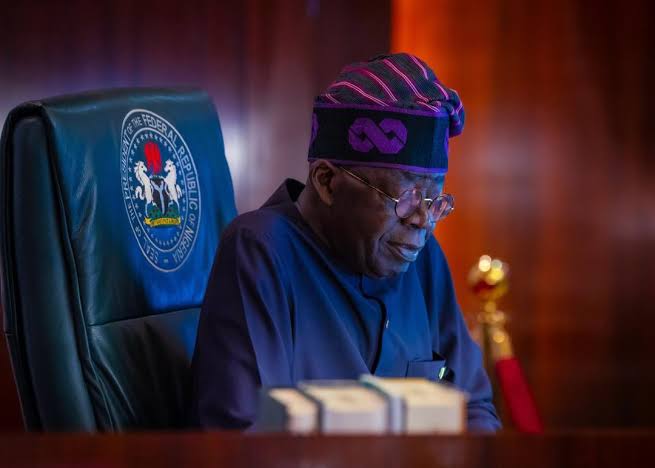
Gen. Christopher Musa, who retired as Nigeria’s Chief of Defence Staff (CDS) in October, has been screened and confirmed by the Senate as the country’s Minister of Defence following his appointment by President Bola Tinubu on Tuesday.
During his screening in Abuja, Musa emphasized that there must be no negotiation or ransom payment to terrorists, warning that such actions only empower criminal networks.
“There is no negotiation with any criminal. When people pay ransoms, it buys terrorists time to regroup, re-arm and plan new attacks. Communities that negotiated still got attacked later,” he said.
He added that ransom money could be digitally monitored, pointing out that Nigeria’s banking system already has the capacity to trace criminal financial flows if fully activated.
The retired general noted that military operations make up only 25–30 per cent of the fight against insurgency. Poverty, illiteracy, poor governance, and weak local government structures continue to feed criminality.
Musa called on state and local administrators to take responsibility for intelligence gathering and early intervention at the community level, adding that security agencies alone cannot shoulder the national burden.
“In some countries, terrorism cases are handled decisively. Here, cases drag for years. It discourages security forces who risk their lives to make arrests,” he said, urging urgent legal reforms including special terrorism courts, harsher penalties, and accelerated trials.
Maritime Crime, Illegal Mining, And Cultism Threaten Security
The Minister raised alarms about rising criminal activity across maritime corridors linking Akwa Ibom to Cameroon, citing piracy, coastal kidnappings, and sea robberies. He confirmed that Operation Delta Safe had been expanded to previously calm zones now facing criminal infiltration.
He also warned against illegal mining, describing it as a major funding source for armed groups operating in forest belts nationwide.
Musa revealed plans to reduce routine military checkpoints, freeing troops for targeted operations in forests and ungoverned areas.
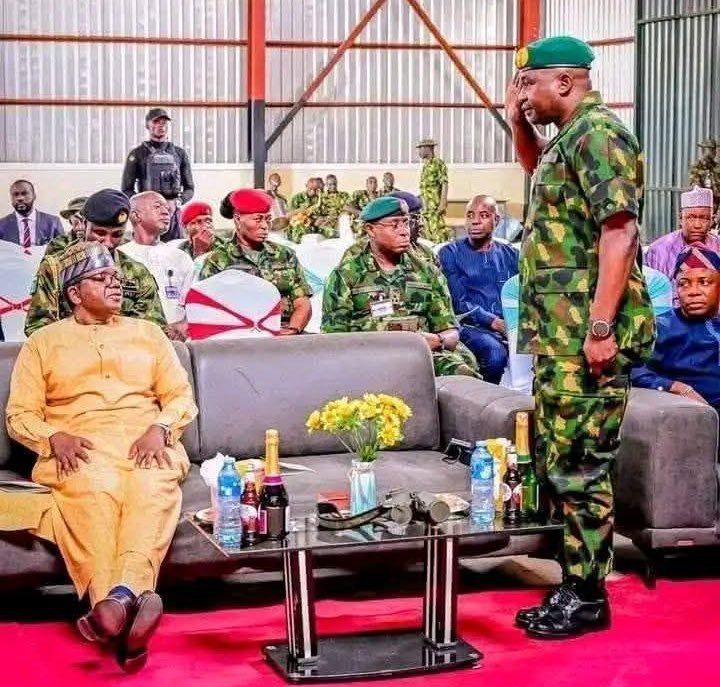
“A hungry man is an angry man. Protecting farmers means protecting the nation,” he said, stressing that safe access to farmlands and food security are critical for national stability.
Musa highlighted that Nigeria’s fragmented data systems—separately held by immigration, quarantine, and other agencies—create gaps exploited by criminals.
“Something as simple as a unified database for all citizens is urgently needed. Once you commit a crime, it should be easy to track and trace you. Other countries can instantly deactivate bank accounts or digital access; we must get to that point,” he said.
He argued that integrating ICT into security operations would allow authorities to trace ransom payments, monitor suspicious transactions, and profile criminal networks in real time.
House Seeks Transparent Prosecution of Terrorists
On the same day, the House of Representatives adopted a wide-ranging set of national security reform resolutions. One key recommendation was the open and transparent prosecution of all terrorism-related cases.
The resolutions covered fiscal reforms, institutional restructuring, intelligence upgrades, welfare improvements, judicial reforms, socio-economic interventions, and regional cooperation.
Lawmakers praised recent steps by President Tinubu, including recruitment of 20,000 additional police officers, redeployment of VIP-attached personnel, federal support for state security units, and the use of NYSC camps for training.
The House called for a review of the military’s “super-camp” doctrine, advocating forward operating bases for better territorial coverage. It also proposed a Joint Intelligence Fusion Centre, multi-agency anti-kidnap fusion cells, drones, biometric systems, AI-enabled analytics, and satellite surveillance across vulnerable borders.
Lawmakers urged accelerated establishment of state police, reduction of VIP security details, massive recruitment, better pay, and housing for personnel. They also recommended special courts for terrorism and banditry, harsher penalties for arms trafficking, and a national Truth, Justice and Reconciliation Commission.
Open Trial Debate and Expert Reactions
Human rights lawyer Evans Ufeli said open trials should focus on protecting witnesses rather than shaming terrorists. “With proper witness protection, I have no objection,” he said.
Deji Adeyanju criticized the Reps’ call, noting that some politicians maintain ties with terrorists. “There is too much romance with terrorists in Nigeria. Security has been commercialised,” he added.
Effiong Inibehe supported open trials with witness protection measures, arguing that transparency encourages justice and accountability.
Meanwhile, the Senate debated amendments to the 2022 Terrorism (Prevention and Prohibition) Act, proposing the death penalty for kidnappers, financiers, and informants.
Senate Leader Opeyemi Bamidele described kidnapping as coordinated, commercialised, and militarized, calling for it to be treated as terrorism. Senators Adams Oshiomhole and Orji Kalu supported the amendments, citing repeat offenders and the need to punish sponsors and informants.
“Nigerians have suffered in the hands of kidnappers. Young girls have been raped. Women have become widows for no reason. This must not continue,” Kalu said.
Rate, Like 👍, Comment 💬, Share this article, Follow us on our social media handles, and Submit your own story to get featured and earn rewards!
 WhatsApp Channel
 Telegram Channel