

The Federal Government has announced plans to publicly reveal the identities of individuals and networks financing terrorism in Nigeria, in what officials describe as part of far-reaching national security decisions.
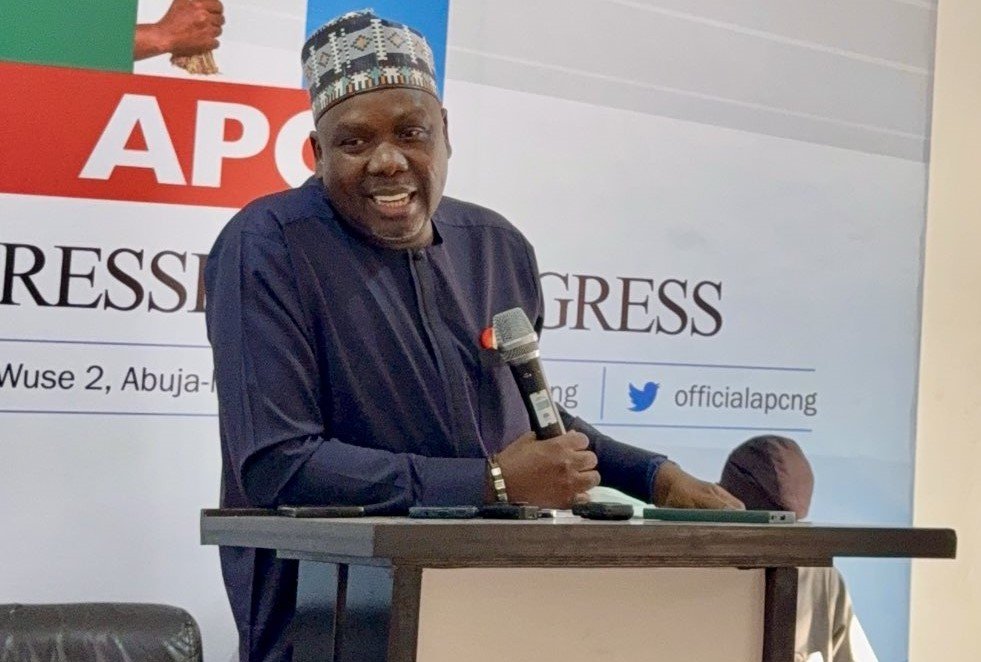
Special Adviser to President Bola Tinubu on Policy Communication, Daniel Bwala, disclosed the move during an interview on Television Continental (TVC) on Sunday.
He said the administration is intensifying efforts to counter terrorist threats and will soon expose those enabling extremist activities across the country.
“The government is making decisive interventions. In the coming days, Nigerians will know who the terrorists are and those funding them,” Bwala stated.
Bwala stressed that terrorism has evolved into a global menace transcending national borders, making international collaboration essential.
He noted that since the September 11 attacks in the United States, terrorism has been treated as a global security issue, with extremist groups expanding operations into regions like the Sahel.
“Any nation where terrorists operate becomes a concern to the rest of the world. This is why international partners must continue to cooperate with Nigeria in our efforts to dismantle terrorist networks,” he added.
The presidential aide explained that extremist activities once concentrated in the Middle East have gradually shifted towards West Africa, creating new centres of instability that demand stronger regional and international coordination.
Tinubu’s Position on Private Military Contractors
The disclosure comes as President Tinubu reiterated Nigeria’s opposition to the growing reliance on private military and security contractors in African conflict zones.
Speaking at the 7th African Union–European Union Summit in Luanda, Angola, Tinubu—represented by Vice President Kashim Shettima—warned that outsourcing peace efforts undermines sovereignty and complicates counter-terrorism operations.
“We stand resolutely against the use of private military and security companies in African conflicts, as their presence often complicates resolution efforts and undermines state sovereignty,” Tinubu told AU and EU leaders.
He argued that Africa’s security challenges, from terrorism to transnational organized crime, require coordinated state-driven responses rather than parallel forces that weaken command structures.
Nigeria’s position, he said, aligns with its long-standing approach to regional peace missions under ECOWAS and the African Union.
Tinubu also cautioned that the global shift away from multilateralism has created a more fragile security environment.
He noted that the EU remains one of the few platforms still engaging Africa on a “continent-to-continent basis, anchored on mutual respect and shared aspirations.”
Rate, Like 👍, Comment 💬, Share this article, Follow us on our social media handles, and Submit your own story to get featured and earn rewards!
 WhatsApp Channel
 Telegram Channel