


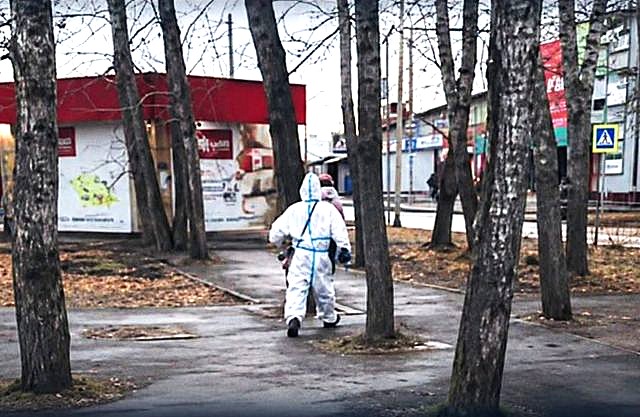
A 28-year-old laboratory assistant at the Irkutsk Anti-Plague Research Institute died in the early hours of 2 October 2026 in the intensive care unit of Shelekhov district hospital.
She was identified as Daria Shipilova by independent Russian media and confirmed by state broadcaster REN TV.
According to colleagues and independent outlets, Shipilova accidentally broke a test tube containing Yersinia pestis — the bacterium that causes plague — on 25 September while working with live biological material.
She reportedly told medical staff she had smashed the tube while collecting samples for testing. Her condition deteriorated rapidly two days later, and she was rushed to hospital with symptoms of severe pneumonia.
The Official Response
Rospotrebnadzor, Russia’s state agency for consumer protection and infectious disease control, initially described the illness only as a “particularly dangerous infection“.
Governor Igor Kobzev avoided using the word “plague” in his first public statements.
On 4 October, Rospotrebnadzor issued a formal statement saying Shipilova had been diagnosed with “pneumonia of unspecified aetiology” and that laboratory tests found no microorganisms related to her professional work.
The agency said the sanitary and epidemiological situation in Irkutsk and Shelekhov remains “stable” and denied reports of accidents involving pathogenic microorganisms at the institute.
Nearly 200 Under Observation
Around 200 people who may have had contact with Shipilova were placed under medical observation, including more than 100 in hospital wards.The Shelekhov district hospital was placed under quarantine pending assessment by a special commission.
Masks were made compulsory at the Irkutsk aluminium plant in Shelekhov, and residents reported seeing people in protective suits, masks and gloves on the streets. Local parents said masks were handed out in kindergartens.
The head of Buryatia, Alexei Tsydenov, initially confirmed the woman had died from an unspecified form of plague, citing Rospotrebnadzor and his regional government.
His statement was later amended to more cautious wording. The head of Rospotrebnadzor, Anna Popova, travelled urgently to Shelekhov to attend an emergency meeting of the sanitary and anti-epidemic commission chaired by Governor Kobzev.
Authorities in Baikalsk urged residents not to travel to Shelekhov because of plague, but deleted the post hours later.
Pneumonic Plague Explained
Pneumonic plague is a severe and deadly form of plague that affects the lungs.It can be transmitted directly from person to person through airborne droplets.
The incubation period is one to three days, and without prompt antibiotic treatment, the mortality rate is almost 100 per cent.
Governor Kobzev said all identified contacts had been placed under medical observation and showed no signs of illness, with laboratory test results returning negative.
He urged the public to remain calm and said the situation was under strict control. Rospotrebnadzor stated that colleagues of the deceased had not reported any infectious symptoms in the preceding ten days.
However, it’s important to note that this is not a new virus but a known bacterial infection — plague.
Unlike COVID‑19, it can be treated effectively with antibiotics if caught early. So far, all contacts have tested negative, and there is no evidence of wider spread.
While the secrecy is troubling and worth watching, this is a treatable, familiar disease, not the beginning of another pandemic.





Let this not be the birth of yet another pandemic outbreak, with forced lockdowns, because the world can not have that right now. And when handling such deadly components I think it is right that the place be airtight as well as well guarded to avoid things like this.
For the deceased, rest in peace, as for the 200 people, fast and speedy recovery to you all.