





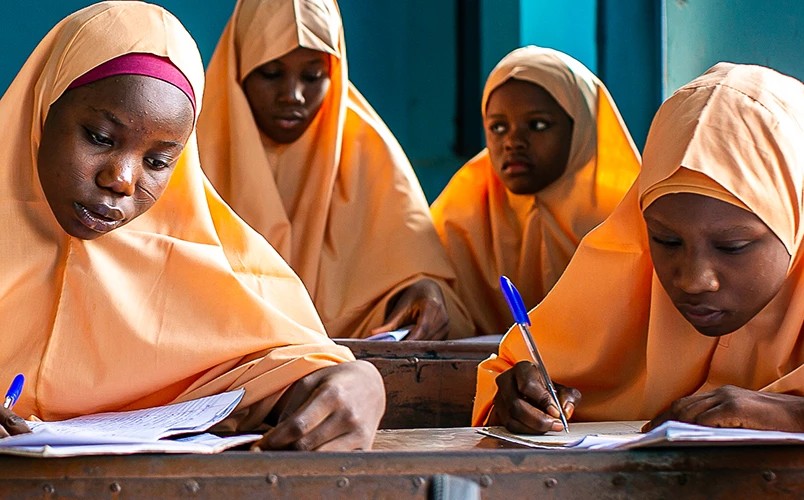
The Federal Government has warned that girls can effectively drop out of school while still sitting in the classroom. It asked teachers to identify and address bullying, abuse, exclusion and other factors that silently push learners out of education.
The Minister of State for Education, Prof. Suwaiba Ahmad, gave the warning on Monday in Abuja. She spoke at the National Trainers’ Workshop on Safe Learning Environment, Gender-Responsive Technology and ICT Skills for Educators in Teacher Training Institutions in Nigeria.
Ahmad, who was represented by the Director, College of Education in the Federal Ministry of Education, Dr Uchenna Uba, said physical attendance alone should no longer be taken as proof that a child was benefiting from education.
Bullying, Abuse Push Girls Out of School, FG Warns
She said a girl could remain in school every day but gradually withdraw after being repeatedly ignored, ridiculed, bullied or made to feel unsafe.
“A girl does not always leave school on a day her name disappears from the register. Sometimes she leaves a little early while she is still sitting in the classroom,” she said.
“She raises her hand and is never called upon. Other children laugh when she speaks, and no one stops them. Someone makes her feel unsafe, and she cannot think of an adult she trusts enough to tell.”
“She is present every morning, but slowly, quietly, she withdraws. If we count only enrolment, we may miss that girl entirely,” she said.
The minister said the warning showed the need for Nigeria to go beyond simply enrolling children in school. It must also ensure that they were safe, included and learning.
She cited UNICEF data indicating that 74% of children aged seven to 14 lacked basic reading and mathematics skills in 2024. Behind the statistics, she said, were children whose educational needs required urgent attention.
FG Trains 45 Master Trainers on Safe Learning
Ahmad said the Federal Ministry of Education had introduced the National Policy on Anti-Bullying in Nigerian Schools and its implementation guidelines.
However, she said the success of such policies would depend on teachers and other adults in schools.
She said teachers must be able to recognise bullying, respond appropriately to reports of abuse and create an environment where children feel safe enough to seek help.
“Success, however, will be decided in schools and classrooms by whether a teacher recognises bullying, whether a child knows how to seek help, and whether the adults responsible respond with care and consistency,” she said.
The minister said teachers themselves often worked under difficult conditions. These include overcrowded classrooms, limited teaching materials and heavy workloads.
She therefore said policies alone could not solve the challenges in the education sector without preparing teachers to implement them.
“We cannot simply hand her a policy and expect every difficulty to disappear. We must prepare her to put it in practice. That is the promise of this workshop,” Ahmad said.
The workshop will train 45 master trainers from 15 teacher training colleges.
They will learn gender-responsive pedagogy, safe learning environments, prevention and response to school-related gender-based violence, and digital teaching.
The master trainers are expected to pass the training on to about 500 teacher educators.
Commendation and Appreciation
Ahmad commended the government of Japan, through UNESCO, for supporting the 15 colleges with ICT equipment. She described the intervention as an investment in the institutions that prepare Nigeria’s future teachers.
She asked participants to ensure the equipment led to practical improvements in teaching rather than becoming unused facilities.
In his goodwill message, the Provost, Federal College of Education (Technical), Asaba, Dr James Olisa, spoke for the Committee of Provosts.
He described the intervention as timely and said teacher-training institutions must be equipped for modern classrooms.
Also speaking, the Deputy Head of Mission at the Embassy of Japan in Nigeria, Kozaki Hitoshi, restated Japan’s commitment to supporting education development in Nigeria.
He said Japan’s partnership with Nigeria was based on collaboration and local ownership.

 WhatsApp Channel
 Telegram Channel





Honestly, this happens a lot, you can be physically present and yet absent in mind and soul. It is not only about the ones who get left out during questions in classrooms but also about the ones who are still small children but shouldering the responsibilities and worries of adults at home. Timely intervention is necessary and maybe even one of the ways to prevent and stop it.