





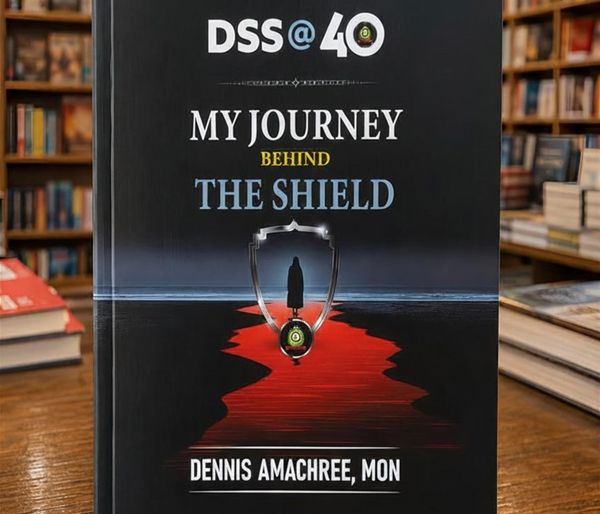
A newly released book by a retired Nigerian security officer has offered a detailed, first-hand account of the final hours of former military Head of State, Gen. Sani Abacha.
In the book, titled DSS @40: My Journey Behind The Shield, retired Assistant Director of the Department of State Services (DSS), Dennis Amachree, said Abacha died in the early hours of June 8, 1998, at the Aso Villa in Abuja, while with a young pharmacist during an intimate encounter.
Amachree, who interrogated the woman shortly after Abacha’s death, quoted her as telling him: “I did not kill him, he died on top of me.”
Abacha ruled Nigeria as its seventh military leader from November 1993 until his sudden death in July 1998, at age 54.
His death has long been shrouded in speculation, with competing theories ranging from poisoning to foreign intelligence involvement.
Amachree said the pharmacist’s account, which points to a coitus-related cardiac arrest, is the accurate version of events, and dismissed rival narratives as “an act of deceit and a disservice to our countrymen and women.”
How Abacha Died, According To Amachree
According to Amachree’s account, in Chapter 17, titled “The Months Of Death: A Turning Point In Nigerian History,” Abacha’s girlfriend, an Igbo woman he did not name, arrived at the Aso Rock Guest House at about 2:40am on June 8, shortly after Gen. Jeremiah Useni had left.
She brought her younger sister, a pharmacist visiting Abuja for a conference, and the pair stopped by to greet Abacha after he had bought his girlfriend a new SUV.
The girlfriend soon returned to her hotel, leaving her sister alone with Abacha.
At about 4:05am, as the two grew intimate, the pharmacist realised Abacha had stopped moving.
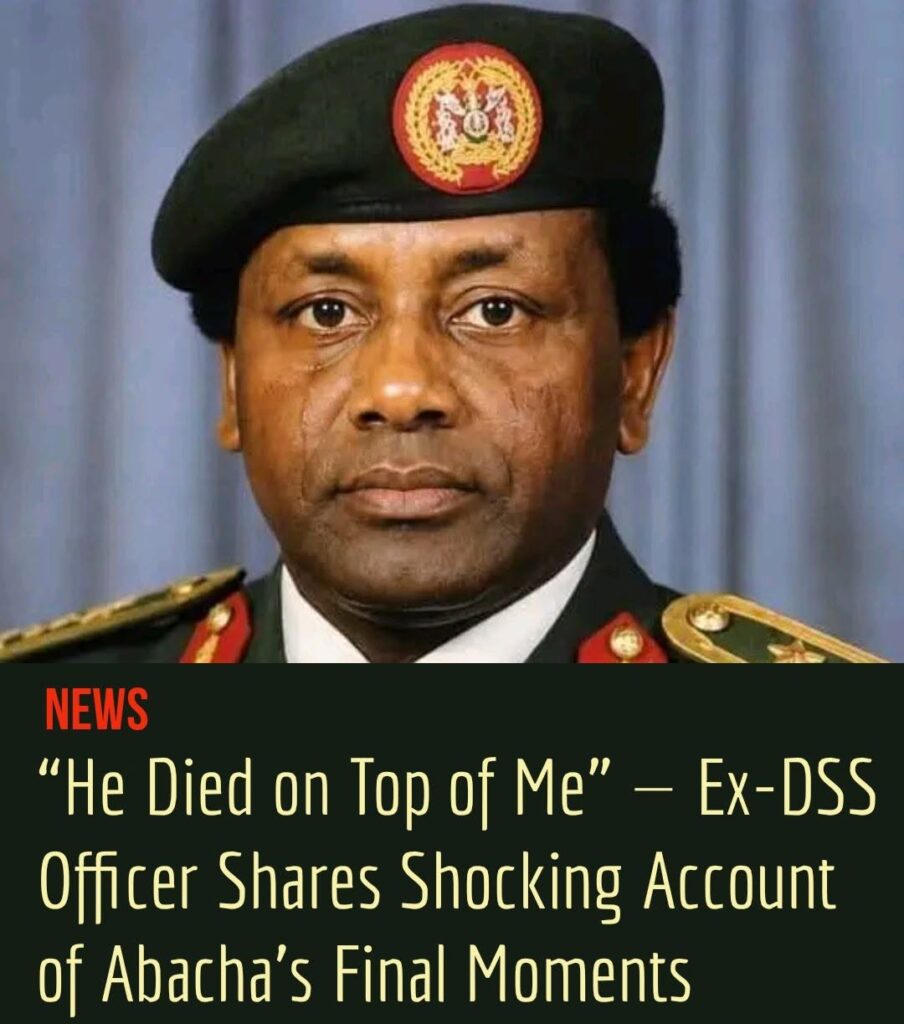
“She called out to him, but he was unresponsive and stiff. She checked his pulse; there was none,” Amachree wrote.
In a panic, she got dressed and told the soldier on guard duty that Abacha had asked for a car to take her back to her hotel.
She then rushed to the Nicon Noga Hilton, told her sister what had happened, and was driven to the airport to catch the 7am Okada Airline flight to Lagos.
Amachree said this gap is “the window Major Al-Mustapha missed” when he later tried to piece together the final hours before Abacha’s death was confirmed.
Amachree Disputes Six Competing Theories
In the book, Amachree examined and rejected six previously published accounts of Abacha’s death.
He dismissed a report by Irish Times journalist David Orr, which cited an unnamed diplomat alleging Abacha was poisoned by disaffected military officers, saying it was contradicted by a Nigerian newspaper’s report on autopsy results that ruled out poisoning.
He also rejected former US National Security Advisor Susan Rice’s account, which echoed rumours that Abacha died in the company of sex workers after using Viagra, calling it unsupported by evidence.
Major Hamzat Al-Mustapha, Abacha's Chief Security Officer at the time, had alleged that Abacha’s health collapsed after shaking hands with a security guard of a visiting dignitary.
Al-Mustapha remains a well-known figure in Nigerian security circles, having later been tried and controversially acquitted over the 1996 killing of Kudirat Abiola.
Amachree said Al-Mustapha’s version differed significantly from other timelines and left a critical gap in the hours after Gen. Useni’s departure.
He also dismissed the account of the late Gen. Jeremiah Useni, a close friend of Abacha’s who supported the official story of death by natural causes, and that of medical officer Brig-Gen Oviemo Ovadje, who linked the death to long-term health issues worsened by steroid use.
Finally, Amachree rejected former Aviation Minister Femi Fani-Kayode’s social media allegations of a CIA-orchestrated, poisoned-handshake plot, saying the theory lacks evidence but reflects deep public distrust of official narratives.
The Interrogation And Its Aftermath
Amachree said he was the Assistant Director of Operations and Intelligence at the Lagos State SSS Command when he received a call about Abacha’s death on June 9, 1998.
He was ordered to send operatives to an address in Ogudu, Lagos, to arrest the pharmacist.
“My team located and brought her to my office. I interrogated her myself. The first thing she said to me was: ‘I did not kill him, he died on top of me.’ After her detailed account, I called the Director in Abuja, and she was immediately flown back,” he wrote.
He said that once the news broke, media outlets circulated exaggerated stories involving imported foreign sex workers and a poisoned apple.
Amachree linked the confusion around Abacha’s death to a wider pattern in Nigerian public life.
“The confusion surrounding Abacha’s death is a microcosm of a larger problem in Nigeria: a leadership culture steeped in falsehood and a lack of accountability,” he wrote.
He said the deliberate suppression of facts by those who should be held to a higher standard has kept the country in what he called a retrogressive circle.
Amachree also reflected on Abacha’s fall, saying that despite surrounding himself with a heavy security detail, the dictator could not escape death, which he wrote “kept its appointment with him.”
Backstory: Abacha’s Rule And The Road To His Death
Abacha’s death came about a month before that of Chief Moshood Abiola, winner of the annulled June 12, 1993 presidential election, who was in Abacha’s custody and died in July 1998.
Abiola’s election had been annulled by Gen. Ibrahim Babangida, whose military government then installed an unelected interim civilian administration under Chief Ernest Shonekan, with Abacha serving as defence minister.
Public rejection of that arrangement gave Abacha the opening to force out Shonekan within three months and take power himself, becoming a full military dictator.
His five-and-a-half-year rule was marred by widespread human rights abuses, including arbitrary arrests, torture and extrajudicial killings, and Amachree said the number of political detainees during that period reportedly exceeded the total recorded across Nigeria’s entire British colonial era.
In his final days, Abacha received emissaries from Palestinian Liberation Organisation leader Yasser Arafat, and later Pope John Paul II, who had travelled to Nigeria to appeal for the release of political detainees.
Before his death, Abacha had also been working on a self-succession plan to convert his military rule into a civilian presidency, forming five political parties and installing loyalists who ensured each party adopted him as its presidential candidate.
Former Oyo State governor Chief Bola Ige famously described the arrangement as “five fingers of a leprous hand.”
About the Book:
- Author: Dennis Amachree (MON)
- Title: DSS at 40: My Journey Behind the Shield – Sunshine Bookseller
- Overview: The 348-page memoir offers an insider’s perspective on Nigeria’s internal intelligence agency (DSS) over four decades. It recounts key historical events, frontline intelligence operations, national security challenges, systemic governance issues, and firsthand details surrounding pivotal moments in Nigeria’s political history.

 WhatsApp Channel
 Telegram Channel



Hard to tell. Even the private room of a Head of State must be under electronic surveillance especially when entertaining a guest. It’s unlikely this book will end the speculation just because of a said so.
That is also an important point.
This is now only for history documentation. Which of the versions is true remains a mystery. Presently, this adds no value to the current economic crisis and bad leadership in the country. Unfortunately, even with history, people don’t learn.