
The United States Congress has delivered a sweeping set of recommendations to the White House over violence in Nigeria, describing the country as “the deadliest place in the world to be a Christian.”
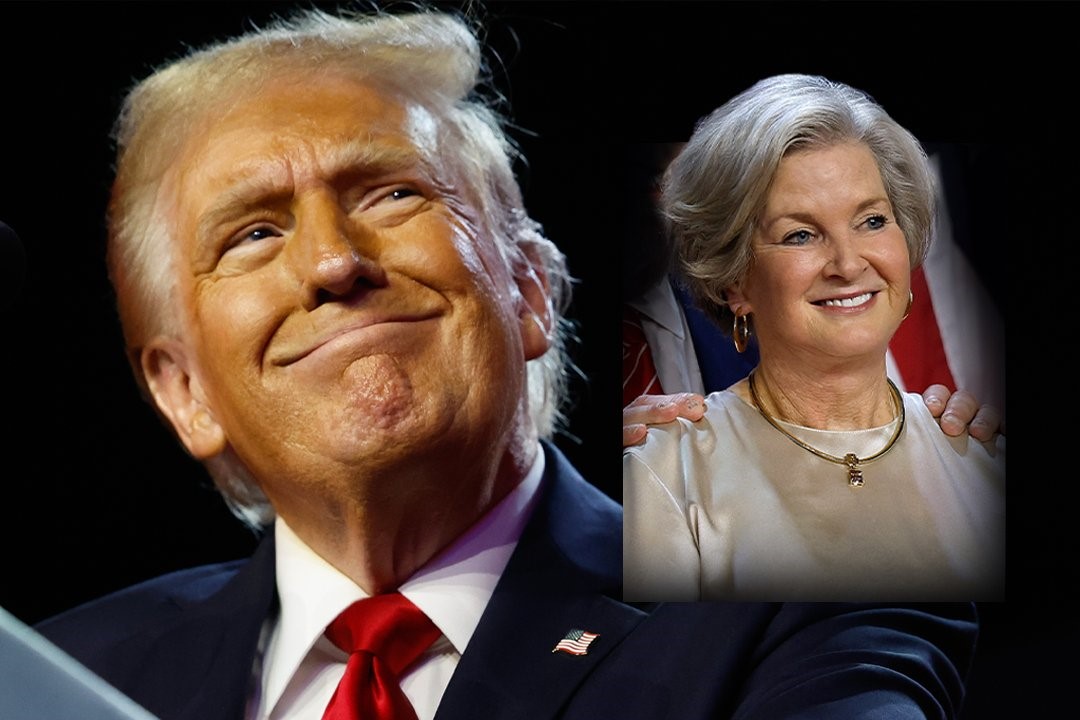
The report followed a congressional investigation led by Rep. Riley M. Moore after former President Donald Trump redesignated Nigeria as a Country of Particular Concern (CPC) under the U.S. International Religious Freedom framework.
Lawmakers asked the administration to invoke CPC presidential directives, impose sanctions, and continue visa bans on individuals linked to violence against Christians.
Nigeria’s Federal Government rejected claims of a state-backed religious persecution policy. Officials described the report as an opportunity for engagement rather than confrontation.
According to the lawmakers, their findings followed months of hearings, meetings with displaced persons, and consultations with religious leaders and Nigerian officials.
They wrote: “Christians are subject to ongoing violent attacks from well-armed Fulani militias and terrorist groups, resulting in the death and murder of tens of thousands of Christians, including pastors and priests.”
They added: “Blasphemy laws in Nigeria’s northern states are used to silence speech and dissent, target Christians and minorities, and justify so-called ‘convictions’ without due process.”
Congress Seeks Sanctions and Sharia Repeal
The panel called for the repeal of Sharia criminal codes and anti-blasphemy laws in northern Nigeria. Sharia operates alongside Nigeria’s secular legal system in several states, mainly in personal and family matters for Muslims, as provided under the 1999 Constitution.
Lawmakers also proposed that Washington explore leverage points to compel armed Fulani groups to disarm. That could include blocking beef exports to countries such as Ghana, Senegal, and South Africa.
They recommended classifying certain militia groups as Foreign Terrorist Organizations and requested a National Intelligence Estimate on sectarian violence in Nigeria.
The report further suggested that Nigeria divest from Russian military equipment in favor of American systems. It also called for countering what it described as destabilizing Chinese influence.
“Our brothers and sisters in Christ have suffered in silence for too long. The world is now watching,” Moore said in a statement.
He added: “This report outlines concrete steps to impose accountability measures, counter radical Islamic terrorism, and lays out a plan to work in coordination and cooperation with the Nigerian government.”
Lawmakers asked for a GAO audit on U.S. aid to Nigeria. They want proof of progress before additional funds are released.
The proposals included strengthening anti-money laundering systems and disrupting terrorist financing networks.
Nigeria has battled violent insurgencies for over a decade. Groups such as Boko Haram and the Islamic State West Africa Province have carried out attacks in the northeast, while banditry and communal clashes affect parts of the northwest and Middle Belt.
FG Rejects Religious Persecution Narrative
Nigeria’s Minister of Information, Mohammed Idris, responded that the country has no policy targeting any religion.
“Nigeria does not have, and has never had, a state policy of religious persecution,” he said.
He acknowledged ongoing insecurity but described it as driven by terrorism, banditry, and communal tensions rather than religious bias.
“The Constitution of the Federal Republic of Nigeria guarantees freedom of religion and freedom of worship for all citizens,” Idris said.
He listed intensified military offensives, improved intelligence sharing, and deployment of forest guards as part of the government’s strategy.
The minister said the government remains open to dialogue with Washington. He described the report as a catalyst for broader cooperation.
Religious Leaders and Analysts Warn of Tension
The Christian Association of Nigeria warned that foreign calls to repeal Sharia provisions could inflame tensions.
A senior CAN official said: “If you look at the process required to amend the Constitution, you will see that it could create serious tension.”
The official advocated a new, people-driven constitution rather than selective repeal of laws.
Kaduna-based cleric Ahmad Gumi defended Sharia.
“Shariah Law is the Muslims’ prerogative just as the US found it only necessary to protect the Christians,” he said.
Another cleric, Halliru Maraya, argued that violence affects all communities.
“Both Muslims and Christians are at the receiving end,” he said. “The perpetrators are not sparing one religion against the other—they kill everyone.”
Political scientist Jibrin Ibrahim described the crisis as complex.
“It’s much wider and much more complex than that. Definitely, Christians are being killed, but Muslims are also being killed,” he said.
Former diplomat Ibrahim Kawu questioned U.S. involvement.
“The US doesn’t respect Nigeria as a sovereign state,” he said.
The debate now centers on sovereignty, security cooperation, and religious freedom.
Rate, Like 👍, Comment 💬, Share this article, Follow us on our social media handles, and Submit your own story to get featured and earn rewards!