

Nigeria’s industrial future took center stage on Tuesday as President Bola Tinubu unveiled the Nigeria Industrial Policy 2025, declaring that Dangote Cement paid about ₦900 billion in taxes in 2025 alone.
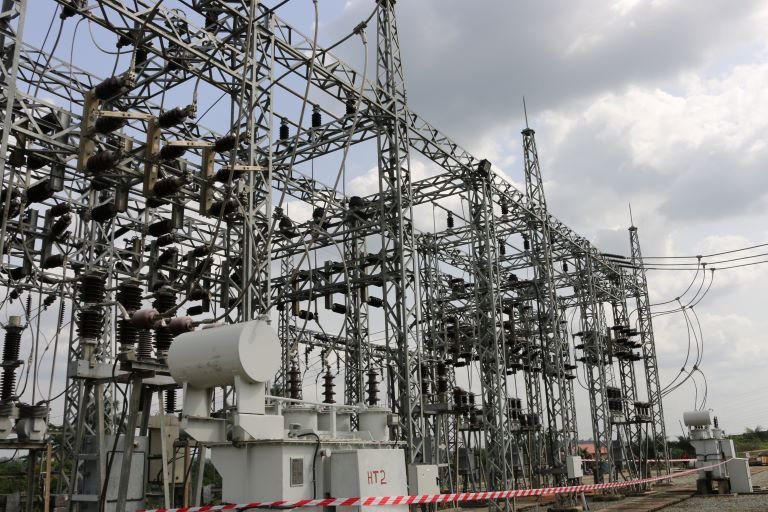
The President said the contribution reflects the scale and potential of Nigeria’s manufacturing sector. He added that Dangote Industries generates more electricity for its operations than many Nigerian states.
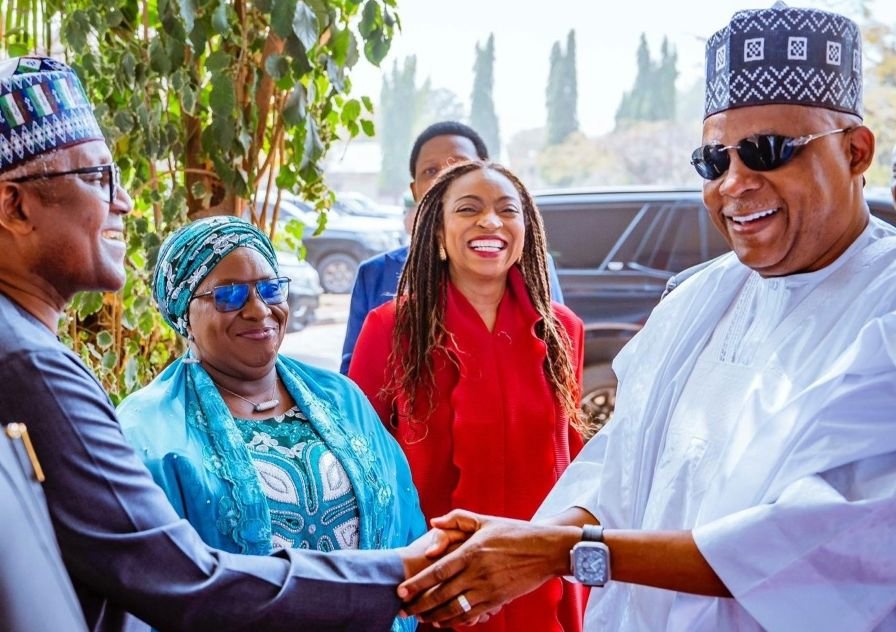
President Tinubu, represented by Vice President Kashim Shettima, spoke at the official launch of the new policy in Abuja.
He described the blueprint as a practical step toward rebuilding Nigeria’s industrial base and placing production, competitiveness, and jobs at the heart of economic strategy.
“Dangote generates more energy for its industries than many Nigerian states, which is a plus for the African continent,” Tinubu said.
He noted that Nigeria must invest in infrastructure to compete globally in the ongoing industrial revolution.
“To occupy more than the margins in this present wave of industrial revolution, we must put in place infrastructure to compete with the rest of the world,” he said.
He explained that the Nigeria Industrial Policy 2025 was born out of that planning process.
Tinubu: Execution Will Define Success
The President acknowledged long-standing weaknesses in Nigeria’s industrial landscape.
He said the country has battled fragmented value chains, high production costs, infrastructure gaps, policy inconsistency, and weak coordination between government and industry.
“This stops now,” Tinubu declared.
He described the policy as both an admission of past shortcomings and a roadmap to unlock value across key sectors. According to him, the government will judge progress by visible outcomes, not paperwork.
“This administration will not measure success by the number of documents we produce, but by the number of factories that open their gates at dawn, the jobs created for our young men and women, the exports that leave our ports bearing the mark of Nigerian excellence, and by the value retained within our own economy,” he said.
Tinubu said the policy prioritizes sectors where Nigeria has clear comparative advantages. It also seeks to deepen value chains and reduce dependence on raw material exports.
He added that micro, small, and medium enterprises will sit at the center of the industrial plan.
“Prosperity must not be exclusive,” he said, noting that infrastructure and energy development will align with industrial growth.
Dangote Predicts Stronger Naira
Meanwhile, President of the Dangote Group, Aliko Dangote, in his remarks, praised the Federal Government for introducing what he called a progressive industrial strategy.
He said Nigeria stands out in Africa because its private sector is larger than the government in economic weight.
Dangote expressed confidence that the naira will appreciate further this year and into 2026.
“Today, the dollar is ₦1,340. Mr. Vice-President, I can assure you with what I know, blocking all this importation and co, naira this year will be as low as ₦1,100 if we are lucky,” he said.
He added, “The naira, this year, will be at ₦1,000 to $100.”
Dangote argued that strong currency stability and clearer economic policies have renewed investor interest in Nigeria. However, he insisted that local industries must be protected.
“If there is no protection, there is no way any industry will thrive here,” he said.
He maintained that Nigeria must stop exporting raw materials and importing finished goods.
“What you should be is to manufacture all the things that we need,” he said.
Dangote noted that since the soft launch of the policy at the Nigeria Economic Summit Group 2025 Macroeconomic Outlook, one message has stood out.
“Industrialisation is no longer optional; it is central to Nigeria’s future,” he said.
Minister of State for Industry, Senator John Owan Enoh, described the launch as a turning point.
He said industrialization is now a disciplined national priority backed by structured implementation.
United Nations Resident and Humanitarian Coordinator in Nigeria, Mohamed Malick Fall, said the policy reflects Nigeria’s ambition to become a strong player in regional and global value chains.
He explained that the framework grew from collaboration between Nigeria and the United Nations Industrial Development Organisation.
The President of the Manufacturers Association of Nigeria, Francis Meshioye, pledged full industry support. He said manufacturers are focused on effective implementation.
The naira recently appreciated to ₦1,335.95 at the official market and about ₦1,380 at the parallel market.
Rate, Like 👍, Comment 💬, Share this article, Follow us on our social media handles, and Submit your own story to get featured and earn rewards!
 WhatsApp Channel
 Telegram Channel