

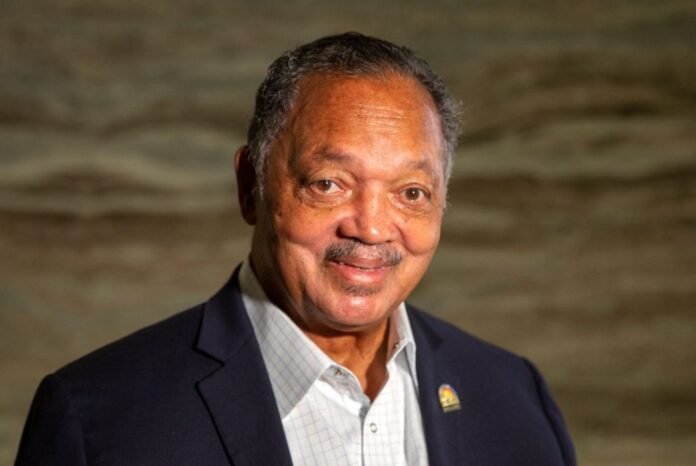
Rev. Jesse Jackson, the civil rights leader who marched with Martin Luther King Jr. and twice ran for president, has died at 84.
His family said Jackson passed away peacefully on Tuesday morning, surrounded by loved ones.
“His unwavering commitment to justice, equality, and human rights helped shape a global movement for freedom and dignity,” they wrote in a statement.
Jackson had battled health challenges in recent years.
He revealed in 2017 that he had Parkinson’s disease, and in November 2025 doctors diagnosed him with progressive supranuclear palsy, a rare degenerative condition.
Early Life and Education
Born in Greenville, South Carolina, on October 8, 1941, Jackson grew up in modest circumstances.
His mother, Helen Burns Struggs, was just 16 when he was born. He later took the surname of his stepfather, Charles Jackson.
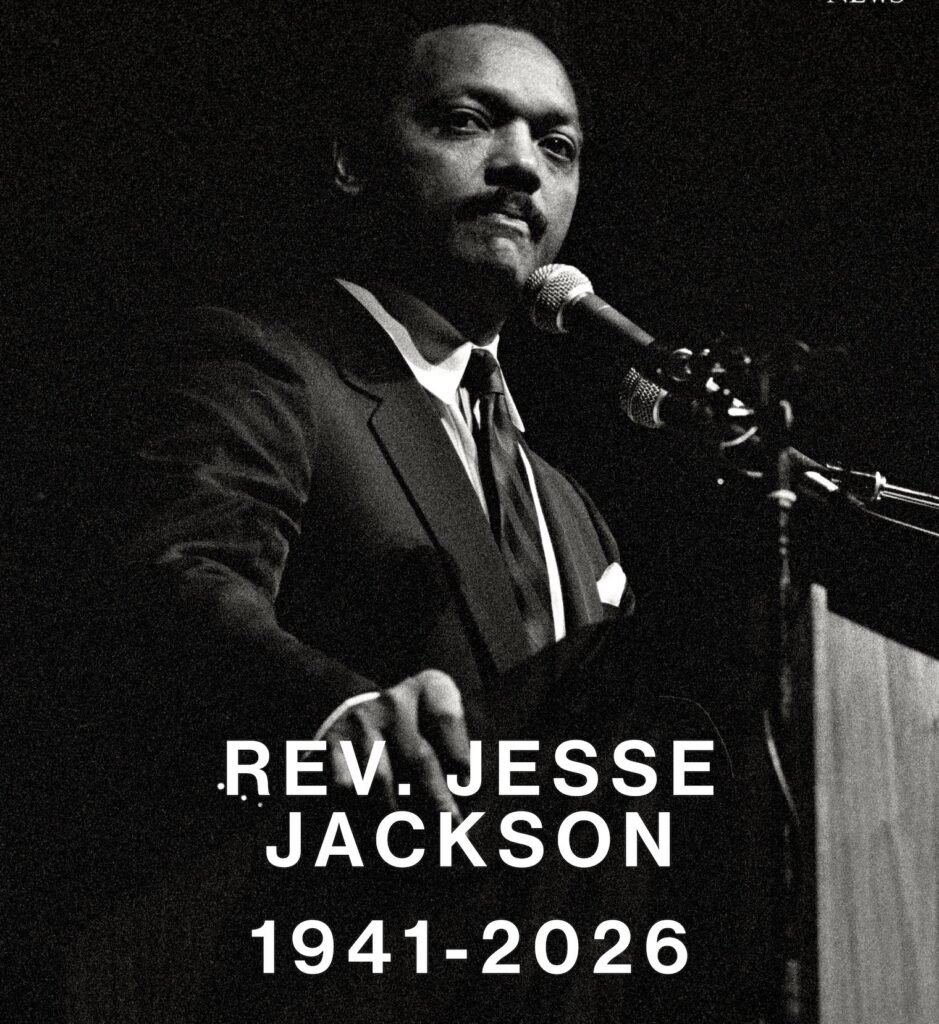
An honors student in high school, Jackson earned a football scholarship to the University of Illinois before transferring to North Carolina A&T State University, where he graduated in 1964.
His activism began early, with sit-ins and protests against segregation.
Marching With King
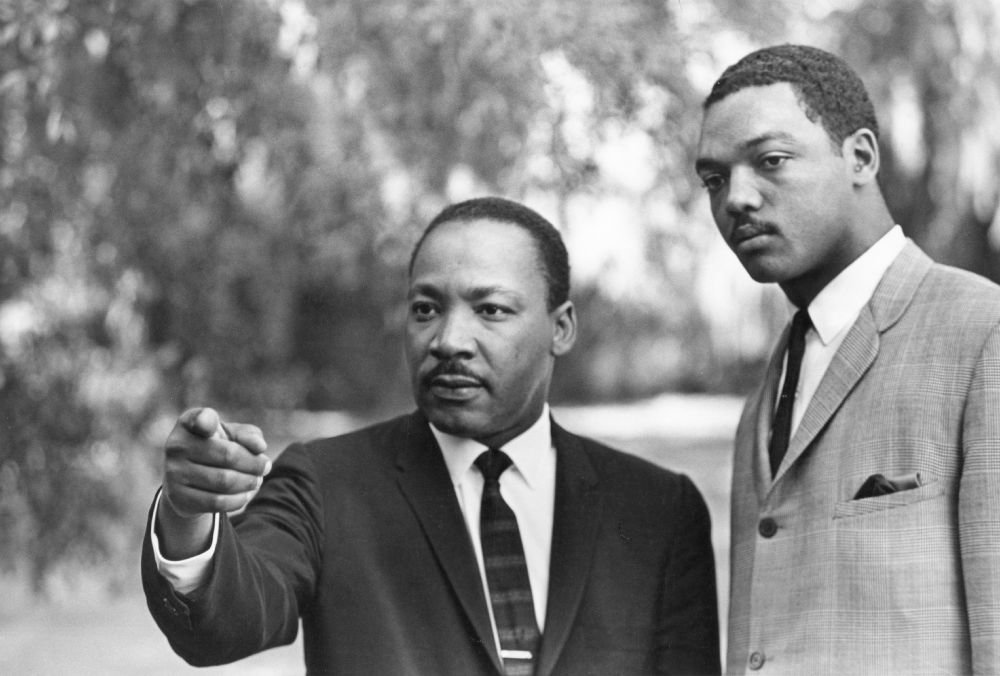
Jackson joined Martin Luther King Jr. in Selma and became part of King’s inner circle. He was present in Memphis in April 1968 when King was assassinated at the Lorraine Motel.
That same year, Jackson was ordained by Rev. Clay Evans.
Though he left Chicago Theological Seminary three credits short of a degree, the seminary later awarded him a Master of Divinity in 2000, recognizing his lifelong work.
After King’s death, Jackson founded PUSH (People United to Save Humanity) in Chicago.
In 1984, he launched the Rainbow Coalition, focused on voter engagement and social justice. The two groups merged in 1996 as the Rainbow PUSH Coalition.
Jackson’s leadership earned him more than 40 honorary doctorates from universities nationwide.
He also became a trusted figure abroad, negotiating the release of hostages and serving as a special envoy under President Bill Clinton.
Political Ambitions
Jackson ran for the Democratic presidential nomination in 1984 and 1988. In 1984, he won 18% of the primary vote and carried several states, breaking barriers for African American candidates.
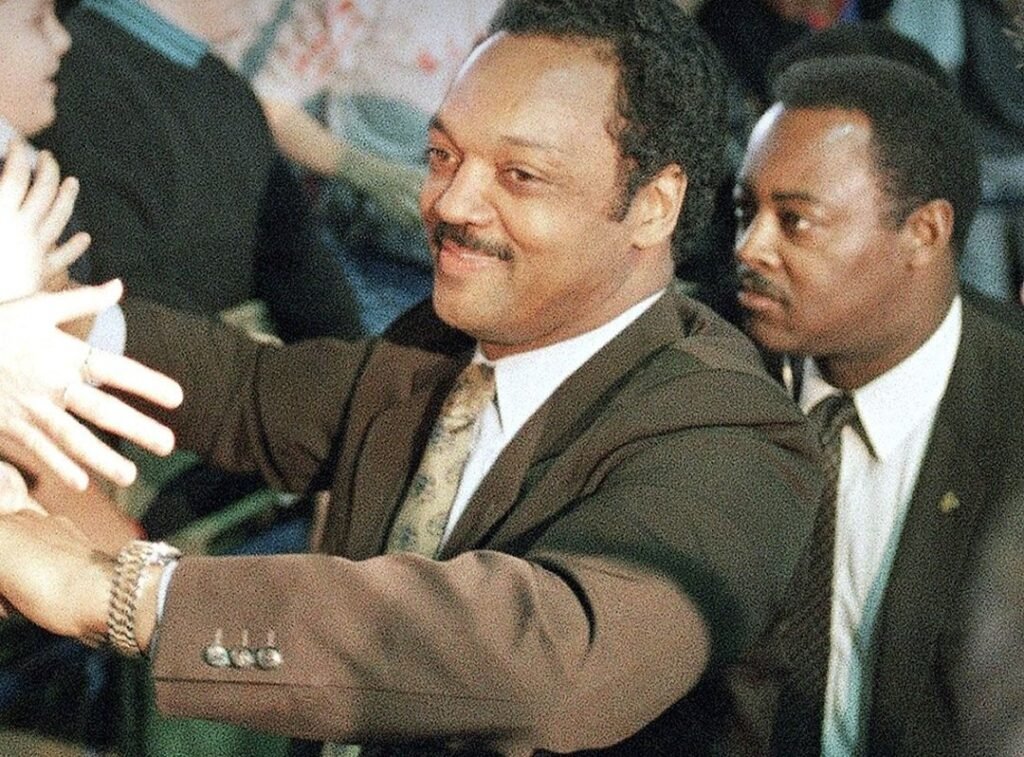
His campaigns were not without controversy, including criticism over remarks about New York’s Jewish community.
Despite never holding elected office, Jackson remained a powerful political voice.
In 2000, Clinton awarded him the Presidential Medal of Freedom (clintonwhitehouse4.archives.gov in Bing), the nation’s highest civilian honor.
Legacy and Final Years
Jackson’s influence stretched across decades. On election night in 2008, he was seen in tears as Barack Obama became the first Black president. “We paid a price to get here,” Jackson told newsmen then, recalling the sacrifices of civil rights martyrs.
He is survived by his wife of more than 60 years, Jacqueline, their children, and countless admirers worldwide.
Public observances will be held in Chicago, with details to be announced by the Rainbow PUSH Coalition.
Rate, Like 👍, Comment 💬, Share this article, Follow us on our social media handles, and Submit your own story to get featured and earn rewards!