



Justice Obiora Egwuatu of the Federal High Court has withdrawn from two high‑profile cases filed by the Economic and Financial Crimes Commission (EFCC) against former Attorney‑General of the Federation, Abubakar Malami.
Egwuatu announced his decision on Wednesday, February 11, 2026, citing “personal reasons and in the interest of justice.”
The cases involve a multi‑billion‑naira asset forfeiture suit concerning 57 properties and an ₦8.7 billion money laundering charge against Malami, his wife Asabe Bashir, and his son Abdulaziz Malami.
The announcement came shortly after the civil forfeiture case was called for mention. EFCC counsel, Ekele Iheanacho, SAN, informed the court that Malami’s lawyer, Joseph Daudu, SAN, had requested an adjournment to February 16 due to a conflicting matter at the Court of Appeal.
Egwuatu then ruled: “Gentlemen, for personal reasons and in the interest of justice, I will recuse myself from this case and in the other sister case.” He ordered that the files be returned to Chief Judge John Tsoho for reassignment.
Lawyers representing other respondents and applicants with interests in the properties already placed under temporary forfeiture were present in court.
Case History
The cases were initially handled by Justice Emeka Nwite, who sat as vacation judge during the Yuletide break.
After the vacation ended, Chief Judge Tsoho reassigned them to Egwuatu, fixing February 12 for the civil matter and February 16 for the money laundering case.
Meanwhile, EFCC Chairman Ola Olukoyede has dismissed allegations that the investigation is politically motivated.
In an interview with Channels Television, he said: “There is nothing personal in this matter. If Nigeria is to move forward, all of us must agree that this fight must be fought without being partisan.”
Olukoyede explained that Malami’s investigation began more than two years ago, before his tenure as chairman.
“He has been under investigation for almost two and a half years. The file was opened not even under me. I inherited it, and for the past over two years we’ve been painstakingly carrying out the investigation,” he said.
He added that charges were only filed after the commission was convinced it had a watertight case.
“Not until I was convinced that we had a watertight case — and Nigerians are witnesses — so there’s nothing personal about it,” Olukoyede stressed.
The recusal adds another twist to one of Nigeria’s most closely celebrated corruption cases. The case now returns to the Chief Judge of Abuja to reassign the case to another judge.
Rate, Like 👍, Comment 💬, Share this article, Follow us on our social media handles, and Submit your own story to get featured and earn rewards!
 WhatsApp Channel
 Telegram Channel




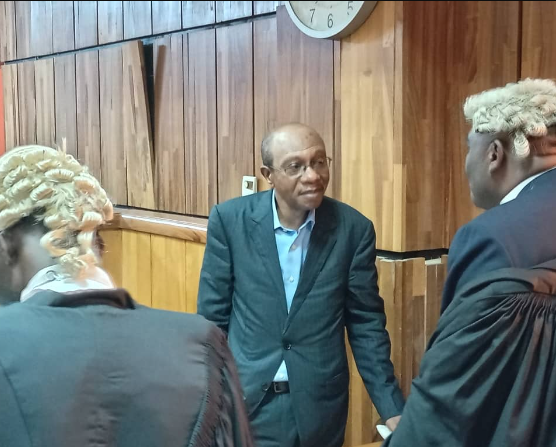


For him to be under investigation for two years and more is not easy at all, and even the file was his own heritage, therefore, the right thing should be done.