


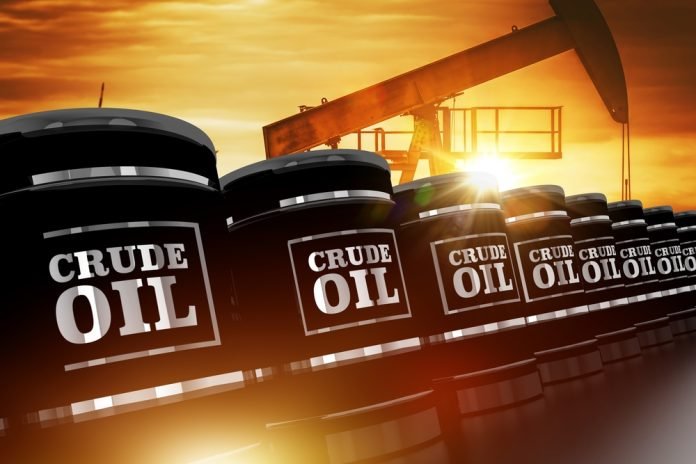
Global crude oil prices spiked on Thursday, reaching their highest levels since September 2025, as mounting geopolitical tensions in the Middle East raised fears of supply disruptions.
Brent crude, the international benchmark, rose 2.24% to trade at $68.88 per barrel as of 12:40 WAT, while West Texas Intermediate (WTI) gained 1.9% to $64.41 per barrel.
According to Reuters, the surge is being driven by concerns that possible U.S. military action against Iran could disrupt oil output. Iran, the fourth-largest producer within OPEC, currently pumps about 3.2 million barrels per day.
Tensions escalated earlier in the week after reports confirmed that U.S. warships had arrived in the Middle East, redeployed from the Asia-Pacific region.
Relations between Washington and Tehran have worsened amid Iran’s crackdown on protests, which the government claims were infiltrated.
On Wednesday, U.S. President Donald Trump announced that a “massive armada” was moving swiftly toward Iran with “great power, enthusiasm, and purpose,” warning that military action could follow if Tehran refused to agree to a nuclear deal.
Reuters further reported that Trump is considering targeted strikes on Iranian security forces and leaders, citing U.S. officials familiar with the discussions. Iran has vowed to deliver a “strong response” if attacked.
The rise in oil prices places global levels above Nigeria’s 2026 budget benchmark of $64.85 per barrel.
President Bola Tinubu presented the ₦58.18 trillion federal budget to the National Assembly in December, describing the benchmark as conservative.
Higher oil prices could provide fiscal relief for Nigeria and other oil-producing nations, boosting revenues.
However, analysts warn that sustained geopolitical instability could heighten global economic uncertainty, affecting trade, investment flows, and inflation worldwide.
Rate, Like 👍, Comment 💬, Share this article, Follow us on our social media handles, and Submit your own story to get featured and earn rewards!




Well, everything had a good and bad side. With this strain in the global economy, oil producing countries with fragile economies can milk this by increasing the amounts sold. This feels like the oil boom yet again.