


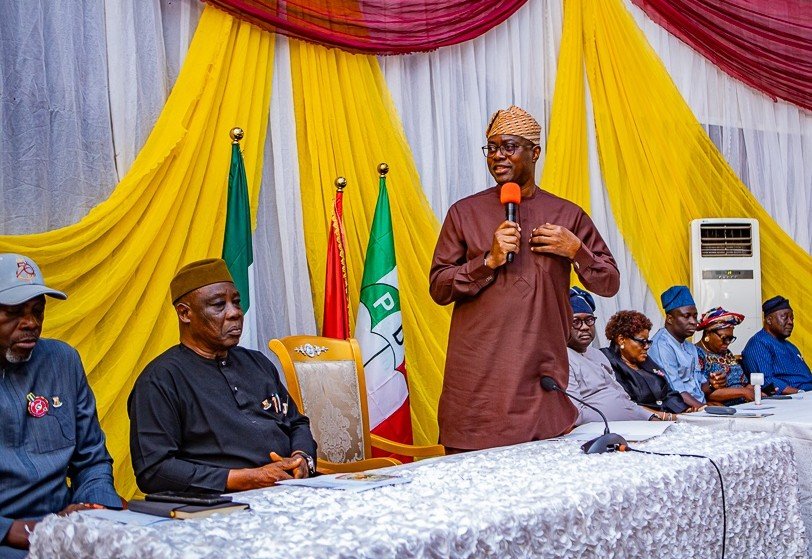
Barely two days after the inauguration of the Oyo State Council of Obas and Chiefs, residents, stakeholders, and socio-political groups have continued to commend Governor Seyi Makinde for reviving the body, while urging him to carefully manage emerging issues to ensure the council achieves its objectives.
Governor Makinde inaugurated the council on Thursday, January 15, 2026, at the House of Chiefs, Secretariat, Agodi, Ibadan, with the Olubadan of Ibadanland, Oba Rashidi Adewolu Ladoja (Arusa I), assuming office as Chairman for a two-year term.
The inauguration followed the passage of the Oyo State Council of Obas and Chiefs (Further Amendments) Bill, 2025, which reintroduced rotational chairmanship among the Alaafin of Oyo, the Soun of Ogbomoso, and the Olubadan of Ibadanland.
The reform is aimed at fostering unity, cooperation, and harmony among traditional institutions in the state.
Governor Makinde emphasized the importance of traditional rulers in maintaining peace, stability, and development, noting that their proximity to communities makes them well-positioned for intelligence gathering and early identification of security threats.
He also promised infrastructural upgrades, including the renovation of the House of Chiefs, stressing that the absence of the council in recent years had deprived monarchs of entitlements and formal engagement channels with government.
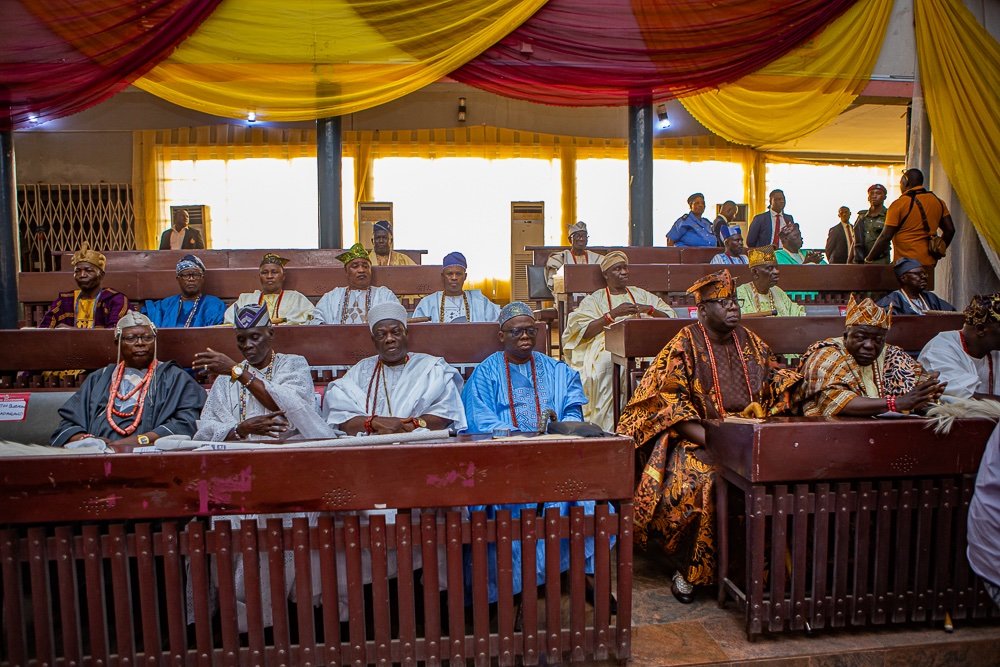
Acknowledging that the amended law may not be flawless, Makinde assured that further amendments could be made if consensus emerges.
“The law may not be perfect. If, further down the line, there is consensus that one or two amendments are needed, the House of Assembly is there to do its job,” he said.
Stakeholder Reactions
The Convener of the Council of Yoruba Elders, Dr. Victor Taiwo, described the inauguration as a significant step toward strengthening security and grassroots governance.
He noted that traditional rulers can play a vital role in intelligence gathering due to their closeness to the people but cautioned that the governor must manage perceived shortcomings with sensitivity.
“If not properly managed, the council’s set goals may not be achieved,” Taiwo warned, referencing reactions from the Alaafin of Oyo.
Similarly, the Chairman of Oluyole Local Government Area, Engr. Akeem Olatunji, hailed the emergence of the Olubadan as Chairman, describing it as well-deserved and timely.
He said the development restores order, clarity, and stability to traditional governance in the state, while reaffirming respect for tradition and the amended chieftaincy law.
“The restoration of the council and the choice of the Olubadan as chairman will enhance cooperation among traditional rulers and strengthen the advisory role of the institution in governance, peacebuilding, and grassroots development,” Olatunji stated.
The council is expected to serve as an important advisory body to the state government on peacebuilding, conflict resolution, cultural preservation, security, and grassroots development.
With its revival, traditional rulers now have a formal platform to engage government, make demands, and contribute to shaping policies that affect their communities.
Rate, Like 👍, Comment 💬, Share this article, Follow us on our social media handles, and Submit your own story to get featured and earn rewards!
 WhatsApp Channel
 Telegram Channel