

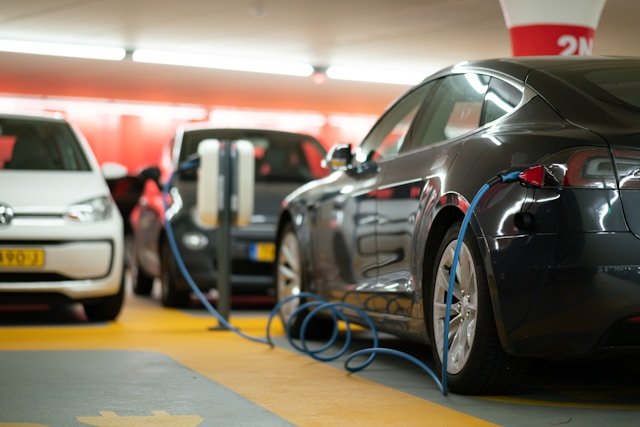
Nigeria’s electric vehicle (EV) industry is gearing up for accelerated growth in 2026, with rising fuel costs, supportive government policies, and private sector investments expected to drive adoption.
Industry executives say customer interest more than doubled in 2025, signaling that the coming year could mark a turning point for both private buyers and commercial fleet operators.
Dr. Kaycee Orji, Chairman of Roxettes Group, noted that through Roxettes Motors, the company has consistently promoted EV adoption by producing electric, hybrid, and internal combustion engine vehicles.
He pointed to China’s rapid transition as a global benchmark.
“China is migrating fully by 2030. They have already achieved about 70 to 80 percent of that transition—almost 90 percent,” Orji said, warning that Nigeria risks becoming a dumping ground for used petrol-powered cars unless it develops a clear EV strategy.
Central to this strategy, he explained, is the Electric Vehicle Transition and Green Mobility Bill, 2025, which mandates government agencies to adopt EVs—prioritizing locally assembled models.
The bill also proposes incentives such as distinctive number plates for EVs, modeled after China’s system where green plates denote electric cars.
Orji added that fiscal incentives, including a reduced 10% import duty on fully built EVs, are already in place, but local assembly would deliver greater benefits by creating jobs and adding value to the economy.
“If Nigeria can sustain the tempo and the Electric Vehicle Bill is handled with speed, I see a boom in migration in 2026,” he said.
Other Perspectives
Olabisi Ajayi, CEO of an EV distribution firm, emphasized that the removal of fuel subsidies has strengthened the economic case for EVs.
“When you compare the running and maintenance costs of electric vehicles to petrol-powered alternatives—especially now—businesses are doing the math and switching,” she explained.
Uche Madunagwu, another distributor, said sustained policy alignment with private investment could transform EVs from a niche product into a mainstream transport solution.
“This year has the potential to set the foundation for a decade of growth,” he noted.
The surge in EV interest reflects broader shifts in Nigeria’s energy and transport landscape following subsidy removal and persistently high petrol prices.
EVs are increasingly seen not just as eco-friendly options but as cost-effective solutions with lower long-term operating expenses.
If the proposed EV Bill is passed and implemented effectively, Nigeria could reduce dependence on imported used cars, stimulate local manufacturing, and position itself as a regional hub for electric mobility.
Some Important Facts to Keep in View
- Nigeria imported passenger cars worth ₦527 billion in Q3 2025, more than double the ₦254 billion recorded in Q3 2024 (NBS data).
- The National Action Plan for the Development of Electric Vehicles (EVDP) targets 30% of locally produced vehicles to be electric by 2032.
- Fully built EVs currently attract a reduced 10% import duty.
- Experts remain divided on whether Nigeria is ready for a large-scale EV transition, but momentum is clearly building.
Rate, Like 👍, Comment 💬, Share this article, Follow us on our social media handles, and Submit your own story to get featured and earn rewards!
 WhatsApp Channel
 Telegram Channel